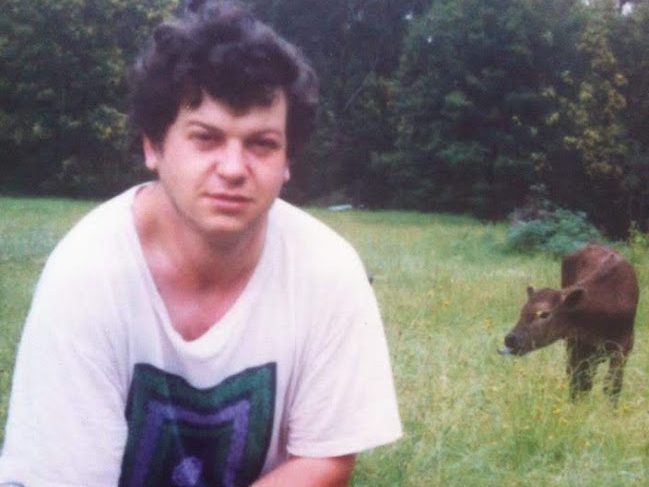
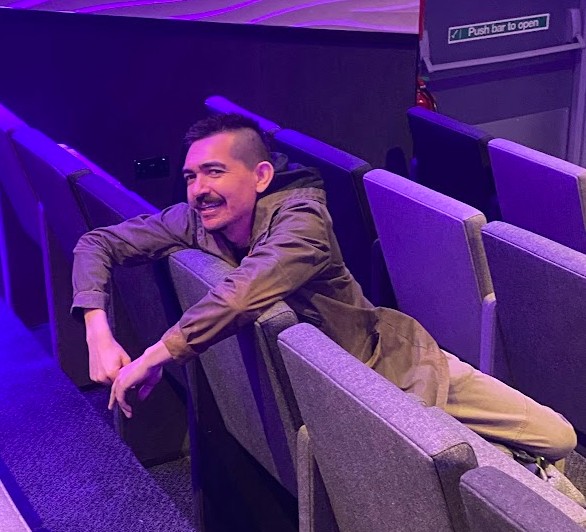
Heydon and I first started talking early 2010’s as we had a common interest in HTML semantics. We worked together for a while at TPG. I tech reviewed his book Inclusive Design Patterns around 2015.
Heydon Pickering – Fireside chat part 1
Transcript
Steve:
I'll record in progress.

Heydon:
Wow, that was loud.

Steve:
One of the things that I've had a real hassle with is doing the transcripts. And I've tried, I've signed up to bloody AI infested by this thing called Descript. Because, I mean, it's difficult, but it's time consuming because essentially I've got to go through the whole thing.

And then sort of double check everything and fix up all the words, which is fine.

Heydon:
It's arguably more work doing the fixing thing, isn't it? Oh, yeah, it is. I mean, I don't know if you're aware, but me and Stephen Hay tried to do a podcast a while ago.

And we did like two or three episodes. And it was really good. We had good chats about stuff.

Steve:
Stephen Hay? Is that the guy from...

Heydon:
He's Californian, but he's based in the Netherlands. He's based in Utrecht. So it's somebody else totally.

Oh, there's Stephanie Hay, I think, right? So there's someone...

Steve:
Well, it's the Hay guy that's Canadian that lives in Australia and is one of the owners of Utopia.

Heydon:
Yeah, that's a different Hay. No, Stephen and I are friends. We met like, oh, I guess it must have been CSS Day, I think.

Yeah, Stephen was the compere in CSS Day in Amsterdam. And we've always got on. But yeah, we started doing a podcast.

And at the time, there was none of this transcription, like AI-based transcription stuff. So we spent the longest amount of time doing the transcriptions. Like we were taking turns to do like chunks of text.

Steve:
Yeah.

Heydon:
So we did it all manually. And I think now it would be maybe a bit easier. Arguably, it's one of the things that AI, to use it as like a really broad term, like speech.

It's sort of speech recognition.

Steve:
Yeah, but it doesn't... That's the thing. It still doesn't work that well.

What I've been using it for is that the first part, I use it just to get a draft transcript. So then I take that draft transcript and I watch it. I watch the podcast and listen to it and fix all the bugs.

But then somebody asked me, can you do speaker labels? And I thought, yeah, I suppose. But it's going to take more time.

So then I went back through it manually. Like I had like 2,000 lines of text with aliens. And so I had to listen to it and work out what I was saying.

So then somebody suggested that I try this descript that does speaker labels. And it's a fucking waste of time. It's really hard.

Like with a lot of AI, you'll say, do this. It'll come back after 10 minutes, give you a partial do it, done. And then say, do you want me to do the rest?

And so you just have to keep asking. And then I got it out, put it in the thing, realized that the labeling was just fucked. It just wasn't.

Yeah. And then it takes more time.

Heydon:
So what I was in the labeling is in like where it tries to detect who's the speaker. Yeah. Yeah.

If it can't do that, then it's not. Well, no.

Steve:
Yeah. Well, that's what I thought that it would be useful for. But it's not cost me $35.

I do.

Heydon:
I do have a you just reminded me of something that I was chatting to someone the other day because they were reviewing some like AI based accessibility products. Right. And you just reminded me because it's one of these things where it's like you had one job, you know, and it was really interesting to me that this company and I would name and shame them, but I can't fucking remember their name.

They're one of these people where they were doing one thing and then they pivoted to like, oh, now it's all AI. You know, like we we will fix your stuff with AI. You know, it will be non sequiturs about AI.

And really, the weirdest thing about it was that they have like a sort of product launch video where they're describing the product and how powerful it is and how it works. And when it came to the section about AI, which was the sort of central theme, I suppose, they started to do a demo and they kept coming to apologize because it wasn't doing it. It wasn't, you know, I mean, I guess it was it was trying to detect WCAG errors or whatever.

And it just it was failing to do it. And the weirdest thing about it is that they kept that in the video. Yeah.

They're trying to sell fucking published the video for it is a marketing exercise.

Steve:
I mean, that's one of the questions that I've. Yeah. I mean, and I ask it fairly regularly.

I say, come on, you people, you know, on LinkedIn. Show us the goods. Show us how great you can be tested using AI.

Because I just haven't seen it.

Heydon:
No, I don't know what the use case is either, because so on the one hand, you have automated testing, right? Which catches, I don't know, 30 to 40 percent of errors because it can only cover non subjective parts of WCAG, right? And then on the other end, you're testing things like like headings and labels.

You're testing to see whether it's worded correctly. Yeah. I can't help with that.

Steve:
Exactly.

Heydon:
It doesn't know what your intent is. It doesn't know what you're trying to communicate. So even a very advanced, the AI would literally have to be your colleague and working on that project like that, like it doesn't work like that.

Steve:
And even once you've done all that, you've still got to QA yourself.

Heydon:
Well, yeah. And of course, there's that too. So you might as well just do it in the first place.

Yeah.

Steve:
I mean, I have asked this question, like I went through each of the criteria and wrote an article called Mind the Gap or WCAG Mind the Gap or something.

Heydon:
Oh, yeah. I remember that. Yeah.

Steve:
Basically, you know, I just sort of pointed out all of the areas where AI or even, you know, typical automation, which is really like I can trust automation, but I can't trust AI to actually make any interpretations. But anyway.

Heydon:
Yeah. Well, this is this is the thing. Right.

So on that side of it, on that side of it, you've got like they are hard and fast things that you're looking for, like a missing alt attribute. So it's not there at all. So it's not an empty alt and it's not an alt with it.

So, first of all, it's very easy not using AI and probably much more efficient. I mean, I use a fucking CSS selector for doing that.

Steve:
Yes. Exactly.

Heydon:
Not bracket alt, right. So that's taken care of. You don't fucking need AI for that.

But then how well the alt text is actually written, again, it's subjective. It's about the intent. It's about context.

They're trying to fill a gap that isn't there, I think.

Steve:
Yeah. Well, that's why they're going to fail ultimately. But yeah, I'm waiting for the our great savior company, which you shall not be named, to do 100 percent.

Heydon:
When you say, I'm sorry, this is a slight tangent, but I know you're a music fan and you love your Garage Punk and stuff like that. Yes, I do. When you say he who cannot be named, are you thinking of Sauron or are you thinking of the singer from the Band of Dwarves?

Steve:
I'm thinking neither. I'm just thinking of a pedestrian accessory company that makes claims beyond its means. That's all.

Heydon:
Yeah. Yeah.

Steve:
So anyway, we've got a good conversation already, but I just want to say this is Fireside Chat, sponsored by HTMLZ. It's at etsy.com forward slash UK shop HTMLZ. And if you use the code PiggyTrump, you get 20 percent off.

I don't think anybody's actually used that code, but hey. And I found this picture of you somewhere on the Internet.

Heydon:
Yeah, this is so this is a picture of me wearing my I had this this like a beanie hat thing, which said security on it. And I would wear that everywhere. And I would get people sort of like make sort of comments or remarks or look at me funny because I think they would.

It was a sort of masculinity thing where I think they thought that I was like I'm like a security guard, like I'm tough. Right. Yeah.

But my official line is that it's short for emotional security. Nice. I actually sell a T-shirt which has security written in big capital letters and then in tiny, tiny text just above it.

It says emotional. Not that I'm emotionally secure myself, but anything helps.

Steve:
OK, so we've got that. Oh. Now, let me stop sharing and I'll get the rogues gallery because it was intended, but it's just ended up being a gallery of people that that we can riff off and pick something.

Some people you don't. So I will.

Heydon:
Absolutely.

Steve:
I'll find that. I mean, you know, other question I ask is what chair do you want to sit in? But, you know, they're not real chairs.

They're cardboard.

Heydon:
Yeah. But yeah, I'm technically now out as being non-binary or agender specifically. So I suppose I should sit in the multicoloured like LGBT chair, I guess, with the with the hat.

What's going on with the hands above the chair?

Steve:
They're the arms of swallow. It's a it's a sort of a symbol of whatever you like. You will see you'll see a picture of what I'll bring up the rogues gallery.

I actually use these arms on on them on a T-shirt for the Adrian asked me to do.

Heydon:
Oh, yeah.

Steve:
Yeah. But yeah, it's it's sort of like a symbol that looks like the logo of another company.

Heydon:
You've made David one of the most memed people alive at this stage.

Steve:
Yeah. Yeah. That's the thing.

Well, I do. Yes. I do that with Dave, with Pat and to an extent, Johnny, because they're my friends.

They're always there with me. So, well, yeah.

Heydon:
Yeah. No fun. I love it.

I mean, I mean, I remember you had a you had a little character version of me in the bottom of some slides.

Steve:
Yeah.

Heydon:
That's because I was sitting on the front row. You're thought this is in the Toronto.

Steve:
Accessory.

Heydon:
Sitting on the front row and seeing myself pop up at the bottom of that.

Steve:
But yeah, you were asking you were asking annoying questions. I think. Yeah.

Heydon:
Yeah. Yeah. Pointing out that pointing out that accessibility isn't just HTML or whatever.

Steve:
Yeah. Yeah. Yeah.

Heydon:
Yeah.

Steve:
This sort of thing that people always say. Yeah. Yeah.

Well, how the fuck do I. Sorry. I'm just.

Heydon:
No, you're right.

Steve:
Yeah. I'm going to share. Where is it?

Oh, OK. Hold on. Oh, yeah.

As I said to Bruce the other day, this is. This this runs a lot more smoothly than than it used to.

Heydon:
Which is not saying a lot, but, you know, I can I can only imagine because I haven't heard it yet. I can only imagine the kind of conversation you had with Bruce.

Steve:
It was it was really relaxed. It was it was a nice conversation. I mean, Bruce is one of those people.

I'm never like I have talked to over the years, but not a lot. I was. Oh, really?

Yeah. I always thought.

Heydon:
That's interesting to me because I think of you as being similar figures in in like in that. Yeah. Yeah.

Not just that, but but like you're both very independent and very much yourself. There's no there's no like a pretense or guile about things. You just get you go about things in it.

It's like, you know, you know. But yeah, I guess so. Yeah.

Yeah. Yeah. True.

That's why we get along. I think that's why we get along then. Yeah.

Steve:
Yeah. Yeah, exactly. Yeah.

I mean. I mean, you know, I've always known Bruce. Well, I've known Bruce for many years, but.

Well, I'm like I'm close to Pat, who is a good friend of Bruce's, so.

Heydon:
Well, they they work together, didn't they? In the opera. Yes.

Yes.

Steve:
Yeah.

Heydon:
Going back a long way now. Yeah. Yeah.

Steve:
Oh, fuck. It's just it's that difficult.

Heydon:
What are you going to do? Share screen?

Steve:
Yeah. I'm just trying to share the screen, but I. Oh, there we go.

Share the screen so you can see the screen now. Can you?

Heydon:
Yeah.

Steve:
Yeah. Why it works is the people here. You just I ask you, who is this person?

Funnily enough, most people don't know. Not most people. Some people like Bruce didn't know who the Swallow was or didn't recognize the photo.

Yeah. So top left. Here we go.

Heydon:
Well, yeah, that's David Swallow. Top left. Yeah.

And then the chap.

Steve:
Hold on. I want to explain what the I had this idea because I wanted to give Swallow some yellow feathers, you know.

Heydon:
Oh, I thought they were chillies, weirdly enough.

Steve:
Yellow feathers to indicate his cowardice. And so I mocked up this show. I won't actually make it, but it's just an idea I had for the cowardly accessibility expert Swallow.

He's not a coward and he's well, I was going to say he's not an expert either, but he does have expertise. I mean, he's got a degree. He's got a PhD in web accessibility.

I mean, how many people could say that? How many people?

Heydon:
Yeah, that is impressive. And I think the work the work that he did around anxiety. Oh, yeah.

That was I thought that was particularly, you know, that was really fresh. People weren't talking about it that much. Yeah.

And I really appreciated it. So I had like a chronic anxiety issue for most of my 20s. And, you know, panic disorder and generalized anxiety, all of that sort of stuff.

And and so, yeah, any any sort of topic that addresses that, because it's still not very well understood. Because, as you know, this the mental health portion of the health service in this country is basically non-existent. And just they're just they're not trained for it.

Yeah. I mean, I've literally had people I've turned up. Like, I keep getting like serious chest pains and I'm shaking everything.

I'll do an ECG and they go, well, there's nothing fucking wrong with you physically. So fuck off. It took a long time for them to realize that I had this disorder, you know.

So, yeah. Anyone who talks about that sort of stuff, I've got a lot of time for.

Steve:
Yeah. Yeah, definitely. Yeah.

I mean, I've just got a lot of time for Swallow. I'm actually I'm meeting up with them. I'm going up to Birmingham to meet with him and Pat on the weekend.

We meet up a couple of times a year and we're meeting in Birmingham to celebrate my birthday.

Heydon:
Oh, nice. Well, that's Bruce's neck of the woods as well, isn't it?

Steve:
Yeah. Yeah. Well, hopefully we're going to meet up with Bruce and Stuart, hopefully as well.

And I'm meeting up with a cousin because I've got loads of relatives up there and I was up there just over Christmas. But I'm going back up and I've got a second cousin who is an interesting character. So she's going to come out and have a drink with us on Friday night.

Oh, right.

Heydon:
Nice.

Steve:
We've got a little Airbnb place right in the middle of Birmingham.

Heydon:
So it should be fun. Yeah. Yeah.

That sounds great. I've actually never been to Birmingham. I need to put that on.

Steve:
I wouldn't go there if I didn't have to. I don't know. It's just I mean, I lived there when I was younger.

It's just when I was a child, I lived there for a period of years.

Heydon:
It's a big old place, isn't it? It's a bit slightly intimidating and it's rough as guts and depressing.

Steve:
But as is much of what's it like up in Norwich? I've never been to Norwich.

Heydon:
Yeah. Norwich is it's actually a really nice place. We've got a weird situation in Norwich where like Norfolk.

So we're bang in the middle of Norfolk, like the like the butt cheek of the kangaroo that is the UK, as I normally explain it to people. We're right in the middle there. And Norwich is a very cool, progressive, inclusive place.

We have a really good pride. It's just, yeah, it's where I was born. And and although I'm not like nationalist or patriotic or anything like that, I'm quite proud of being part of Norwich because it's a great place.

Yeah, yeah. I mean, I'm speaking from Norwich now and I'm like 10 minute walk from the centre of flats and quite near the centre. But yeah, the trouble with Norfolk is that while Norwich in the middle, this little island is this lovely, progressive sort of forward thinking, educated place, the whole of Norfolk is like a Tory wasteland, basically.

Yeah. It's racist farmers and and fascists, especially on the coast. You know, it's always for some reason, it's always people on the coast.

They're always there. Yeah.

Steve:
They sort of warehouse people on the coast these days, don't they?

Heydon:
They seem to be warehousing racists on the coast.

Steve:
I can't help when I ever I think of Norwich, I can't help but think of. I can't remember his name, Alan Partridge.

Heydon:
Oh, yeah, yeah. Actually, someone called me Alan the other day because I mentioned that was yesterday. Yeah, I mentioned Norwich and it took me a while.

I was like, what is that referring to? Of course, Alan Partridge. And the thing is, there was a petition when when the Alan Partridge film came out, the Alpha Papa, there was a local petition for him to do the premiere in this really shitty cinema we have in a place called Anglia Square, which is actually currently being knocked down and rebuilt because it's dreadful.

But there's a little cinema just there. And so, yeah, the idea was it would be really funny if he actually they did the premiere for the film. They ended up doing kind of like a little premiere there, but then one in a proper fucking cinema in London or whatever.

But I because I know that little precinct quite well. It's like just a little shitty concrete shopping precinct. I found my way in through the stairs like there were people that they were at capacity and they're saying people shouldn't be coming in or whatever.

But I knew there was a back way in. So I actually saw him, saw him arrive and come out and do that. But it was so funny because like it's just this sort of horrible, like brutalist car park opposite.

And the car park people had commissioned this like welcome, welcome to Norwich Stein, which is just like red aerial boards on this plastic. It was just perfect. And it was they did it unironically as well.

Like they weren't trying to make. Yeah. Like depressingly bad.

It was just what it's like there. So, yeah, that was kind of fun. I enjoyed the film, actually.

I thought it was really good.

Steve:
I don't I don't think I've seen it.

Heydon:
It's funny. It's got Tim Key in it. Tim Key's very good in it as well as his like sort of assistant.

Steve:
I'll have to, I'll have to watch it. So, OK, so we've got The Swallow. Well, at least you recognised him.

That is one of the classics.

Heydon:
This game is like, I mean, I recognise probably a little bit more than a half people here.

Steve:
Well, that's OK. Then the other half we can chat about. Who's there?

Heydon:
Yeah, yeah, sure. So next person along. I know that face, but I cannot think of the person's name.

Well, and I feel like that might be a picture of them from a long time ago.

Steve:
Yeah, I couldn't find a picture. Well, I couldn't find a picture.

Heydon:
Is it a hat?

Steve:
No, no, it's Ian Hickson. Oh, OK. It was over a discussion, it was over an article on the heading structure, the outline algorithm, that you and I first started to cross swords and discuss and became friends.

Heydon:
Yeah, it's actually, yeah, I remember that whole time very fondly, and I do think about it quite often. And I always think of you around Christmas, funny enough, because we had, like, yeah, we'd got into some sort of debates and stuff, I suppose, which was the style at the time. But then we'd reached some sort of agreement or something.

But then we bonded over our mutual fondness for Jethro Tull, and we were messaging each other. I think it was probably Christmas Eve or Christmas Day about Jeff Rotel or something.

Steve:
Yeah, I'm a great fan of Jeff Rotel. Bruce Lawson hates Jethro Tull. I don't know why.

Heydon:
Yeah, but he probably doesn't even hate Jethro Tull. He just has to say he does because of his punk credentials.

Steve:
Yeah, but I love punk music too.

Heydon:
You and I have eclectic tastes. Yeah, absolutely.

Steve:
But yeah, this Hicksie, he disappeared off the scene. Has he really? Sorry?

He's not involved with WHATWG anymore? No, no, he's not. He got moved out of that.

I mean, this guy was the comptroler of HTML5, really.

Heydon:
Yeah, yeah.

Steve:
And it must have been, he did a fucking great job, a lot of it, but he was just a bit of an asshole.

Heydon:
Yeah, no, it was weird because to begin with, because I suppose I identified heavily with knowing HTML, caring about HTML. And so when these new elements came out and everything, I was so ready to defend them and say like, you know, this is a new thing. It's really cool.

And, you know, I wanted to see them with rose-tinted spectacles, I suppose. So when we got talking about it and you, I guess you were pointing out some, what would you call it? Like some issues or some inconsistencies or whatever with the spec and with other things or whatever it was.

I was quite defensive about it, but that was without knowing any of these people who worked on it.

Steve:
Yeah, I think we came to an understanding. I mean, we don't, you know, obviously don't have the same views on everything, but I think that we, you know, reached a point of understanding the practicalities of the thing.

Heydon:
Yeah, absolutely. Yeah.

Steve:
Yeah. I still think that I hate HGROUP. I never hated it.

I just thought it was useless. And so that's the reason why it's still in the what.world. I mean, it wasn't going to leave the whatwg spec because they wanted to keep it for whatever reason. Wait, which one, sorry?

HGroup. Ah, yeah. I removed it from the W3C HTML spec at the time only because it was supporting something that didn't happen.

Heydon:
Yeah, yeah.

Steve:
No, I remember HGroup. Yeah, but it's still there. And now it has sort of, I'll put some sort of frosting of semantics on it so people feel that it's meaningful.

But, you know, it's still there.

Heydon:
The idea, right, was that if you put an H1 and an H2 inside an HGroup, then that would be as one heading in the outline. Or it would make sure that the H2 didn't introduce another section.

Steve:
That's right.

Heydon:
Right. I don't know if that was ever implemented correctly.

Steve:
It wasn't implemented. No. That's the point.

Heydon:
This is why I ended up falling on your side with all of this stuff against folks like Hicksy, was that they were coming purely from a theoretical standards and paving the cow paths sort of way of looking at things, I think. Whereas you were looking at it from a more practical sense in terms of accessibility. Like, what's the actual outcome of this?

How's this actually going to be interpreted? Yeah. How's it going to work in a browser and then in a screen reader plugged into that browser sort of thing?

Steve:
Well, I mean, I wouldn't have minded if they'd implemented it. But it wasn't normally the requirements on the browser to implement the outline algorithm. And so it didn't get implemented.

Heydon:
No, no. It's funny because I actually saw one recently. It was in some fresh code as well.

And I thought, oh, someone's actually using HGroup. But then I had to point out that because whether people are using HGroup or not, people tend to do that thing. And it's one of my pet hates.

Because it's a pet hate because it's difficult to actually fail it in terms of an audit. Because if there's an H1, then an H2. It's like, well, OK, you've introduced another section.

But I bet that's probably not what you wanted to do. Like, semantically, it works. It's just the intent is then misaligned.

And it's one of those things that people still, I find all the time, even if they're quite good with accessibility, that thing with headings of like, oh, I want a subheading. I'll just use another heading. It's like that.

An H2 isn't a subheading. It's a heading.

Steve:
Yeah, exactly.

Heydon:
Having to point that out a lot.

Steve:
That's why I try to make it in HGroup that if you've got a heading in there and you've got paragraphs after or before it, that those paragraphs take on some magical headingness.

Heydon:
Yeah.

Steve:
They don't actually. But, I mean, that's what they're supposed to represent.

Heydon:
Yeah, yeah. Yeah, I remember that aspect of it. So it would sort of stop an H2 being a heading.

But if there was a P in there, then at least there would be some sort of something that would associate the paragraph to the H1 above it sort of thing. I mean, that's another thing that I think is something that people seem to fundamentally don't appreciate is how much of accessibility or how much of like non-visual UX is about grouping things. Like, what the group is.

You have the label for the region, so you know when you go into that region you have the context. And that sort of stuff gets left out a lot. We were looking at cards for a design system the other day, and I was explaining how we need to have some sort of generic role on a card.

Because if it's not in a list, if it's not a list item, or it doesn't belong to a list item, which ordinarily it would. But if you have a card on its own, unless you have some sort of grouping mechanism, it's just some stuff, right? There's an image, and then there's some text.

There's no kind of non-visual metaphor for it being a thing, like an encapsulated thing. So, like, role group, because region is sort of like a bit overkill, I think, probably. I mean, partly because it gets wrapped in some circumstances to being a landmark and what have you.

Steve:
I think it's got to have a name, doesn't it, in order to be announced. Well, the same as group. The Hgroup provides that grouping.

It has a role as a group by default, but it doesn't get named. It doesn't get announced unless the group has an accessible name. So, basically, you know, it just keeps it.

It conveys the grouping semantics, but doesn't expose them by default.

Heydon:
Yeah, I've got you. But to go back to Hicksy and everything, I wasn't confident they were thinking about that sort of stuff, whereas you were in the parallel organization. But they also seemed to be kind of ideologically uninterested in it as well.

It was very frustrating to watch that. And obviously, I felt bad for you because you were, I mean, the main element was the other one, of course. I mean, specified specifically to mark out the main part of the page.

And yet, and then the folks in the WHATWG side were stepping in to go, oh, well, actually, I think you could have multiple names if you want. Just to sort of muddy the waters for no good reason.

Steve:
Yeah, so that's what it was in the WHATWG Spec. And then, well, until about 2016 when Hicksy just dropped out more and the people. Oh, that was that long ago, was it, Blimey?

Oh, yeah. Maybe in 2017, where I did this big PR that basically aligned the main element in the WHATWG with the main element in the W3C Spec. Which is, I was really pleased about that because the idea of multiple mains.

I mean, funnily enough, I remember, I remember your mate Jeremy Keith. He was arguing for that.

Heydon:
So, I mean, again, if you're sort of speaking from a. This is the thing I think is that if you're looking at it as a, well, theoretically, if you have a section, you could have the main part of the section or whatever. I kind of get that in theory, but the whole point of it being defined in the first place was really as a.

As a landmark, right? And it was one of those landmarks which you can only have. You would only have one page because it would make a nonsense of it otherwise.

I mean, there are there are certain sectioning elements which can be landmarks in certain situations and not be in others. But it's just again, I mean, I keep using this word, but it's the the intent of it was was to say that this part of, you know, it's the the main part of the page or the unique part of the page. And it was sort of like deliberately.

Misconstrued, I think, in some ways.

Steve:
Yeah, there was just lots of. I mean, that was, you know, like I don't generally feel as if I've burned out throughout my career, but I definitely burned out of doing web standards for a while after that. I mean, it was my, you know, like I was thoroughly engaged with it to the point of exclusion of other stuff.

So I'm glad that I sort of stepped stepped away from it.

Heydon:
And yeah, yeah, yeah. And I think, yeah, you're you're at that burnout point. And burnout is always about trying to do good.

And whoever the world around you or the organization you're contending with not allowing you to do the good that you want to do that, that is essentially burnout, which is why burnout is usually in a capitalist context, especially in accessibility. Right, because you feel like it's your job to make things better for customers or make them better for users or whatever it is. And the organization is, well, we don't care about that unless it makes us more money.

And so you're putting all of this effort into into making things just just better. And they just prefer their dark patterns. That's going to demoralize you very quickly.

And then you're going to plunge into into burnout like really fast. I mean, that's why I ended up having a break from doing auditing for a long time. And I mean, now it's sort of something that I might be called upon to do, but probably usually as as a small part of a larger like design system related engagement or whatever.

But I had to stop doing like like audits all the time because it just felt like a lot of the time it was so you have these two factors. One, you have to be really, really like accurate. Like there's the professional obligation to do.

To interpret WCAG as accurately as possible and catch everything, which is a really difficult game to play because so much of it is quite subjective. Right. So that that that's very stressful.

But simultaneously, quite often you're doing this for an organization who is only interested in you doing it in the first place so that so that you become liable instead of them for any mistake that you might make. And and they tend to you know that they don't see it as an actionable thing. It's just it's just the well now we've had that audit done.

We'll put that in the filing cabinet.

Steve:
Well, that's why we don't call them audits at TetraLogical, we call them assessments. And what we we don't provide in general, we don't provide a report. We do provide ACR, a standard that's as in the accessibility conformance report, which is like the VPAT.

But we essentially provide a bunch of issues, which the organization can put up onto there. And we quite often do put it into their JIRA or into their bug trackers. So they get it.

Heydon:
Yeah, nice.

Steve:
And so so each issue is an actual item about, you know, this this shit isn't correct. Here's our how to fix it. And, you know, yeah.

Heydon:
So it's like when we were when we were working together at TPG, that that was what that was the part of it that kept me going was the fact that there was this focus on actually delivering advice. And it was you could solve it as a design problem. And this is the thing that I think a lot of people forget about me is that my background is as a designer.

I went to fucking art college and most of my the first part of my career in the web, if you want to call it that, was was doing, you know, designing, but then implementing visual design. So I was sitting in that, you know, in the middle there where I was. I was I was taking like typographic ideas or whatever the sort of communication design elements, but actually coding as well.

That was where I was sort of happy in that place. That's what people call unicorns. Right.

Which is which is it's so funny because I don't think it's that rare. I think there are quite a lot of people who do that. It's just that we want we really intend on erasing those people because it because.

I mean, I did a whole video about this. It was it was called something like, why is everything binary? But it's we want people to either be either be developers, either be programmers or designers.

Right. And it's like, choose one. And so that kind of middle ground there.

I mean, I there was someone the other day who who I won't name, but there's someone who you probably met, but very influential in accessibility. But they made some remark about how, like, let's not emphasize too much about front ends because front end doesn't really exist anymore. Like nobody cares about front end.

And it's like, well, first of all, don't make that self-fulfilling prophecy. But but also there is this attitude now that that that bridging position, which is so important between kind of high level design and then implementation and having that in one head or in one team. You know, who are good at that is disappearing.

And it's really sad. And it's disappearing because we're intent on compartmentalizing things so much, you know, just do a design and throw it over there. I mean, I'm trying to teach myself stigma at the moment because it helps me be able to collaborate with designers.

And when I say designers, I mean UI designers who are not, you know, they're not they're not coders or programmers, which, you know, no shade or anything. That's just not the area that they're comfortable with. And it's so silly how like Figma is just the worst version of CSS.

Right. And it's like, well, it makes so much more sense if I was just making this in the code, like I'm designing at the same time. Yeah.

CSS was all of that. CSS is the best design tool history's ever given us. But for some reason, I have to do it in this shitty proprietary software first and then.

Steve:
It's just these huge, huge canvases that it really disorientates me. I mean, we work with with Figma design stuff, but luckily it's not me that does it. It's the more other people within the organization.

Heydon:
Yeah.

Steve:
But anyway, let's we've we've only got two. It's going to be like a six hour. I'm drawing it out because I'll be embarrassed about not knowing some people.

So that's all right. So the number three.

Heydon:
Top right. That looks like that part in the middle there.

Steve:
Yeah. And this shirt is I talked about it with Bruce. It's one of those shirts that nobody has bought.

And well, really.

Heydon:
Yeah.

Steve:
I mean, I'm trying to give them away and still people won't take. But but that's, you know, part of the fun is, I mean, I created it not to to be a moneymaker, but just because.

Heydon:
Well, you can make the design like when you come up with the idea for the design, it doesn't cost you anything to put it up. No, exactly.

Steve:
Yeah. I mean, to sell it cost me like 20p every three months to have it listed. Yeah.

Heydon:
So, yeah. I mean, I use I use T-Mill for my for my like T-shirt designs. Yeah.

And hoodie designs and stuff. And I chose them because the quality. I mean, I'm wearing one now, actually.

I'm wearing my div div jumper hoodie. It's really good quality. It's supposed to be sustainable.

I don't know how true that is. They say it's sustainable. It's UK based.

But then they're quite expensive and the margins are really terrible. Like unless you're charging a fortune for them.

Steve:
Yeah.

Heydon:
But but yeah, there are two or three designs where I've sold several like of that design. And then there's 30 or 40 which people haven't touched, you know.

Steve:
Yeah. I mean, I've got hundreds for the most part. Yeah.

I haven't sold many of them.

Heydon:
You're very prolific because you generate all of this. Yeah. Like me.

Like they're very like kind of meme like, I think. Yeah. I mean, I think the last time we saw each other in person was in that it was the State of the Browser conference.

I had a Mohican and you took that. You took a photo of me with this Mohican. And it's one of my favorite shots of me.

I can't remember.

Steve:
You had your hair being Mohican. But I remember. Yeah.

You were sitting down in the chairs at the bottom near the stage. And I took photos.

Heydon:
Yeah. We had a little chat in that kind of foyer with like sort of mezzanine area before.

Steve:
People think I'm some sort of creep, you know. But I like to take pictures because then I remember things.

Heydon:
Yeah. Yeah. I don't mean that.

That's like, yeah, I have to write things down to remember things. My memory is actually terrible. My my brother's there.

He went to Oxford and then he became a barrister and is now just become a judge. He's my younger brother. He's two and a half years younger than me.

And one thing that I mean, he's just very, very competent and very and very intelligent anyway. But one thing that's very different between us is that he has the extraordinary memory. Like he can remember stuff from from my childhood, even though I'm the older kid that I can't remember.

Right. So I do think it gives people an advantage. I can't remember shit.

So, yeah.

Steve:
Well, I mean, I was talking about that with with Adrian about because, you know, just doing this work and then people asking after a project finished, do you remember X, Y? And it's just there's nothing there. It just it just goes down on my head.

Heydon:
Yeah. Yeah, exactly. I mean, I have to look up basic stuff about especially things like JavaScript.

Steve:
Oh, yeah.

Heydon:
Really, really basic things that it does. But every time I do that thing in JavaScript, I have to look up that.

Steve:
That's what that that's why it's good to have the authoritative resources to, you know, to look it up because.

Heydon:
Yeah. Well, I mean, a lot of I mean, I suppose a lot of that is that comes from stack overflow. But not not not exclusively stack overflow.

But now stack overflow is decided that it's going a sort of an AI route, or at least that was the room that I heard. Now people are kind of concerned and people are withdrawing their accounts from it. Yeah.

So it's going to I think it's going to sort of go a little bit in the direction of of like Twitter. Or X in that people are going to start disbanding from it. And simultaneously to keep up the numbers, it's going to get pumped full of bots and scripts and stuff.

And until it's, you know, until it's completely emulsified, which would be a bit sad.

Steve:
OK, so you should recognize the next person because I saw them with you. Yeah.

Heydon:
Yeah.

Steve:
That's Amy.

Heydon:
Yeah.

Steve:
So you and your friends.

Heydon:
Yeah. Yeah. I would say we're yeah.

She's one of the people I'm close to within our industry. And we just you know, we hang out as friends whether it's a conference or otherwise. Amy's visited me in Norwich and we hung out.

We went to one of those. We went to the Rage Rooms, which is one of those places where you get to like smash stuff.

Steve:
Oh, really?

Heydon:
Yeah. They give you like loads of like crockery and stuff that people have donated. And I had an old laptop that I took.

So I let Amy was having a stressful time for whatever reason, you know. And so I thought it'd be a good idea. And I watched her smash up this laptop.

And it was very, very cathartic, I think. Yeah. We've we've we've worked together.

We tend to hang out. Amy's just a very droll, very funny, very sharp person, you know, always.

Steve:
Yeah. I mean, I haven't talked to her myself. Yeah.

I mean, I haven't just haven't had the opportunity to be introduced or whatever.

Heydon:
I tell you what as well, actually, while I think of it, she's like another one like us in the sense that Amy is very Amy. Like there's no there's no pretence or there's no kind of like ceremony. She's just very open and direct.

Steve:
And, you know, I might get her on the show. Oh, she'd be great. Yeah.

Heydon:
Yeah. Yeah.

Steve:
Absolutely.

Heydon:
Yeah.

Steve:
Do you know who the next person is?

Heydon:
I did. The eyes really reminds me of someone.

Steve:
It's not someone in which this is Alistair Crowley. And I put Crowley in there because I know that you have interesting religious or ironic religious beliefs. All I remember is that at the time that that you were working at TPG with Mike.

And I think that it was known that you self identify as a Satanist at the time. I don't know what. But what I appreciate.

I know, you know, I think back about this is that is that Mike just, you know. Oh, yeah. OK.

Like he didn't.

Heydon:
Yeah. Because Mike is Christian, right?

Steve:
Yeah. Yeah.

Heydon:
So Mike always, always had a lot of time for me. And he was he was always he was a good he's he's always been a big cheerleader for my work. And I think that is I really appreciate really good guy.

And, yeah, that sort of stuff didn't seem to fade. And we actually had a conversation about it at one point. And we were just sort of like, well, on that point, we agreed to disagree.

We're both human. You know. Yeah.

Steve:
Yeah.

Heydon:
Exactly.

Steve:
Exactly. Yeah. I mean, he's just very accepting of like he ran a broad church, so to speak.

Yeah. TPG. I like I didn't know that he was religious until about four or five years after I started work there.

was only through somebody else.

Heydon:
Yeah. I mean, yeah, it certainly doesn't. It's not part of what we do, is it?

And that's the thing I see. That's that. So that's only really there where I draw the line, because, well, so to explain, I would say that I am a Satanist in the secularist sense.

So in the in the non-theistic sense, I think I think theoretically or technically people, some people divide it this way in that if you actually worship Satan, like you believe that that entity, that they that sort of deity or sub deity or whatever exists and you worship it, then you're a devil worshiper. You're not actually a Satanist. Like it's the sort of Levin tradition of Satanism that I'm, I suppose, by line within some ways, just because it's an it's an anti-theistic culture and it's kind of anti paternalistic and anti authoritarian.

So there's something that I've come to realize recently is that. One of the biggest identifying things about me, I think, is that I'm very allergic to hierarchy and Satan, Satanism, or that that brand of Satanism is very non-hierarchical. It's just it's just you you do things your own way kind of thing.

And you there's no one to worship. And also you shouldn't be stamping on other people. So I don't I don't like being a boss, but I also don't like having a boss.

So most of life, I feel completely, completely kind of disconnected. And in the UK, particularly because we still have a standing monarchy and all of that, I think we're horribly, horribly obsessed with hierarchy. And I hate it.

It bothers me all the time. And it's that that thing of like, I don't mind that, you know, your Jeff Bezos's or whoever are shitting on me as long as I get to shit on people below me. And yeah, that that kind of attitude really sucks.

And so that's that's kind of why I identify with Satanism a bit.

Steve:
Yeah, I mean, that that's it was these arguments that about Musk, Grok and and how the. Certain people were OK with the fact that it produced non-consensual images of children and. But they were they were fine with that because it, you know, sort of caused the the Lib Tards, so to speak, you know, grief.

Heydon:
Yeah, yeah. Where is everything goes as long as it upsets the people who are. And that's another thing that I've I've come to realize about that dynamic is I always thought it was like this battle for this battle for who was right and who was wrong.

Right. But it's it's not it's about who it's you just basically it's just arbitrary team. I mean, it's not arbitrary for people on the left, because I think I think they do have principles and frameworks for doing things for the greater good.

But to the right, it's just. You're either on my team or you're not. Right.

It's like it doesn't matter if we're being hypocrites, because if we're doing it, that's just us winning as a team.

Steve:
Yeah.

Heydon:
There's no like there's no kind of like objective morality to it whatsoever. Yeah.

Steve:
So second row. We're in the second row. First.

Heydon:
Yeah. So that's Sarah.

Steve:
Second name.

Heydon:
I'm never quite sure. I think it's Swayden. But it's been it's been a long time.

Steve:
I'll ask her. I'm doing a chat with her next month.

Heydon:
So.

Steve:
Yeah. Well, I've been trying to get, you know, a range of people.

Heydon:
Yeah, yeah, sure. So Sarah, I've I've only actually met in person once. I've never met.

We were we were I believe we were both speakers at a smashing magazine conference, like a smashing conference years ago. Like it's probably 2016 or something like that. And and they had like there was this sort of chill out room area that they had sort of separate to the main stage and everything, which had lots of Lego.

And so we had a little chat and a little get to know each other over some Lego. We were building a little bit of Lego, which was very nice. And she's ever so sharp and just so hard working.

Yeah, it was the SVG stuff, I think, originally that she's well known for. And, yeah, just just just getting to know that stuff totally inside out. And then there was a time where she was doing this conference talk and for some reason, like her speaker didn't work.

And there was something wrong with the screen or there was a massive technical malfunction. And she just said, that's OK. I'll just do it without that stuff.

I've got it memorised. And she just ploughed through it, like remembered everything in order. Like, again, amazing memory.

But my fondest memory of Sarah is that when I released the first book, I actually got put into print with Smashing Magazine, which was inclusive design patterns. Yeah, it's a white book with the with the really sort of sketchy illustration I did on the front. I insisted on doing all the illustration.

She, I think at the time. Sorry, you're gone. Can you hear me?

Yeah. Yeah, cool. Sorry, the battery's on my head.

No worries. Yeah, I think at the time she was only sort of just making inquiries into accessibility, was interested in being involved in it, was growing a passion for it. She bought my book and she sent me this really, really lovely message.

Just it was just it wasn't so much about the content of it, but she just she just saying she thought that the like the first like the introduction or the first few pages were really well written. And she's saying, oh, it's just like made my synapses fire.

Steve:
And, you know, and was that the book that I tech edited one of them?

Heydon:
Oh, yeah, it might have been that one.

Steve:
Yeah, it might have been. Yeah, you didn't ask me again. That's the thing.

That's the way it works with me. You know, I get asked to do a presentation. I present and I never hear anything back, which I never get invited back the second time, which which I quite like because I done my dash.

I'm not like the sort of person that wants to, you know, redo the same. I don't like going on the on the presentation circuit, redoing the same thing over and over again.

Heydon:
Oh, no, I'm the same. Yeah. And Amy's like that, too.

Steve:
Amy, Amy generally does a new talk for every conference, which is I only want to talk about stuff that that. Yeah, I wanted to impart knowledge, I suppose.

Heydon:
Yeah.

Steve:
That knowledge is, yeah, the lack of knowledge. Yeah. So, Sarah, I'm looking forward to chatting to her.

Next up is do you know who that person is?

Heydon:
Again, it's the face is familiar.

Steve:
Matt May.

Heydon:
Oh, Matt May. Yeah.

Steve:
Yeah. So Matt May's interesting characters. He's I believe.

What's the religion? He is. What's the.

Heydon:
Is it is it is a is a Christian?

Steve:
No, no, no, no.

Heydon:
It's Buddhist.

Steve:
Buddhist. He's a Buddhist. Yeah, but he's actually a I think that he's some sort of, you know, religious ceremonial person, whatever that whatever they're called.

Heydon:
Oh, yeah. OK, that's cool.

Steve:
He's been ordained or whatever. But it's an interesting character. He's been around for many years.

He was he worked at the W3C. He was involved with the development. I think he was a.

An editor of WCAG something.

Heydon:
Oh, really? OK.

Steve:
Yeah.

Heydon:
And he also he wrote with people who are editing WCAG particularly like because Pat's been involved quite a lot with.

Steve:
Yeah, well, Pat's right in that what he's doing a lot of work is updating the volumous amounts of WCAG 2.2 documentation, all that, all those hundreds of documents that are sometimes years old, you know, and they've been going through and updating and improving them, which is great. I mean, yeah, I am listening on the Friday afternoon calls and Pat's been involved for the last year or two. And now he's he's the task force commander or whatever they call it, because some other people dropped out.

Oh, that's right.

Heydon:
Adobe.

Steve:
Yeah. Yeah. And I knew I knew even there because TPG, you know, used to be a Adobe used to be a customer.

And so we worked with Matt. But we just, you know, again, he's one of those people I've seen, but like probably seen him at CSUN and things like that. And we're always friendly, but I never really had a chance to sit down and have a conversation with him.

So hopefully when he when I meet to talk with him that we will.

Heydon:
From his writing, he has really, to me, like really interesting patterns of communication, like his writing style. I was going to say, like the way he talks, but I mean, in writing, but I think he's pretty sure he's quite openly very neurodivergent. Oh, yeah.

Yeah. I think with neurodivergence, but but that always like I I'm neurodivergent of some sort of flavour, but nobody's sure what. But but I tend to get on very well with people who are also, you know, that way inclined.

And like all the all the folks I worked with at the BBC, they're all neurodivergent of some form, whether it's one end or other.

Steve:
Who did you work with at the BBC? Did you work with, who's the guy with the, my brain, he's got a, he's got a little.

Heydon:
Oh, Jamie. Yeah, Jamie and Lion. Yeah.

Steve:
Yeah, Jamie and Lion.

Heydon:
Although I didn't, I didn't often speak with Jamie. But yeah, I did work with so it was Gareth, Gareth Ford Williams. Yeah, who's who's that they've all left now.

Yeah, it's Gareth Ford Williams, Michael Matthews and Jamie. Yeah, Jamie in line. And they're all so so Gareth is ADHD.

Steve:
Yeah.

Heydon:
And and Michael and.

Steve:
He's just a cunt really, isn't he, old Gareth? He's a lovable, he's a lovable one. He got me into trouble because he wanted a shirt that said excessively twat, which I made.

And he got, he almost got me cancelled because obviously twat is here in the UK. It's a word that anybody uses in the US. It's highly offensive.

Heydon:
So I have strong thoughts about this, because actually one of our former colleagues or like mutual colleagues used to always pick me up for using the word cunt and say, you shouldn't use that because it's misogynistic. And. I tried to moderate it because I do think that, you know, part of your audience is American and then that can be triggering or whatever.

But at the same time, it's like, no, in the UK and in Australia, it's the garrity, right? It's just it's just to be vulgar.

Steve:
It's not just to be, I mean, you could use it in a really friendly term. Well, yeah, yeah.

Heydon:
Love that cunt, you know. A vulgarity that's used in a concept where you're being friendly is it is something about saying something that's vulgar in the sense that it's it's familiar and it's open if you sort of works like that, I guess. But yeah.

Yeah. And my belief is just that it is misogynistic in America because America is an extremely misogynistic place. Yes.

And it's actually it'd be very rare that I would call a woman or someone who identifies as a woman a cunt because I am aware of that connotation is usually.

Steve:
No, but in the UK, it's fairly regularly women use that term to refer to other things. So, you know. Yeah.

I mean, it doesn't. I don't know. I was watching this Stuart Lee comedy vehicle show.

Heydon:
Oh, yeah. Yeah.

Steve:
And he was talking about context free words. And that just reminded me of that because, you know, yeah, it's about the context that it's used.

Heydon:
I mean, that's that's why we automating algorithms for certain terms being bad is or, you know, teaching AI that you can't use certain terms is ridiculous because, you know, to talk about sensitive topics or topics which are problematic, you need to invoke them, which means you need to use the terminology. Exactly.

Steve:
Yeah.

Heydon:
If you've seen the show, Kimmy Schmidt and the unbreakable Kimmy Schmidt. No, I haven't. Okay.

So there's a character who is who's the main character. Kimmy is was kidnapped and kept hostage by a by like a a cultist in a in a in an underground bunker. And so that was a very traumatic experience in her life.

And so there's a there's an episode where she's talking to to someone and they say, Kimmy, I appreciate that it's triggering. So I'll ask you first, is it okay if I use the term bunker? And she sort of nods reluctantly and then he just goes bunker.

And it's like, if you're talking, I mean, either don't talk either talk about it or don't talk about it. If you're if you're like all you're really doing by having like the what's it called the content warning is just summarizing the horrible thing you're about to say into the most offensive part. Like, you know, yeah.

Steve:
Um, it's 10 past six. And I'm thinking that we haven't even got through this. Uh, what I would propose to you is I've got to go and have dinner because it's my birthday.

Heydon:
Yeah, yeah.

Steve:
I mean, I'm I'm enjoying myself.

Heydon:
Yeah, we can do that. I mean, we can pick up where we left off. There's a few.

Steve:
Yeah, yeah. That's what I mean.

Heydon:
I want to talk about Makoto because they did me a real solid recently with some translation stuff. Cool. So, yeah.

And Adrian is one of the, you know, the most interesting people I've ever met.

Steve:
Yeah, that's what I'll say. There's the swallows arms. That picture was originally that he just had one arm up like that, you know, and he was somewhere he's doing a presentation.

I took the arm and turned it to that in a number of ways. Yeah.

Heydon:
It's like the most in of in jokes.

Steve:
Like, yeah, well, this year, I mean, it's just it's just from my own amusement, the amusement of people I'm close to generally.

Heydon:
But, you know, I love it.

Steve:
But also because, you know, Adrian asked me to lose a white shirt.

Heydon:
So the stuff that I remember most fondly is the stuff you used to do with Patrick. Like it was just this one image of him on the toilet. Oh, yeah.

Steve:
I talk about that. I got that. That picture was originally published by Bruce.

It's still up there.

Heydon:
Oh, that was a Bruce one.

Steve:
Yeah, that was originally a Bruce. And then I took it. I started putting it everywhere.

I did this TPG marketing campaign, which I'll share that.

Heydon:
That says a lot about Mike that you, you know.

Steve:
Yeah. Yeah, exactly. I was.

Yeah, I was doing doing stuff. Let me see if I can find it, because that might be a good thing for us to. To leave on.

I've got. Let me have a look. This is just ridiculous.

Heydon:
I'm just picturing now you've got this enormous folder on your computer of all of these completely deranged images.

Steve:
Unfortunately, I have. I have deranged images, but it's all over the fucking shop. I know where where I keep.

Heydon:
Oh, I see.

Steve:
Yeah. Yeah. Fair enough.

But hold on. Yeah, I've just got hundreds of screenshots and things, but I don't know what. Where is it?

Let me I've got to find it now.

Heydon:
Well, yeah, why didn't yeah, why didn't you you dig them out and we can go over them in the in session two. I want to I want to sign off with this. Oh, yeah, that's fine.

But, yeah, I'm not in a hurry, particularly. So, yeah, I don't mind waiting. So, no, no.

Steve:
I'll find it. I'll find it.

Heydon:
Which one is the toilet one you're talking about?

Steve:
Yeah, yeah, it's definitely the toilet one. But I'll find it. It's just I don't know what the fuck I've done with it.

I put it somewhere.

Heydon:
I bet I can find it if I Google it.

Steve:
Now, I've got I've got a I what I have. Is I have a recording of it because what I originally had it as the start of this of this thing. But no, I.

Oh, here we go.

Heydon:
Thank you. I was just searching Patrick Lauca.

Steve:
Oh, you're probably you're probably the original photo from Bruce. It's actually come up surprisingly. OK, now I've found it.

I've just got to share it. OK, so can you see that? Yes.

So this is the the my TPG marketing. I will finish on this and we'll come back and discuss some more.

Heydon:
Yeah, yeah, cool. Oh, there's a yeah, you got the vid the video at the bottom. Is there music?

Should I be hearing music? Yeah, can't you hear the music? No, Zoom's really annoying for that.

I was trying to do a call the other day where I had some music stuff that I was trying to play.

Steve:
I don't know why it's not playing music. It's the Diva corporate anthem.

Heydon:
This is brilliant, though. Anyway, the typography, the colours you've got, you've you've really reduced it down to an art form.

Steve:
I made this ages like this is probably 10 years old.

Heydon:
I did it when I was at university. One of the things. Oh, there was the picture.

It's just flown by. Yeah. So Mike saw this, then?

Steve:
Yeah, yeah. Yes, that was. Yeah.

I mean, yeah, it's not the sort of thing I do today, but it's. No, no, no.

Heydon:
But once you've done, you can't up in the ante would be quite difficult, I think.

Steve:
Yeah, I mean. The fireside chat itself was something that I was born out of TPG because we had, you know, we started getting more and more people and we had a water cooler. I think at the time of Skype that we moved to teams.

But I just started to do this thing where I asked people five questions and got them to respond. It was called the fireside chat. And they would respond.

And I put it on a post with a picture. They provide a picture. So it was just a way of people get to know each other.

Heydon:
Yeah, that's nice. It's kind of ostensibly the topic is about accessibility, I suppose, because we're involved in that. But but it's, you know, it's looser.

Steve:
Yeah, I mean, I'm sure that other people have done accessibility, you know, really. I'm not. Yeah, I'm interested in the people such as you.

Yeah. Even you, my friend. Anyway, thanks.

I will organize to meet again. And so we'll have two fireside chats.

Heydon:
Yeah, yeah, that's great. I mean, if we can find if we can find a date to do it next week, great. If we can't, we do it the following week.

I'll be in Iceland. But I'm on the same time zone because Iceland. Oh, cool.

All right. What are you doing in Iceland? So my wife, you met Fan a long time ago.

Steve:
Yeah.

Heydon:
My wife, Fan, has got some work there because she's a psychologist. She's working with some local people there in social work and basically helping them assess some traumatized children and that sort of stuff. So so we've sort of become friends with a couple there, Bjork and Henrik.

Bjork isn't her real name. She's just named herself after the singer. You know, like English people or English speaking people.

But, yeah, we went we went to stage there like I just tagged along, basically, because Fan was going and I've been I went to Iceland in my early 20s. I went hiking right across Iceland. That was great.

But, yeah, so we're going back because she's got some more work there and I'm just going to hang out and I hope to get some skiing in. I love my skiing, but there's fuck all skiing in Norfolk. Yeah, it's all pretty flat, isn't it?

Yeah. Cross country skiing. It's like an indoor slope thing.

It's just one slope, so it's not much good, really. So, yeah, so I'm looking forward to that. I hate the flying and everything.

I'm a very.

Steve:
It's only four hours there, though, isn't it?

Heydon:
It's less than that, actually. It's like two hours, 45 minutes or so.

Steve:
I stopped in Iceland once on the way to America.

Heydon:
Yeah, that's a good route into America.

Steve:
Not that I'd go to America anymore.

Heydon:
No. And also, you'd have to go over Greenland now. Yeah.

Which is like slightly concerning, that situation. But we can get into that more next week, if you like.

Steve:
I like the fact that you call yourself Hayden Zapper. I appreciate that.

Heydon:
Yeah. I feel bad because you always like finding pictures of me looking a bit like Zapper, but I don't have that facial hair anymore.

Steve:
That's fine. Yeah, well, there's that one illustration that you look. Well, you could have been Zapper.

You could have been many things, my friend. I will catch up with you soon. Yeah, cool.

Heydon:
Just let me know when you're available and stuff. Enjoy the rest of your birthday, Steve.

Steve:
Will do. Really good. Great to catch up.

See you. Nice one. Cheers.

Bye.
Some people/stuff mentioned
- Dr David Swallow – A web of anxiety and other articles
- Amy Hupe
- Mike Paciello
- The works, workings, and reckonings of Heydon
Jethro Tull – We Used to Know
Lyrics
Whenever I get to feel this way
Try to find new words to say
I think about the bad old days
We used to know
Nights of winter turn me cold
Fears of dying, getting old
We ran the race, the race was won
By running slowly
Could be soon we'll cease to sound
Slowly upstairs, faster down
Then to revisit stony grounds
We used to know
Remembering mornings, shillings spent
Made no sense to leave the bed
The bad old days they came and went
Giving way to fruitful years
Saving up the birds in hand
While in the bush the others land
Take what we can before the man
Says it's time to go
Each to his own way I'll go mine
Best of luck with what you find
But for your own sake remember times
We used to know
2 replies on “Talking with Heydon Pickering”
[…] Video: Talking with Heydon Pickering Steve Faulkner: Fireside Chat with Heydon Pickering, Part 1. […]
[…] Video: Talking with Heydon Pickering Steve Faulkner: Fireside Chat with Heydon Pickering, Part 1. […]