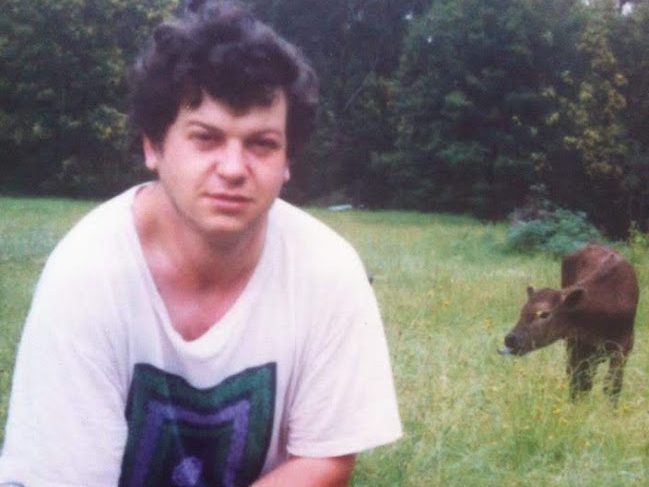
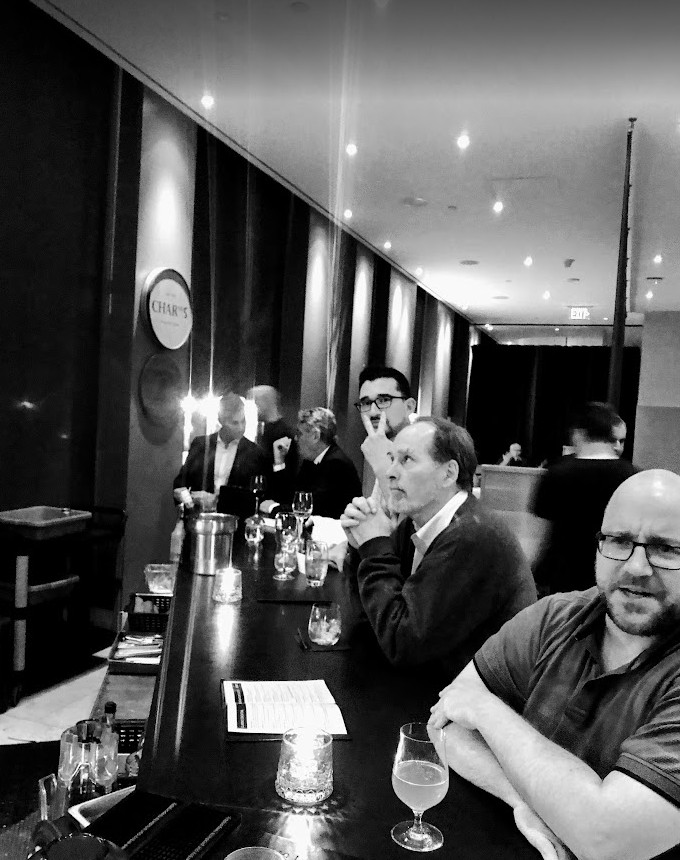
Eric and I have crossed paths in the past, he is a thinker and prodigious developer/advocate of accessibility practice and disability rights. I had the honour of spending an hour with him recently talking about disability, accessibility, politics, depression and religion amongst other things.
Transcript
Could be a pair of David Swallow underpants.
Oh, yeah.
Yeah.
Well, that's in the private collection.
I don't actually have that published, but I do have a private collection of of certain items that
It is for the more discerning collector.
Okay.
Roomy and as comfortable as the shirts, and you definitely didn't pay me to say this.
Moving swiftly on.
Okay.
So I've got a lot of questions.
If you feel uncomfortable about any question or you don't, you know, just say fuck off, basically.
And that will be fine.
That will be I will understand that you don't want to ask that question.
It's I mean, they're not overly personal, but you know, what we do and work and our lives, especially since we well, you do a lot of presenting and I present occasionally, but we're on social media.
And so people know things about us and we, you know,
convey certain aspects of our private lives publicly.
Yeah, yeah.
I mean, open book for better or for worse, just usually.
Okay.
So, see, this is what happens.
I just forget what I'm doing.
What I will do first, and this is, as I say, you don't have to pick from under each of the characters, but now share.
Now.
Let me know.
All right, I'm going to do it this way.
I can, I can quickly.
No, you're not supposed to see that.
Okay.
I don't think you saw it anyway.
And what makes it worse is that when I have the screen sharing on, it doesn't, I have to actually push a button in order to see my, see my taskbar, which is really annoying.
Okay.
So fine folks.
Yes.
So there we are.
So this is the, what we named is the Rogues Gallery.
It's just an aperitif to our further conversations.
So
First thing I ask, and it's not a competition, it doesn't really matter if you do or do not, but can you name the people on this Rogues Gallery?
Let's see.
So for the top left.
That individual is.
I don't know their face, so I'm not sure.
That is the that's how can you not know Dr.
Swallow's face?
I use it all the time.
That was that was him when he was in Austria on holiday or some something.
wearing an Austrian hat.
The next person.
That's Stuart Hay, if I'm not mistaken.
No, it's not.
That's he.
That's Ian Lloyd.
He does try to look a lot like Stuart Hay at certain times.
I don't know.
I don't know why.
I mean, I think he himself has a fine visage and he should just accept the fact.
But no, that's Ian Lloyd.
And that was taken at from CSUN 2024, I think.
The next person you can't not know.
No, that's.
Yeah, Patrick Lauke.
Well, the way I pronounce his name, I don't think it's correct, but I just always pronounce it that way.
And I say look, but it is Lauka or something or look or something.
That was from TPAC.
See, I've got I just got loads of photos, so it gives me an excuse to put photos up, especially of Dave and Pat
and also quite a few of Lloydy these days.
That was in TPAC 2024, I think, in, where was it?
In Seville.
Very nice.
Fancy.
I'm sure that you recognize the next person, but maybe you don't.
It's the good witch, Glenda.
Yes, yes.
Well, the goodness,
is debatable, but the whitch part?
No.
Sorry.
I always say these things about people, which is which run through.
Yeah, it is Glenda Sims.
And the next person, I honestly don't know.
And that's, that is Cynthia Shelley.
So when the when I release the interview, you'll be able to recognize it.
because you've got over an hour.
What about the second row, first person on the second row?
They look vaguely familiar, but I'm not sure.
I have that.
Okay.
The balance made that shirt.
That's a guy called James Craig, also known as James Craig.
Yeah, I know James Craig.
I just don't know what he looks like.
One of the giants of accessibility at Apple.
And the next person?
I don't know that person.
Now that is Ted.
I can't remember his second name.
It's, well, it evades me.
I do know it, but it's Ted.
And he works at Intuit.
He used to work at.
Ted Drake.
Ted Drake, exactly.
And he's very much involved in the CSUN organizing speakers for CSUN, stuff like that.
Yeah.
So that's Ted Drake.
Thank you.
The next person.
See, I know there's some, ringers in here.
Yeah, it's funny, just like, some of these people I don't know by face, but I know them by their writing.
So it's like, yeah.
That's Gerard, right?
Gerard Cohen, yes.
I've known Gerard for years now.
He used to work at Wells Fargo and TPG used to have Wells Fargo as a
customer.
And I met him through that.
But we always have a drink and stuff at CSUN and wherever I see him, which is usually at a conference.
And he's going to be a future participant or interviewee.
So there's something to look forward to.
He's a really nice guy, very including.
I've noticed he's been doing a number of
It's not like online training that he's been doing through some, some, yeah, I can't remember what the name of the organization is, but yeah, so I've noticed that.
Do you know the next person?
Is that Jenny?
I think.
No.
Okay, then I don't know.
It's, it is one of the owners.
I'll give you a clue.
It's, it's one of Glenda's bosses, big bosses.
Oh, my gosh.
I'm blind.
P.P.
PK, right?
Or?
Preeti, yeah, Preeti Kumar.
Yep, okay.
And I had a meeting with her about something or other at CSUN last year, and that was, I took that shot.
The next one?
That's Natalie.
Yeah, that's Natalie.
She's a future hot seater.
And
everybody knows this guy.
Nobody wants to know him, but everybody knows him.
I am cursed with the knowledge of RZA, recognizing that face.
That's Adrian.
Yeah, he looks very, like he looks very thoughtful there.
I would say more like he looks like he's trying to figure out how to beat you up.
Oh, maybe.
Yeah, he, well, that was at accessibility TO.
Sorry, access video conferencing in, where was it?
In Toronto.
That was last year.
But I used to work with Adrian in years gone by and we've remained firm friends ever since.
And yeah, he seems to have a, everybody seems to know him.
The next person, this is one of those people that you may not know.
This is killing me because this is somebody else I also recognize the face and it's, I don't know the name off the top of my head.
So please go ahead.
I mean, when his name first comes to me, it's Humberto Eco, but it's not, it's actually Joe Humbert.
Okay.
And he.
He's somebody else I used to work with that is involved in, he specializes in mobile accessibility with native applications.
And he is involved at the W3C with the development of the Mobile Accessibility Task Force, the work that he's doing.
So I've got a number of pictures on him because he likes
He likes some of the t-shirts that I made, especially ones involving Dr.
Swallow.
So don't ask me why, but he does.
They are publicly available is what about.
I mean, his check's clear, so it's all good.
Yes, exactly.
And then there, do you know the next person?
I can recognize him when I'm at him.
I've got to confess, the next three, their faces look familiar, but I don't know their names.
That's absolutely fine.
I didn't recognize, I was sitting next to this guy in the middle at the bar, and it's only because he started to talk that I realized who it was.
It's a guy called Ricky Onsman, who I've been in...
Yeah, for years and works at TPG and is an Australian guy.
I've known him for years and years, but I didn't recognize him in the flesh, so to speak.
So I subscribe to Ricky's RSS feed and I've definitely cooked meals he's put out for his recipes.
Oh, really?
He has good recipes too.
Yeah, I'm aware of his recipes, but I know he's one of the people at TPG that I enjoy his articles.
And one of the things I liked about the TPGI blog
was that it had good technical articles and it wasn't, well, originally the TPG blog was just technical stuff and then it bifurcated and there's a marketing blog and there's a technical blog, but I really, and the technical blog is still that.
And so you've got good people writing good, insightful information sharing with
with the community, which is what we like.
And Ricky is one of those people that does it.
Then, so this is not a particularly good photo.
This was, we were at CSUN, the one I'm talking about now, this is Sarah Horton.
And yeah, you probably know her name because she's written a number of books.
Yeah, just incredible writer.
Anything she puts out, I'm there.
Well, that's that's Sarah Horton again.
We used to work together for years at TPG I think she works at some university now, but she got married.
I think they got married.
Maybe they did.
But anyway, her partner is David Sloan.
who I also used to work with and works TPG.
That picture was actually from a, we were at a reception.
I hate to say this now, but it was a, well, I don't hate to say it, but because it was a audio eye reception at CSUN.
I mean, essentially it was a drinks in Mike's room.
So we were there and
For some reason, I've got pictures of it to prove it, but she was wearing David Swallow's shoes at some point and dancing in his shoes.
These shoes are huge.
I've also got pictures of him trying to put on her shoes, which are about four sizes, too small.
It was an interesting night.
This was the same night Lloydi was there and
he'd had a few and he fell over and like just mashed his face into the I it was it was high up.
It was like it was on the 20th floor or something.
And I was concerned because the window, the door was open onto the balcony.
I was concerned he was going to go out and and topple over, but he didn't.
But it was.
Yeah.
Anyway, so that's Sarah and the last person
is actually probably most people don't know him.
That is a guy called Shane Paciello, son of Mike Paciello.
Shane works for Level Access or something.
He's a project manager.
He used to be a project manager at TPG and I really enjoy his company.
And so, and I saw that photo, I thought, I'll add Shane because it helps with my memory of these things.
So
We have a mixed bag of people there that you know and don't know.
But, you know, this is, well, I would say the, I would say there's a cross section of people that are involved in accessibility, but also it's,
Yeah, I noticed there's a lot of blokes involved in accessibility.
There was also a fair amount of women, but also basically white blokes like you and I, except that you were younger and better looking than I.
But flattery gets you everywhere, Steve.
Yeah.
So anyway, so I will, let's get to the meat of it now.
Once we, this was like the icebreaker.
Hopefully you're feeling comfortable.
stop that sharing and we're back to you and I.
And what happened before was that I accidentally flashed my questions.
But anyway, we can we can start.
So I'm not going to show you the questions because that's part of it.
So the mystery.
Yeah, I didn't.
Part of the magic of being an interviewer.
So
Eric, what the fuck is going on in your country?
Yeah, well, we're in the like, I think the twilight years of a late capital imperialist system and the assholes have climbed over the walls and installed themselves in power.
And yeah, you're looking at probably the death of the American Empire.
Yeah, I have that feeling myself, but I'm very much an audience member, I'm sure a lot of the people in the US are audience in that it may not, affect them in their local area, for example, but it's affecting lots of people around them.
And then there's those people that actually live in the places where, yeah, it's
Yeah, unfortunately, the last however many years has made America's business a lot of people's business.
And unfortunately, I think we're reaping what we sow here.
Yeah.
So how has it affected you personally as in, you know, the, I mean, where you live?
Are there, is there ice raids, et cetera, or is it just more that you live?
that it's happening to friends and people that you don't know.
Yeah, I live in a very progressive area.
Despite that, there have been ICE raids, notable like a kidnapping of a student from one of the universities nearby.
And that was towards the beginning of this nightmare.
They're continuing.
There's some pretty good response networks in place.
But we are
I live in Massachusetts in the United States.
You're typically one of the targets of the current administration's ire because we tend to put up resistance to the current illegal and oftentimes unconstitutional mandates.
And so that's great.
I love that our politicians, for the most part, are actually doing what we need them to do.
We're starting to
develop kind of more local response networks on the state level, including creating an alternate network to the CDC, which has been compromised.
The mayor of Boston, Michelle, is amazing in terms of that.
So it's one of those things.
I don't like the snow, but I love where I live.
That's what, so you live in Boston?
Just outside of Boston.
Because that's where Sarah Horton and David Sloan live.
Oh, I should hit them up.
Yeah.
I'm pretty sure they do because they live in some sort of like, I can't remember the name, but some suburb that sounds, you know, sort of cool.
And yeah, so anyway, yes.
So how has this affected you personally?
I mean,
You know what?
I'm incredibly depressed, honestly.
Like, yeah.
I was raised Jewish.
And so part of that is like a very thorough education on how fascism comes to rise and leads to things like ethnic cleansings.
And history does not repeat, but it sure as fuck rhymes.
And, you know,
The fact that everybody has like low-key capitulated to a monstrous bully when it's like history has proven the exact thing you want to do is defy them and not grant them this kind of power.
Yeah.
Drives me up the wall.
I'm.
often times just screaming at my inability to affect change on a level that would change this.
And how has this affected your personal life?
I mean, as I understand it, you're in a relationship and think that you don't have children,
you?
I've got a dog.
But that's yeah, that's more that's problem enough.
Yeah, I'm not advocating that you have children, but it makes life more complicated with children.
Somebody was Pat was talking about this is not online, but was was chatting to me the other day about the
that his son was involved in a in a presentation or, you know, thing at school where they were talking about AI.
And but it was all very positive.
You know, they had a very positive spin on, you know, the the future and AI.
And I was just thinking.
Well, well.
Obviously that doesn't gel with what my feelings are about it, my understanding, but also for kids.
I was just thinking, well, you can't tell them the truth.
You can't tell them your truth anyway.
You can't tell them that, you know, AI absolutely sucks and it sucks, you know, huge dogs balls all over the place.
And it's and it's not a force for good.
But
If you tell me, you know, you don't want to, you know, sort of you don't want to sort of like make them lose all hope in life.
Yeah.
Yeah.
It's one of those things where it's like if you want to foster like curiosity in a way that's like, I guess you as a parent would seem like
Positive, I don't know, like I feel a little uncomfortable 'cause it's well out of my area of expertise, but like you can leave a little, leave a little breadcrumbs, yeah, to for them to follow.
Everything's outside my area of expertise, so don't worry about it.
Yeah, You thought about accessibility, didn't you?
Well, so my partner's a teacher and we talk about this a lot or this kind of thing where it's like there's a certain degree as like an authoritative figure over children where you
you're in for a penny and for a pound.
Like you're going to instruct them on how to like navigate through the world, whether you like it or not.
So like, how can you equip them to succeed?
And part of that is like, yeah, it's the same thing that like journalists struggle with for no good reason, which is like the myth of impartiality, which is like,
What is that?
There's no such thing.
They don't seem to struggle much in the States with that.
Well, they don't struggle over here with much or either.
I'm going to pick up my dog who is whining one second.
Yeah, yeah, for sure.
So she's very needy when it's winter and she's cold.
Where is she?
This is chicken.
Hey, chicken.
What time is she?
Cavapoo?
Yep.
Havanese poodle.
She's tragically shortened to have a poo, which all right.
Yep.
She's a rescue, like 3 and change.
Yeah.
We paid like 800 quid for our dog.
This was 2018.
But she's had so much illness that it's just, yeah.
The cost to us is dwarfed.
But she part of the family, so we have to
We don't have to, but we want to look after her and keep her happy and well as she possibly can.
I mean, I love dogs.
I often say this and I'll say it again, dogs are the best people.
Yeah, no, I'm like, you say, how's my mental health?
Like one of the, she's a, she's a load bearing part of my support structure.
Yeah, yeah, exactly.
I know what you mean.
I mean, I just, I, because as I said, was saying to you earlier that my dog Lola's been ill of late and it just really affect like the thought of her being so ill and worrying about her passing away.
It just really got me down.
I mean, it got us all down, got my wife down too.
The kids, yeah.
live on a different planet, I think.
But there's still, but it's just, it was just so depressing.
So I was so happy that once that she was able, because she just likes to go to the park and run around and be an idiot, just like she's got a pea brain, I'm sure.
But what is in that pea is a lot of love.
Yeah, it's great to get you out of your own head, like a little green area where I live and like, same thing, like just taking her there to smell and romp around is such a good antidote to like doom scrolling on my phone.
Yeah.
You know, marinating in the things I already know that are bad.
Yeah, exactly.
I mean, again, yeah, to be honest, I wouldn't like to be anybody in the States at the moment.
Even those people that have a comparatively sheltered life compared to the others, but I just...
of shit that you see on, you know, people being, people being disappeared, you know, just people being abused and for sport, which is essentially what it seems to be about.
Yeah, the cruelty is the point.
Performative.
Yeah.
Performative cruelty.
Now, okay, we'll moving swiftly on from there because
Yeah, unfortunately, I tend to ask depressing questions, so I'm sorry.
No, it's refreshing because like another thing that feeds the depression is like, you wouldn't know the fuck this is going on at like at work and spend 40 to 60, let's be real, it's the US 60 hours plus at work and like you wouldn't think any of this shit is going on.
Everyone likes to.
talk about with your colleagues or it's just not?
Oh, I talk about it with my colleagues, but like, you know, the civility politics of it all is just infuriating.
It's like you're just pretending like everyone isn't living, you know, depressed and terrified.
Or if, yeah, God help you.
Yeah, you, you know, soldier on.
It's like the English saying about the stiff upper lip.
Yeah.
Regardless of what the fuck, you know, is.
And it's like that meme that we always see about, you know, the person, well, the animal sitting there drinking their morning coffee and saying, you know, everything's fine and places burning around them.
Yeah, it's that idea.
So I'll move on to the next question, which is lived experience.
How do you view your own intersection with disability?
Yeah.
That's a good question.
I feel more confident with.
Yeah, it's changed throughout the years.
Like I started.
And I think like as a preface, like we live in a deeply ableist and eugenicist culture.
And so like with that, you're kind of.
born into thinking usually like you don't really question your disabled identity unless you're made to.
And like one really good thing about kind of like reading up more about disability justice and that kind of space is like exactly how to untangle those views.
And so like originally I kind of was like, well, I don't really identify as disabled.
And then like one of the first kind of instructive moments is like,
you'll wear glasses there, buddy, which is, kind of the shallow end of the pool, but it's like, that's become so normalized that we don't question it, where like, I take these off, I legally can't drive.
Yeah.
And, you know, QED.
And then, like, I talked about it in my Accessibility Toronto talk, where kind of recently...
I've done a lot of soul searching and like there's a lot of traits there that are like present that are on the like neurodivergent end of things.
I haven't done the official like evaluations because I'm terrified of the current CDC.
You haven't got the diagnosis.
Yeah, because I think that'll put me on a list which will throw me in a camp if things don't go pear-shaped.
Yeah, I'll probably with your output, they'll probably
Put you in the cab anyway.
Any independent thinker of any type will be scooped up.
So.
Yeah.
But yeah, it's just I think having that framework to sort of question those sorts of things and because I think a little bit of that might have been just like some subconscious denial.
But like, I think it's pretty clear at this point, you know, one thing I don't mind chatting about is like, I definitely have aphantasia.
And I choose.
Like the inability to form mental pictures.
So like.
I thought somebody else who's got that.
Yeah.
I always thought it was like a narrative conceit, but I'm like, it's like, oh yeah, no, like I don't have like these vivid imaginative, you know, daydream sequences.
People just do that.
And like, you know, if I want to like conjure the mental picture of an apple, say like that takes work, that takes focus.
And like it's very like.
transient, like if I don't maintain that concentration, like it just kind of fades to black.
And that's just how I've always been.
I just never really stopped to question if that was like, you know, not the norm.
So you see that as a disability?
I think it's gets into, it's definitely a neurodivergent trait.
Yeah.
But again, is neurodiversion necessarily a disability?
I don't know.
I mean, it's...
I think it's under the larger umbrella of like a disability.
Umbrella, yeah.
It definitely does create barriers.
I mean, one of my daughters has ADHD and is autistic.
And I definitely see that as being problematic for
Her at certain times in her life, because...
with just the way that she interacts with people.
Yeah.
Yeah.
And I definitely like there's some other tells in that kind of camp as well.
But like the flip of it is like, I think a lot of where I am and who I am is kind of leaning into those traits as well.
Yeah.
It's a double edged sword for sure.
But I don't know.
I recently got diagnosed with diabetes.
That's definitely a disability, but like, what sort of diabetes do you have?
Type two?
Yeah, I recently got diagnosed with type two diabetes.
High five.
You got the little machine?
No.
What little machine?
I haven't got any, like, I don't need, it's, you know, age-related.
And at this stage, I'm not, I don't need to take any medication.
I've just, they put me into some support group and it's got a app with it.
And what I'm trying to do is lose weight by changing my diet and continue to do light regular exercise.
Yeah, I have a continual glucose monitor, CGM.
It's like a little.
little bug that lives on your arm and it just has a little needle that samples your blood sugar level and makes your phone scream at you if you eat too much cake.
Oh, really?
So it helps you to moderate what your intake.
So you don't have to have, you don't have to take insulin or anything for you.
Yeah, no, thank God I don't have to inject insulin right now, knock on wood.
Because like that's another whole mess in the States, which is like our private health care.
Yeah, yeah, we talked about, I've talked about that with both Cynthia and Crystal, because yeah, it's just that's something that's alien to me because I've always lived in a country that has universal health care.
Well, you know, I started off living in Australia and in the UK and it's just, you know, in Europe, it's
some form of universal health care.
It's not exactly the same.
Some of it is, you know, managed insurance.
But yeah, nobody goes broke from health care.
Yeah.
Like it's one of those things where it's like people refusing an ambulance because it would put them irreparably in debt.
Like we as a society should have stopped and said, all right, some people need to go to jail.
Like, yeah, well, it's just that it's just something that that
I'm not anti, you know, capitalist in in the sense, but some things just shouldn't be run for a profit motive.
Health being one of them.
Education being another government being another that, you know, it's, yeah, it's definitely a slippery slope.
What was I going to say?
So
I know you've had mental health issues.
I mean, I have suffered from myself from depression for most of my adult life and I take medication for it.
I've made, you know, no secret of that.
I don't know whether I see it, you know, in terms of disability, it's just something that makes me me.
Yeah.
Yeah, I was going to say like a lot of the things that I like kind of consider under that larger disability umbrella, like we don't kind of consider the classic kind of forms of disability.
Like I'm not in a wheelchair.
Yeah.
I have what you are, what you see.
I have low vision, but like not to the point where it impedes, you know, my day-to-day.
Yeah, those are kind of the classic archetypes, but like.
Yeah, I have depression as well.
I manage it with medication as well as therapy.
I did therapy, but I haven't.
I'll tell you what made a big difference for me was that all getting older seems to be things that seem because I used to have really bad anxiety all the time as well.
Occasionally I had to take, well, I take anxiolytics, antidepressant medication, but I used to have to also
top it up with some Valium or some, diazepin type things on occasion because it was so the anxiety was so bad.
But that hasn't happened to me in the last couple of years, which is great.
That's awesome.
Yeah.
Like, and that's the other end of it is like, I, I firmly believe in destigmatizing it about talking about it.
And like, that's another generational notions around disability, which is like,
we've gone from, gosh, Homer just had an article with the name for it.
But basically like, you sequester your weird aunt away because they're, not like us.
And that's generally shifted to like understanding what the heck is going on.
And the only way that really changes is if we like collectively kind of talk about it.
And so like we have more shared support.
Yeah, and normalize it, I suppose, or just, or bring it,
Three.
It is probably a better word than normalize.
Yeah.
I mean, I don't, you know, I don't wear on my sleeve, so to speak, but I, you know, I do.
I don't hide it because I know that there's lots of other people that are in this situation.
So yeah, I can't like more than I have fingers and toes like people I've talked to that I've like worked with or friends with that like
didn't feel comfortable talking about it.
So like messaged me on the side and like, yeah, getting rid of that stigma, I think is really big.
Yeah, well, one of the ways I tried to do that was that, well, as well as just mentioning it in, you know, I created a shirt with with sertraline on it with a pill, you know, 50 milligram, 100 milligram.
And the number of I got quite a few people that I knew
you know, sort of responding, saying that's great.
And what, you know, they themselves take that because I don't, especially with mental health, there's a lot of stigma about actually taking medication.
And I say, well, look, you know, because I was at the point 30 years ago, I was at the point where
I was feeling so bad and my life was just so shit that I either had a choice.
I was on this anti-depressant, which didn't really help during my 20s.
And then I was just getting worse and worse and worse.
I felt so bad, like I couldn't get up with, stand up without having severe anxiety.
And so I thought, I'm either something's going to change or I'm going to top myself.
And I went and saw the doctor and he said, try these.
And which was at this time was a new class of drugs or a newly available class of drugs in Australia sertraline.
And from the moment I took them, not the moment from the, you know, I woke up the next day after first taking them and I just felt better.
I just thought, I didn't feel, you know, like happy.
But I feel able to cope with my existence.
Yeah, I fought getting a prescription for a really long time.
Like I was like, I think this is something I can work through with therapy.
And my two thoughts here.
One, the quality of therapists are unfortunately unevenly distributed.
And I think that fortunately some really good advice somebody told me, which is like, if it's not working,
Fire your therapist.
It's nothing personal.
You have nothing to prove to them.
It's just business.
And find a better one if you have that privilege or the ability to.
Oh, yeah, definitely.
I mean, you're paying them.
You know, if they're not providing a good service, then you tell them the bugger off and find somebody else.
I mean, I think that talking therapy is, or therapy in general, is an important part of helping you to, you know, to
refocus how you're feeling about yourself and et cetera.
But yeah, I don't think I could have done it without the drugs.
Yeah, and that's the thing is like the better therapist I found, like eventually was like candid.
And they're like, I think we've reached a point where like you need chemical intervention.
And you know, I talk a lot about like that disabled identity in the abstract, but like
I was holding on to this like really rigid idea of self, which is like, I alone can like mentally force my way through this sort of thing.
And like I had a lot of hesitancy around taking on a prescription to deal with like the depression and the anxiety.
And like she led me to a framework that's a little bit more adaptive, which
dovetails quite nicely into like a larger disabled identity conversation of like, what is me?
You know, why do I draw these artificial lines?
Why am I so afraid of these things?
Can I interrogate that?
And same as you, like, you know, we started on a low dose, but like it just evened things out a little bit more than a lot of it.
Yeah, gave me a fighting chance.
That's what it did, you know, gave me the opportunity to have some perspective, whereas
before I was living this fucking nightmare that never went away.
And I was able to step back from that a bit.
Yeah.
As I say, I mean, it didn't, you know, I still had anxiety and still suffered depression, but over the years and before that, and along with that, I also saw a psychiatrist and therapist and things like that.
But I haven't for years.
Which you can probably tell that's what turned into some sort of mad old goat or something.
But anyways.
Another thing they don't tell you is like, sometimes it's just a sometimes thing.
Like, people see therapists for a little bit to work through something.
Sometimes they see them for their entire life.
It depends on your need.
But like, we just don't collectively talk about this shit.
And it like drives me up the wall.
It's like.
Oh, well, we're talking about it now, though.
Yeah, Like you go to a dentist if your tooth hurts, you know, you go.
see a proctologist if your ass hurts, like, Yeah, I've done both.
Yeah, so I'm very experienced in my life.
Yeah,
Yeah, like that's another layer to it, which is like, especially if you come up, I think, in like computer science, like you're made to believe that your brain, like your body is this like little like mech suit for your brain, which is like this perfect
platonic ideal of cognition and beautiful ideas flow forth into the world and you just happen to have to walk around and live in a body and eat food to keep it going.
The real truth is like the brain-body connection is very fucking real and like you're as much a product of like your physical body as much as you are like the thoughts and like turns out, oops, they're interrelated.
And so like, you know, again, like it's part of that stigma, I think, around like,
You know, your body is a part of you for better, for worse, and you got to live in it.
And so like, I guarantee you, if you have a hemorrhoid and you're suffering the pain of it, you're going to be a completely different person until you get those symptoms addressed.
So yeah, definitely, definitely.
Yeah.
I was going to say, I'll cut that bit out, but fuck it, I won't.
It's just part of the conversation.
Moving safely on yet again.
How has your work life been affected by the war on woke?
As in, you know, anti-DEI, just the whole thing about, you know, in the States especially, but also in other places.
Yeah.
Sort of deprioritizing accessibility or disability related issues, deprioritizing any issues not really related to
Adult white men.
Yeah, yeah.
There's definitely been effects.
You know, your classic like, let's rebrand this and not talk about it directly.
I've seen that come down the pike through how we talk about certain things.
Microsoft.
which is our parent company, 86ed their annual diversity reports, which is, I feel, cowardly.
And you think that this was a direct result of the change in political, climate, government, whatever?
Oh, undoubtedly.
Thank God the European Accessibility Act exists because we do business and turns out, you know,
I was, yeah, I was talking to Cynthia about that, but, you know, just like the carrot versus the stick with accessibility and people sort of, you know, some people will say, oh, you know, they didn't like the idea of having laws around or having it codified.
I think it's great because it actually does make people sit up and listen and make people actually do things more than people make
like, you know, organizations, companies take it seriously.
Yeah, I think it's, you know, it's one of those things where to me the value has always been intrinsic, but turns out at a certain point, and I know you know this, like you need to appeal to a higher authority, which is usually law.
And it sucks if you wind up there, but like at the same time,
these laws exist for a reason, and that's because a lot of people who have a direct quality of life impact for the lack of accessibility spent their precious time on this planet pushing said laws.
So they exist for a reason, and I'm here as a result of that.
Yeah, I'd be good.
Yeah.
I mean, as I say, I mean, I'm totally comfortable with laws and I actually appreciate them because they actually
do codify things within practice, you know, and and and make it part of the a business process whereby the business has to think about this, because otherwise they'll get fined by the by their, you know.
the particular state that they work in, or by the European state in this case.
I mean.
it's it's it's not at the same level of litigation or or you know.
that has occurred in the States because it seems like the way everybody does things, they sue each other.
Yeah.
But still, I have been hearing from certain customers that, you know, they're getting, they have to respond to certain things that the government is already or individuals based upon the framework and the framework of actually, you know,
come to them and said, this isn't working.
And they set up and take notice because they, because of the laws.
Yeah, I mean, I think a lot about like, the web and I think a lot of accessibility work is like inherently anti-capitalist and like, so we've tried to contort it into being like a vehicle to do a capitalism.
And so like, I think that's one of the reasons why we, what we do is in the margins.
And it's interesting when you think about it as like infrastructure where if you find a architect and you explain how the web is built to somebody like who can go to jail for building a building that kills people, like the way we build the web is so flimsy and crap.
Like if these were houses, they'd be collapsing on people on the left and right.
Yeah.
It's like without that regulation,
There just honestly isn't a lot of reason for a profit motivated organization to give a shit.
Yeah, yes, yes.
I, yeah.
I used a recently used a one of these apps for getting food delivered.
And well, it's actually my daughter was using it.
She made an order, immediately realized that it was going to the wrong place.
Yeah.
Yeah.
Can't change it.
I mean, I'm talking about instantly realized, oh, it's going to the wrong place.
Weren't allowed to change it.
So then that cost me 30 quid.
Yep.
Because food was delivered at 11:00 tonight somewhere that didn't and they couldn't.
The number of times, my buddy across town has gotten like some Thai food that he can't even eat.
I'm just like, sorry, man.
It's just, it's, yeah, it's just like, I don't, that is just poor user, you know, it's poor usability on the part of the app, but they, and their processes, they didn't seem to give a shit about it.
Yeah, okay.
because it won't stop me using it, but it will mean that I spend money that I don't necessarily need to.
Anyway, yeah, going back to me again.
See, I it's just this is just a vehicle for me to rave.
That's all.
Okay.
Next question.
It's I'm talking still about depression, anxiety, I think.
Do you think
Depression, anxiety, ADHD, et cetera, is more prevalent in accessibility workers.
I don't know.
I think like a lot of it, I think is kind of parallel to the like autism conversations writ large where it's like, I don't know if it's an uptick in
its prevalence as much as it is we as a society have better mechanisms for talking about it and identifying it.
So like I do think there are more people in accessibility who have a personal connection to it.
That might be through ADHD and depression and anxiety, but I also think like we're probably net a little bit more equipped to talk about it than
other folks, especially in a professional context, like there's still a lot of danger in saying like, I have depression at work where suddenly like HR is taking a real close look at you.
Yeah, yeah.
Well, yeah, that's one of the, yes, in general, when I'm, when I was at TPG, my boss, you know, Mike and Debs and Charlie knew about my struggles.
I didn't mention them once the TPG got bought by Vispero.
I just, but now I'm part owner of a company, so it doesn't, it's really is that how I treat the people that work for us.
I work with, you know.
Well, like I see you and I raise you here where it's like, I think like depression and like
attention issues are double-edged swords where it's like, a lot of, I think a lot of my like depression also opens the door to thinking critically about things because, and that's really good if you work in software because you think about failure paths, you think about non-ideal situations, you think about like how could this be abused or misused.
And so for like somebody like me that like has to build a lot of things that
I don't get to revisit and also get distributed at a global scale by like an unknown amount of people with an unknown amount of like things they need to do.
That really is helpful for thinking through like exactly how can I make this as self-sufficient as possible in a way that like is accessible to the people that need it, but also serves the needs of like designers that just want to put a table on a website, you know, and not think too hard about it.
Yeah.
And the ADHD thing, like, I don't know, jury's out, but I, since I can't visualize things, I think in related concepts a lot.
And so I didn't realize this until way too late in the game, which is like, those logical leaps may not occur to everyone around me.
And so one of the coping mechanisms I've cultivated is like explaining it.
And I'll say like, the connecting thought here is A to B.
I'm like, that's great for conversations with people when we're like talking about what should we get for dinner and I suddenly start talking about like, I don't know, helicopters.
But like, it's also helpful when you work in systems, which like surprise, all of the web is just systems all the way down.
So like, you know, it giveth and it taketh away.
Yeah.
no, I mean, I'd ask that question myself.
I was asking that question because and I think that that your answer is right.
I think that there's more there's more opportunity to be able to talk about those, you know, mental health, physical health, whatever in the accessibility space.
Yeah.
I don't think that necessarily I suppose.
Well, I was trying to understand whether the actual the job, you know, is killing us or is it, you know.
Yeah, it's not.
It's not helping.
No, no, you got to.
I mean, that's another thing I talked about in that talk, which is like, you got to really, like, cultivate some strategies to, like, focus.
on how to take care of yourself before you can take care of somebody else.
Because for people like us, this job will take and take and take and take and take.
Yeah.
And you need to figure out where that line is.
And like, having crossed that line, like you can give too much of yourself and then there's nothing left to give.
And so like, it's not selfish as much as it is like sustainable.
And like, I know I'm speaking in really general abstracts, but it's like,
The web never stops.
The work never stops.
So that's, yeah, that is the thing.
That's one of the things I realized in doing the stewardship of specifications at W3C is to think that you're going to be an editor for life or anything.
It just doesn't work.
I mean, the specifications live on, like HTML lives on
past my direct involvement in it, lives on past, you know, Ian Hickson, who was the great, you know, sort of changer of the way HTML was developed.
But he saw himself as, you know, editor for life or that's how he, you know, and he's, he burned out, I think, and just disappeared.
Yeah, and that's, even on a good trajectory, your average tenure in tech is like 3, two to three years at a place, which is ridiculous.
But say I got hit by a bus tomorrow, like, how is my
place of employment going to sustain these practices without me?
Like it's a savior complex and that sucks.
Like, you know, fuck that.
Yeah, definitely.
I think we have time.
We've been speaking for just over an hour, but we have time for one more question.
Do it, buddy.
Get weird.
Does spirituality religion play a part in your work?
Damn, Steve.
Well, I'm interested in that because, I mean, myself, I don't have a, I don't, I'm not religious.
Yeah.
But definitely my politics does play a part in my work.
But, you know, I just, yeah, I'm just interested because also I've just, I've worked with people that I were, that were highly religious.
And I just see how it's affected their outlook or not affected the way that they, you know, act and towards other people.
Yeah.
Okay.
Well, you know, speaking of savior complexes, so like, I'm not religious.
I said I was raised Jewish, but I don't practice.
I think.
there's different motivating factors for coming into this kind of work.
But also, if you look at the history of disability and religion, I think, unfortunately, the no-no word of saviorism pops up a lot, which has definitely altered the course of
how we as a society talk about disability.
And so I'm always a little nervous about that because like, there's a direct line between, institutionalization and religion and like, speaking for an individual and what their needs are compared to letting the individual self, advocate.
And everyone's on a spectrum, but it's like, there's a world of difference between, you know, somebody who
just by virtue of accident of birth, can't see versus somebody who may have a lot more, what I would constitute as like severe needs.
And so people coming into the work through the model of a savior mindset always make me ambiently a little nervous.
in the same breath, I do know people who are religious, who do work in accessibility, and they're lovely, beautiful, wonderful human beings.
It's just like...
Oh yeah, so yeah, so do I.
But what my experience has been that certain people that with that I actually don't think that conservative Christianity or conservative any religion that has any place or is helpful in any way to the
cause of supporting or increasing disability or decreasing the effects of disability, to be honest.
But that's my way.
But then again, I had a boss for 15 years that was of a Christian church that I always thought was
really fucked.
And I still think they're fucked.
I mean, I don't have, but that person always acted with integrity.
I didn't even know that person was in the church until a third person happened to mention it after five years of working with the person.
And I've seen the person accept, you know, sort of people that are professed themselves as Satanists.
I think it was a bit tongue in cheek, but that was Haydon Pickering, as was said that he was.
Yeah.
Yeah.
But.
Yeah, like, I mean, I guess it's like, you know, I promised you an overlay reference here, but it's like, it's the same shit, like who is getting centered and why?
And like, if it's centering somebody who is not disabled as an attempt to try to
fix them.
Like I'm immediately like, let's suss as fuck.
So.
Yeah.
it's, I suppose what I'm trying to convey is that people can have their religious beliefs, but they can still support a humanist sort of philosophy.
And they could still, people who have a religious belief, but then don't immediately make it their whole personality.
It's a lot of them and that's great, but they still look, they can still experience and get on with people many different types.
But where I've found it to be a problem is that the person, it's obviously people who have, this is like, well, I was going to say it's like racism.
But it's not because...
Like you can, I don't think any form of racism can actually have any positivity to it, but some forms of religion, you know, some form of religious belief can.
Yeah.
But, you know, I find that certain people, it's the same thing.
I just cannot understand why, how a person could be a racist, but then also be interested in supporting accessibility.
Yeah.
Developing accessibility and you know.
Like people contain multitudes and sometimes, sometimes not that that's not the greatest thing, but yeah, I'm right there with you or I'm like, how did you wind up here?
Yeah, yeah.
It was just that I, I made, sorry, I did some social media, but I think it was on LinkedIn and I was talking about AI because we, I've talked to, I haven't talked about AI with you, but I've talked about with other people, but
I did this post and then somebody reposted it with the statement that, I'm sure that they're trying to help us with these tools by creating.
This is about accessory testing.
And to think that somebody is actually, I don't think they're doing it for a good motive.
I don't think companies, companies are doing it for a profit motive, whether they, you know,
If it can have some, if the product could actually do something that it says it does, then that's a selling point.
It's not about accessibility or disability, it's about making money.
And it doesn't really matter what the product is.
That's it, whether it's accessibility testing product or whatever it is, it's about what,
What is the potential of that product to enrich the shareholders, which is unfortunate?
Yeah, I think like, I mean, there's definitely a world where you can have a business that's motivated by profit that puts something out into the world that like genuinely helps.
It's like, and I know, you know, like when we're in our like, I know it's such a buzzword, but like in shitified, like late capital era where like,
there is a disconnect between the service you produce and the profit that comes in.
That's when things get really screwy because like you've basically abandoned the reason you exist in the 1st place.
And like we're seeing it all over the board.
I think like the Campbell's soup thing being the most recent example of that, which is like, at the end of the day, you make soup, you probably should care about the people that consume your soup.
And Sorry, I'm unaware of what happened with Campbell's soup.
Oh, just.
Random exec went on this like racist, like irate about the people that consumed his product.
And it's like, really, you know, talk about biting the hand that feeds you, man.
Yeah, exactly.
And just, yeah.
And it's just because like these concerns are now so abstract that like you forget at the end of the day, like you make soup, people drink, you know, people eat soup.
Yeah.
Well, it's just, I mean, the narrative, the
the so-called Overton window for what's accessible speech has widened massively in the states of late, isn't it?
So I mean, it's widened here as well, but not to the extent, like it's not actually glorified, you know, we don't have the government putting out ads, you know, sort of glorifying the rounding up of people and the deporting of people illegally and all these sort of things.
Well, I mean, you talk about, you know, you mentioned earlier, like,
white dudes and accessibility and like, hi, I'm one of them.
Like, never underestimate the power of as a tall white dude just saying, why would you say something like that?
Like, I've popped that off in real life a few times and like, it stops that shit cold and dead.
Yeah.
Well, yeah, I mean, it's, I definitely think that the onus is upon those of us with more privilege to call out that shit.
Yeah.
And like, obviously.
be safe about that.
Like don't universally apply to every situation you're in.
Like if you're a dive bar where you don't know anybody versus like maybe on the train.
I mean, I've, you know, talked, I've drank in lots of bars during my life and been there, but I've managed so far not to, I've been in one fight during my adult life and it wasn't really a big fight.
So yeah, you really, you need to know when to
when to hold your words back for sure.
But in certain circumstances, I think, yeah.
And wherever you can make a statement about something to then you should.
Yeah.
So you were talking about your talk and I really enjoyed
your talk at a11yTO.
It was definitely the highlight of a11yTO for me, which is surprising because I don't normally sit through a lot, but I sit through the whole of your talk.
I mean, you did mention me, which was nice, but that was a small part of the whole thing.
But what, and I've said this to other people as well, I think I said it to Crystal, that one of the things that I got from your talk, which I hadn't understood was about burnout and how it can affect people, accessibly people more.
And the reason why I hadn't picked it up before was because I've never been in the situation where I've been the only accessibility person in the room or, you know, I've always worked for organizations that help organizations, you know, that provide services.
So I've always been surrounded by other people that are involved in accessibility.
Yeah.
Yeah.
And like, I mean, like in my current setup, like I have peers that.
Yeah.
And that's rare.
But it's also like, you know, just going to the doctor's.
Oh, yeah.
Yeah.
Hope they're.
Yeah.
Like I come from.
Yeah, I come from a consulting background too.
And like, that definitely changes how you interact with folks where like, usually just say, go do this.
All right, bye.
And like, you're too expensive for them to like, ignore you.
Yeah.
Yeah.
Well, that that is like, you know,
being paid for a service is a positive thing because it means that the people that pays see a certain value in what the service you're providing, the information you're providing.
So I just wanted to thank you for that talk because I really enjoyed it.
Thanks for watching.
One of the things that I came away from that was, well, it's been appreciation of the what burnout can do, but also that I just realized, well, I realized, I see you as a web existentialist.
So, you know, like you just have that, you know, like
Existential as in Sartre and.
Yeah, it's going right on the business card there.
Yeah, but you do because it just, because you, that talk that you gave that had a lot of, obviously a lot of thought into it and you, and the sort of references and the sources that you, that were really well thought out as well as it looked good because my presentation is always sort of shit.
So I appreciated seeing someone that can do it professionally.
But yeah, it was, as I say, it was honestly, it was, I'm not, no, I've got, I'm going to be speaking to Doug later, but I can't say that he's, I enjoyed seeing Doug because, Doug Schepers, because I just think he's a real character.
And also I appreciate the fact that, you know, all the work you do on SVG, but
It it really made me a bit of a Eric Bailey fan.
Oh, buddy.
Big fanny.
But there's many other questions I could ask you.
But as as usual, time is was actually we've been going for an hour and a half.
So I think that's more than enough of definitely more than enough of me, probably enough of you at this point in time.
And
If you're willing, we'll have you back again to talk about something later on if I can.
I've always said, because it just takes such a lot of effort for me to actually do the post-production.
Hopefully this will be better.
That's why I got rid of all that because it was just causing me conniptions.
But as I said, thank you for talking with me about these various subjects and hopefully
you had an enjoyable time.
Oh my gosh, highlight of my week.
Thanks for giving me the chance to, you know.
It's funny because I think you and I, I don't know, we don't know each other very well.
And I think I got to know you a bit better at a11yTO, but I think that both of us had different preconceptions about the other person.
So
And I think that those, you know, through actually talking and it wasn't negative preconceptions, just preconceptions about what who the person is, you know, from limited understanding.
So I appreciate the opportunity to get to know you a bit better.
Same buddy.
All right.
Well, I'll yeah, as I said, I'll send you the details of this and you can look at it in your own time and
Come back to me and if you want to cut.
Unfortunately, you can't kind of cut out anything that I say, but it'll just be me.
If I had my way, it'll just be me.
Well, they cut out your hemorrhoids.
So like, what else can I cut?
Yeah, exactly.
Oh, God, yeah.
I don't know how that came.
It just reminds me.
I had a wonderful time when I lived in.
I lived in Chippendale, this suburb of inner city suburb of Sydney, which, which is where the university was.
Yeah.
But yeah, I had a wonderful time, but that was many, many years ago now.
So anyway, Eric, thank you again.
And what's your dog's name?
Chicken.
Chicken.
You want to know her full name?
Yeah.
Crispy Chicken Bacon Cheddar Ranch.
Yeah.
How old is she?
She's like three and change.
They picked her up on the streets of the city when she was a pup, so we don't know her her actual birthday.
Right.
So how long ago did you get her?
Uh, two years ago.
So you got her when she was a year and a bit.
Cool.
Well, give her a pat and a kiss and a hug from Uncle Steve.
And, um, hopefully I'll see you again soon.
Yeah.
All right.
Good to see you, man.
See ya.
Further listening
Iggy Pop – Johanna
Lyrics
verse:
Oh, yeah
Oh, yeah
Oh, yeah
I′ve been a dreamer,
I've been a dreamer,
Been a dreamer for a long lost love
Johanna, Johanna,
I hate you baby, ′cause you're the one I love
I been a mean one,
I been unclean,
I been a bitch, and I know it too
Johanna, Johanna,
I hate to say it, but I'm coming back to you

chorus:
Screaming murder,
Screaming murder,
Bloody murder all in my brain
Johanna, Johanna,
I hate you baby, ′cause you′re the one I love
Love!
Love!
3 replies on “In conversation Fireside with Web Existentialist – Eric Bailey – 3/12/2025”
[…] In conversation Fireside with Web Existentialist – Eric Bailey Steve Faulkner: a thinker and prodigious developer/advocate of accessibility practice and disability rights. […]
[…] In conversation Fireside with Web Existentialist – Eric Bailey – 3rd December 2025 […]
[…] In conversation Fireside with Web Existentialist – Eric Bailey Steve Faulkner: a thinker and prodigious developer/advocate of accessibility practice and disability rights. […]