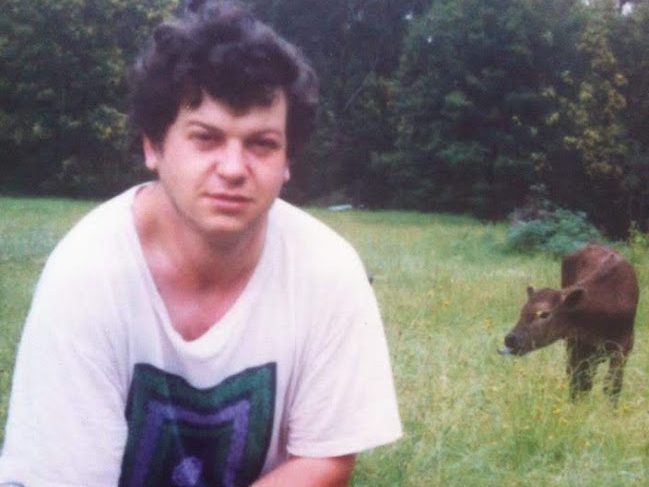
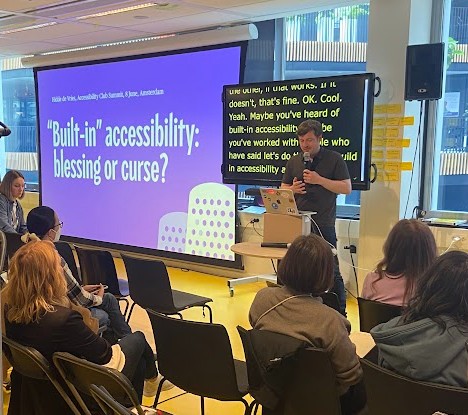
I had the pleasure of talking with Hidde a few weeks ago. We have met more times than I can recall. I can recall the meetings we have had of late as we co-edit, along with Jeroen Hulscher, the WCAG Evaluation Methodology (WCAG-EM) 2.0
Hidde speaks!
Transcript
Steve:
Well, hello, Hidde. How are you?

Hidde:
Hi, Steve. I'm good. Thank you very much.

How are you?

Steve:
Yeah, not too bad. Not too bad at all. It's a Monday afternoon.

We've got a – you probably do as well – a short week because of – do you – yeah.

Hidde:
Easter, Friday, Monday. Yeah, it's all shorter. Yeah.

Steve:
So you get Monday off as well.

Hidde:
We do, yeah.

Steve:
Yeah, so do we. I mean, we do it as well, but I thought it was an English thing. It's like boxing day.

Hidde:
Bank holiday or like – Yeah, yeah. Yeah.

Steve:
Yeah, no, it's all good, so I'm looking forward to that. I mean, I've been – I haven't been – I've been taking some vacation time or staycation time the last couple of weeks because my wife went to Sri Lanka for work, and so I had to control – or control – which is not bad. It's just that, for example, our dog Lola, she's got some problems.

She takes her tablets, making her pee all the time. So we've got to take it down like half a dozen times a day at least. I live in a flat, second floor, so it works well with both my wife and I take turns because she does the mornings, I do the evenings.

But anyway, that's neither here nor there, but yeah, I haven't been at work, so I'm just sort of starting to get back into it. How are you, Lord?

Hidde:
Don't worry. Actually, can I say – can I just compliment you on the graphic design for Fireside Chat because I know you as like a fashion designer and like have the whole fashion emporium, but I didn't know you had the graphic design skills as well.

Steve:
Well, yeah, yeah. It's so great. This actually, the slide is actually from my TPG days, which I think I mentioned because it wasn't the resurrection.

I did this internally as a – well, I didn't interview people synchronously. I did it asynchronously, and so yeah, so it was the Fireside Chat. So it was just to sort of get people to know each other a bit better within the company, and that's why I resurrected it because I like the idea, and I thought, well, let's see if we can make it into something.

And surprisingly, well, you will be my 13th. I thought Mike was my 13th, but you were the – you were lucky 13th.

Hidde:
Yeah. That's not Friday, at least.

Steve:
Yeah, yeah. Well, there is that. But as you may have seen, I've got loads more people to have as guests.

So it wasn't something that I was planning to do on a long-term basis, but it just seems to keep on going. Anyway, I've got my hair cut especially for you.

Hidde:
I love it.

Steve:
Look, I've got to really, you know, look smart and professional. So first up, I will ask you about NCDT. What can you tell me about it?

Hidde:
Right, so NCDT is the National Conference for Digital Accessibility. So the letters are the same as in English, but the T is accessibility in Dutch. It's a Dutch conference that happens every year.

Steve:
So what's the Dutch word for accessibility?

Hidde:
Het toegankelijkheid. So it's similar to the Swedish word, apparently. I've got a sticker on my laptop of the Swedish word that I'm not going to try and pronounce.

But, yeah, this is an event that happens every year, and it, like, draws all the accessibility people.

Steve:
So how many people are going to be there, you reckon?

Hidde:
I'm not sure. I think it's hundreds, like 200, 300, I want to guess.

Steve:
Is it a good place? Is it a good conference?

Hidde:
Yeah. I mean, I'm not going to say it's bad. Oh, of course not.

Steve:
But, I mean, you could say, well, you know.

Hidde:
I think it's going to have really good speakers, for one, because you and me are both...

Steve:
Well, it's you and I, yeah.

Hidde:
But, yeah, that's the case every year. Like, they've got good people, and I get to... I spend a lot of time in the hallways, usually.

It's a bit like CSUN is internationally, but in the Netherlands, like, we're getting to connect with everyone that you never get the chance to catch up with.

Steve:
This is happening on the 28th of May, I believe. Is it just a one-day conference?

Hidde:
Yeah, it's just one day. 28th of May, yeah, on the first day, yeah.

Steve:
Yeah. I'm looking forward to that. I'm speaking with the organizers, and thank you for suggesting that I maybe...

Hidde:
Yeah.

Steve:
It's the worst thing you'll ever have done, you know, having me up there. But anyway...

Hidde:
Is he a good speaker? I was like, yes, yes, he's great.

Steve:
Well, I mean, I don't think I'm a bad speaker, but I... And I'm going to... Obviously, I've got lots of material from you from when you've talked about WCAG-EM before, so I'm going to make prodigious use of that, but bring my own sort of twist into it.

Really, one of the things I really want to highlight is the people involved, being you and Jeroen. So is that correct, Jeroen?

Hidde:
Yeah, perfect.

Steve:
Yeah, finally. So your job, I was thinking about, I don't even know what the title of your job is. What is...

Hidde:
I've got, like, various titles. Some I made up, and some is the official. Officially, my title is that I'm an advisor on accessibility standards, or standards, I think, in general, to the Dutch government.

And it involves... Yeah, getting involved with standards, basically, and one standard that's really clear to us is WCAG. Yeah.

Because, yeah, we do the regulation for WCAG for governments in the country, so that regulation involves a lot of WCAG. Yeah. So, yeah, we wanted to get involved with it and with the future of it, too, because it affects...

Steve:
We've definitely done that.

Hidde:
Yeah, a lot of things.

Steve:
So both you and Jeroen, is he the same...? Yeah, the same.

Hidde:
Yeah, advisor on accessibility standards. That's the farthest we get, but even if I explain it within the government, a lot of people don't know what that means. Because they don't know what advisors are, I guess.

That is an official thing, but what an accessibility standard is or why it needs standards, people don't really get.

Steve:
Right.

Hidde:
That's why we're involved, I guess.

Steve:
And so what is your day-to-day? What do you do?

Hidde:
I just came back from the office.

Steve:
Yeah.

Hidde:
There's a lot of... A lot of my work is around... I spend time on the WCAG itself and on the WCAG evaluation method.

That's the bit where we meet online. That's part of my week. Other parts are also in the adjacent standards, like the Web Sustainability Guidelines.

Steve:
Do you involve it in the EN 3015?

Hidde:
Yeah, that as well. That is a small part. With WCAG, we want to be actively involved, whereas with the EN 3015 09, we basically just monitor what's happening there and we don't get involved a lot.

Although I just emailed them the other day, but I don't usually get involved because it's a much bigger standard than the bit that we're actually responsible for. We monitor websites and apps.

Steve:
Right.

Hidde:
And the EN has a lot more to it. There's a lot of chapters that don't really have any impact on our bit, so we just monitor that. And I have some extracurricular activities there too.

I'm in the AI board for the government.  I'm in the green team, so I do some extra things where I feel like this is relevant.

Steve:
Oh, cool

Hidde:
I know some stuff about it. Let me get involved with that too.

Steve:
I know that you've written about AI a bit, but I've noticed a couple of posts through my various social media timelines that Wikipedia have now banned any AI, which I think is a good thing to do because I've mentioned it previously, but I found my Grokipedia page and it talks about me.

Hidde:
What does it say about you?

Steve:
Yeah, it did.

Hidde:
Is Grokipedia the thing that Elon Musk?

Steve:
Yeah, it's the Grok version of Wikipedia, and it's got information about me. I'll put a link to it when I publish, which I meant to do previously when I spoke to Mike, but I forgot. But it just talks about me playing football.

So obviously, this is a famous footballer, but the majority of it is about my time with various football teams.

Hidde:
In which country? In the UK. Right, right.

Steve:
Yeah.

Hidde:
And how did you find this period of your life?

Steve:
Well, funnily enough, well, I've never been one for playing football or playing any sport. When I was, I mean, Australians, well, I went to school in Australia, but what happened was that around when I was 11 or 12, I broke my leg and they found I had a tumor in my bone. So essentially, I was laid up for two years.

Couldn't use my leg. So I'd lost any impetus I had in playing football or, as we call it, rugby league in New South Wales. And I have no interest in watching sport.

The only time I had any interest in watching football was when my daughters, I've got two daughters and both of them played for years. So I used to enjoy watching them. But anyway, enough about me.

See, that's the thing I get on. I start talking about myself. I mean, who wants to know?

I want to know about you and I want to ask you about CSUN. Was it your first CSUN that you just had?

Hidde:
My first ever, yeah. I had tickets once before. That was five years ago.

Oh, yes. Obvious things happened.

Steve:
Yeah.

Hidde:
A few weeks before kind of hell broke loose, or like a few days, I think, really, we were told, like, let's not go to CSUN. And I was like, why? What is this thing?

But yeah, COVID happened at that time. So this was my very first edition.

Steve:
Yeah. And what happened?

Hidde:
Well, it was intense. Like, you get to meet so many people that you don't meet in other places. It's very big.

Like, there's a lot of talks at the same time. Like, my ideal conference is a one single track type thing where everyone goes into the same thing. You have drinks afterwards and then you talk about what happened during the day.

That's really hard with this because, like, you all go to different talks and the rooms are difficult, right? There's, like, some are full, the ones that you want to go to. So actually, I only attended one talk in total.

There was a bunch that I wanted to go to, but I was late.

Steve:
Well, hopefully you attended your own talk.

Hidde:
I was at my own talk, too. So that's actually two in total. I didn't present my own talk as well.

Steve:
Was it well attended?

Hidde:
Yeah, I think reasonably well. Like, it wasn't packed, so people could have still, like, snuck into it. But it was good.

Steve:
I'm sorry, we should ask, what were you talking about?

Hidde:
I was talking about the WCAG evaluation methodology that, you know, we worked on together. This was basically to try and get feedback to see what people think. That part actually worked.

Like, we did get some feedback from people, which is good. Like, there were people who said they wanted to look at it, but they hadn't done it yet, and now they did. So that is good because we want to make this methodology that actually works with how people think about things.

Steve:
Do you think that you're achieving that?

Hidde:
I mean, it's hard. We use it a lot at the Dutch government, so we have our own kind of biased way that we work for that. Like, we use it on 9,000 websites and apps.

I don't know of any other places where they use it at scale like that, but I would love to see that change and also find out why people aren't using it as much because, yeah, there's something a lot of people do, like evaluating websites, and we might as well try and diverge on the way.

Steve:
Since it's been updated and made more sort of the scope of it is being increased to encompass all the things that we do test and evaluate, I think that it's going to become more popular. I mean, I sent you that. I got a message from someone the other day saying, well, they read it, and they're going to start using it internally.

I thought, great.

Hidde:
Yeah, super cool. Since I started talking about it publicly, I did get people reach out and say, well, we use it at this huge company. So that is great.

And yeah, we're going to work on making it better too, I hear. Yes. The rest of the year.

So yeah, more goods to come. Like, we're finalizing it now, right, for publication as a note. It's a draft note now, and that's a status just before notes.

And yeah, trying to get some updates in AGWGfrom the working group. We just looked at the working group again, right, asking them what they thought. That's just finished.

So yeah, we're just getting ready to publish.

Steve:
I mean, internally, the W3C staff, you know, Kevin and Tamsin and who else is, Alistair? Well, Alistair is not staff, but, you know, people are looking at it, which is what you want.

Hidde:
Yeah.

Steve:
But not looking too closely, which is also what you want. But I would like to say, I've said this before, but both you and Jeroen, I feel humbled to be working with you two because you're doing a great job.

Hidde:
Well, the feeling is mutual. I mean, it's been great.

Steve:
Well, you're doing the work. I'm just, like, you know, talking. This is important.

Yeah, well, I mean, you know, I have been, but I know that I need to put more time into it, which I will.

Hidde:
Yeah. That's going to happen. But yeah, CSUN was great.

Like, it's such an interesting event. A lot of Europeans weren't there this time.

Steve:
Yeah.

Hidde:
Including the UK.

Steve:
Yeah.

Hidde:
It was harder to get into the U.S. and lots of reasons not to go there.

Steve:
Did you have any, how did you find your process go through customs? Was it easy?

Hidde:
It was one of the easiest I've ever had, but that was because I used this new app, I think, that, like, pre-registers some stuff. That may be part of the reason. Another part may be that less people are trying to get through the border, and I'm also obviously privileged, so maybe, you know, I would never encounter the kinds of troubles that these custom people make other people go through.

Steve:
Privileged in what way?

Hidde:
Like, I'm white. I don't look like I could be doing something wrong, which...

Steve:
Well, I mean, you say that, but, I mean, I made the observation previously that you look dodgy, my friend. There's something going on. It's an undercurrent.

No. I know. But, yeah, but it doesn't, you know, I understand that you're less likely to, but, I mean, they've been, you know, detaining people left, right, and center, you know, just ordinary people like you or I.

I mean, you don't have, as a Dutch government employee, you don't have any special sort of...

Hidde:
I don't have, like, a diplomatic passport. They should give me one, I guess. I can travel for work every now and then.

I had a friend who had one. Apparently, it's a great experience because you get to go through different booths and stuff, but maybe it helped. Like, they asked where I worked, and maybe when I said that, they left me alone.

I'm not sure. I always feel very uneasy going through these customs there because they're always really strong and serious. They don't joke like they do in the UK when you enter.

Steve:
Well, no, yeah. The last time I went through was last year, the last CSUN I went to, and I was concerned. This was 2025.

I was concerned, but it was just a breeze. But also, what I found was that just before I left, I'd had problems with my hip, like being older, that I have a dodgy hip that plays up on occasion. So I had a stick.

So I was using my walking stick just to help me. And because I had a walking stick, they sort of put me in the line for people to go through, which I was, you know, quickly, which I was really pleased about because the line, the standard line, which I've been in a number of times, it was like hundreds of people just waiting for their hours and hours. But I got through in like under an hour.

So then I had to wait for my bags. But, you know. So who did you talk to?

Who were the people and concepts that really struck you while you were at CSUN?

Hidde:
That's a great question. Like a lot of different types of people go through my head, like people I've been working with for a long time, which maybe isn't relevant for here.

Steve:
Irrelevance is relevant.

Hidde:
I mean, some were like on a personal level. Fantastic. To me, on a musical level, I got to see Stevie Wonder wandering around, which is interesting.

He's there every year. On an industry level, I was a little disappointed with like the subjects that were covered. Like a lot of it was vendors who are trying to make money out of accessibility.

Steve:
There's a lot of sales pitches going on there.

Hidde:
Lots of sales pitches, yeah. And I don't know. A lot of it was either that or AI or both.

So there wasn't a lot of content that I felt like, you know, is perfect for this kind of audience. Like there were some of it. But yeah, there was a lot of content dedicated to kind of selling stuff.

And some of the rooms were also bought by some of these companies. So it felt very commercial.

Steve:
Well, yeah. Some of the big companies have their own room. Like TPG or Vispero used to have their own room.

I don't know if they did this year. I think they did, but a smaller room. But yeah, you know, presentations went on there and all that sort of thing.

Hidde:
So it seems very focused on industry. But yeah, I'm glad I went. And I'll probably go back.

But if it was up to me, like if I had to pay for it myself, I probably would choose a different conference, like a11y Toronto or one of the ones in Europe. Because the quality is so much better in different places.

Steve:
Also, it's fucking expensive. I mean, you know, it's one of the only conferences that I know that you, as a presenter, have to pay.

Hidde:
Yeah, I've never done that before. And I also never will do it again. Because I feel like it's underestimating sort of your value as a speaker.

It's actually also the event where they're the most unfriendly to speakers as well. Like they were, yeah, they're pretty rude. And yeah, I think at other events, like that kind of thing is much better arranged.

And the quality of the talks is then also better because they treat people better.

Steve:
I mean, a lot of it, yeah. A lot of my positive experience from CSUN is just seeing people. And also, you know, talking in the hallways, talking at the bar, having meetings with people, and also the social events.

Did they have the karaoke this year?

Hidde:
I think so. I think I missed that. Because at least there's a couple of karaoke events that I was aware of that I couldn't make.

Right. Oh, that's a shame. Because I answered it at other places.

But I heard it happen, yeah. And I think it is that kind of thing that really helps. Also for like my work in standards, just knowing the people that are behind the microphones in some of these calls that we were having is really helpful.

It's really hard to overestimate that. Like that's, yeah, that has been really, really great. Like a long time collaborator in AGWG, Greg Vander Heiden, who I talk to in these queues that we get into in AGWG.

It's great to finally have a chance to just chat person to person.

Steve:
So did you hash anything out with him? Did you lead the conversation with Greg feeling you had more of understanding of his position and he had more understanding of your position?

Hidde:
A bit of that, yeah. You just got like you understand each other better and stuff like that. So I think it's really good for that too.

Like, yeah, who are all these people that are working on accessibility and that you know their face, but haven't met them in person? Yeah, yeah. Really fantastic.

But yeah, I feel like a lot of how we could make happen with conferences here in Europe and I guess in Toronto too.

Steve:
Now we've come to that.

Hidde:
What's going to happen?

Steve:
Oh my God. Can you see the Rogues Gallery? Yeah, yeah.

And if you've seen any of these before, you know I just ask you, you know, who this person is and blah, blah, blah. I mean, it's not a competition. There's no prizes.

I've already told you that you get your, you get a free item from HTMLZ regardless of how well you do on the Rogues Gallery. But I will ask you, do you recognize the person at the top left?

Hidde:
Yes, yes. But I'm struggling to come up with his name now. I've chatted to him.

Steve:
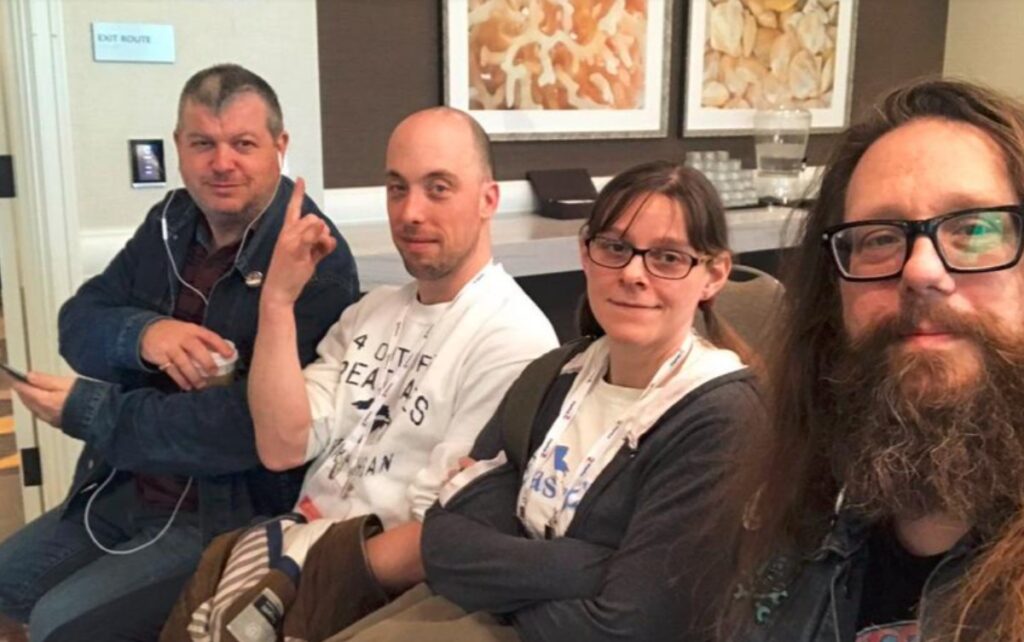
Doctor, he's a doctor and his second name is a bird name. Swallow, Doctor David Swallow.

Hidde:
Oh, Swallow, yes. Of course, David Swallow, yeah.

Steve:
He's a, as I always say, he's a really good friend of mine and he always appears to look, him and Pat are always making appearance on the Rogues Gallery. And I'm actually doing a fireside with him on, what is it, Friday, which is Good Friday. It's going to have a, Yeah, it's going to have a, well, a Christian theme, of course, because, sorry, I was going to start being frivolous about Christianity, but I won't.

I don't know, are you religious, Hidde?

Hidde:
I am not, no, no. No.

Steve:
Do you know, well, I remember, do you know a guy called Job? There's a guy called Job and his wife or partner called Stommepoes.

Hidde:
I don't think so.

Steve:
Anyway, they haven't been around, but they were at CSUN, but I've known them for, but anyway, he's Dutch. He lives in Amsterdam or nearby and is both a priest and a firefighter. And he was also involved in accessibility for a while.

Anyway, I haven't seen him for ages. So, yes, and so, as I said, the picture here, because it's got the Monday, 30th, the March 14th, the time that was when, for some reason, my iPhone just picks random pictures from my photos store on my phone and turns them into screen savers.

Hidde:
Wow, amazing. Who has been on your phone before? Is it all these people?

I guess.

Steve:
No, no, this is just, I've got about half a dozen of Dave and they sort of just pop up and rotate. So that's why he appears on my phone. My daughter says to me, why have you got Dave on your phone?

I was just, it's not something that I do consciously. It just appears. And also, his nice smiling face makes me happy.

Next person.

Hidde:
Okay, so this is Jeroen. He's my colleague at the Dutch government. We work together a lot on some of these standards things.

Steve:
Is Jeroen, is he going to be at the NCDT?

Hidde:
Yes, I believe so. Yeah, yeah, yeah.

Steve:
Yeah, excellent. And are we planning to have a face-to-face meeting? You and I?

Hidde:
Yes, yes, yes. We need to talk about that, but we should do that. And possibly also figure out if we're speaking there together or not.

Like, I don't know what the mechanics of that are. Well, you and I speak together or? You and Jeroen.

Steve:
Yeah, I mean, I'm quite happy for Jeroen to speak as well if he wants to, but he appeared somewhat reluctant, which I did later. I mean, I'm not, I don't like speaking, I do it. But it's not, you know, if I had a choice between that and having an ice cream, I'd have the ice cream every time.

Hidde:
You could do both. It's in summer, right? May.

Steve:
Yeah, okay. Well, yeah, I might do that. Might bring, I might bring some ice cream.

That'll sort of get people thinking about something other than my performance. But, and so you've worked with Jeroen how long?

Hidde:
Officially like two or three years, I think. But before that, we also like collaborated on stuff and like did audits together and stuff. So at the government we're together for, I think two something years.

Yeah.

Steve:
So is there any rivalry between you? You like, you know, you jostling with Jeroen.

Hidde:
You'd love to know, right? Oh yeah. Not really, like.

Steve:
I could imagine there would be.

Hidde:
I mean, nah, not really. I feel like we're in good trust, but that's because we'd like known each other for quite some time.

Steve:
That's good. Yeah. I mean, I met him twice now because he was at the state of the browser, which I saw him at as well.

So, but he was, yeah. He didn't hang around, but it was good to see. I look forward to seeing him in May.

Hidde:
Yeah. You'll both be there, right?

Steve:
Yes. Yes, definitely. The who's up next?

Hidde:
I feel like this is someone who I know, but it's an older photo of them.

Steve:
Yes. It's Patrick.

Hidde:
No, Patrick. Okay.

Steve:
Yeah. Patrick at the front. Do you know who that guy at the back is?

This is like 20 years old. This photo is just something because, Pat has these Flickr things and he puts photos up, but he's got, he takes so many photos that he's about, you know, at least five years behind in actually uploading stuff. But anyway, this guy, this was like from 2005, I think.

But you may have heard of him. He's a Canadian and he was very well known in the early part of the twenties. And his second name is Clark.

His first name is Joe Clark.

Hidde:
Oh, yeah. Of course. Yeah.

Steve:
Yeah.

Hidde:
But he, that is a long time ago, I think.

Steve:
Yes. Yes. Yeah.

Well, it's just, you know, I'm just showing my age now. We're all showing our age. Yeah.

Well, Joe Clark wrote one of the seminal texts about accessibility and he used to be on the speaker circuit, did the, you know, what was that? I can't remember the name of it. There was a big speaking circuit that they had in the U.S. specifically that had, what's his name? Zeldman.

Hidde:
Yeah.

Steve:
Yeah. There was, there was a whole thing. And Joe, Joe was one of the, one of those.

And also what's his name? The, the Irish bloke that lives in Brighton. Yeah.

He lives in.

Hidde:
Jeremy Keith.

Steve:
Yeah. Oh, good old Jezza. Yes.

Yeah. Well, he was one of the, the peers of Joe. So Joe was one of his peers at the time.

Next up. I don't know if you know, you probably, he's not very well known.

Hidde:
Or this is another one of those older photos.

Steve:
Well, actually this is, this is a very new photo, but it's a guy called, I've got him on there because I, because he's a good friend of mine B because he's Dutch. Even though he lives in New Zealand now, his name is Hans Hillen. And he, Hans and I had started.

Hidde:
Oh, I think I've met him before when you guys were speaking in Amsterdam before. Is that possible? Hans Hillen and Steve Faulkner together.

Steve:
That was, that was like 2011.

Hidde:
Yeah. Long time ago.

Steve:
Yeah. That was when I launched, um, html five accessibility. And, uh, yeah, good old Eric, Eric, Eric, Eric, um, told me that there was the, he was the most disappointed he's ever been in, in someone speaking or something.

Hidde:
He just, that doesn't sound like something he would say. I see. I recognize him on the picture.

Steve:
Yeah, of course. Well, that's, yeah. So Hans, Hans still works at TPG.

I've worked with him for, as I said, we started at the same time, 2006. Um, Hans has been, you know, under the radar, but he's done a lot of stuff. Like he was the, he was implementing, um, ARIA in Yahoo mail for Yahoo.

Um, but he used to go, um, when ARIA still had prefixes. So like the, the ARIA, when ARIA first started off, it had like, it had like a triple a, um, and then I call on, and then the, the name of the role or whatever, because it was, it was, uh, namespaced. And, uh, that was implemented.

That was very early days. That was the initial implementation in Firefox. Anyway, Hans is a great guy.

Uh, I don't see him enough. Um, and, uh, he still continues to, uh, do good work. Do you know who the next person is?

Hidde:
Wendy Reed. All right. Yeah.

Yeah. We had pancakes together in, uh, at CSUN.

Steve:
You did what?

Hidde:
We had pancakes together.

Steve:
Oh, which she was on at CSUN.

Hidde:
Yes. Yeah.

Steve:
Oh, excellent. I, yeah, I didn't, I didn't know she went to CSUN. I, I met her a few times at, uh, TPAC.

And, uh, she used to work for Rakuten Kobo.

Hidde:
Yeah.

Steve:
Who was a customer of ours.

Hidde:
Oh, yeah.

Steve:
So, uh, yeah. And she's coming on to, she's going to be a guest on the, on this  podcast in the, in the coming months.

Hidde:
Oh, fantastic. Yeah. I love Wendy.

She's awesome.

Steve:
So I, I had a look at her. She's working at eBay now. Is that correct?

Yes.

Hidde:
Yeah.

Steve:
Cool. Well, I'll catch up with her, and, um, find out. I've just got it.

Hold on a sec. Just, I tell my, my daughters that, uh, or I tell my family, don't, um, disturb me because I'm doing podcast. And then I get a message.

So dad, can you ask mom sausage, eggs and chips, but, uh, I definitely did the same.

Hidde:
Uh, yeah.

Steve:
Oh, well, when you were young, yeah. Do you, have you got brothers and sisters?

Hidde:
I do. Yeah. I've got two brothers.

I'm the middle one.

Steve:
Uh, the bad, the problem child.

Hidde:
Hmm.

Steve:
Yep. Hold on a sec. I'm just telling her I'm in a meeting.

Okay. Yeah. That's what I mean.

Also, I realized this. I hardly know anything about you. You know, uh, you just, you are very cagey about it.

You know, you, But yeah, I mean, I enjoyed it. It was an interesting time. But he was there.

He was one of the people running it, always manning the front.

Hidde:
I see. Person in the front desk. But I look forward to it. I know that if you- Marc, I'm sorry, I didn't recognize you.

Steve:
Well, at least I know his name. I've done it. Half the people on here, there was someone who I'd just seen on, I don't even know the person, but the name is Taylor Arndt.

She's a person who does accessibility and interested in AI, and I'd seen the person's name on LinkedIn. But for some reason, when I introduced, when she was on the Rhodes Gallery, and I said that her name was Bettina Art. Bettina Art is an actor from Australia, from historical, it's got nothing to do with her.

So anyway, next person up.

Hidde:
I don't know who this is. I want to say it's, he's from Toronto.

Steve:
Yes, it's Billy Gregory.

Hidde:
Billy Gregory, yeah, yeah, yeah.

Steve:
One half of the infamous Viking and Lumberjack. Billy is involved with, he's one of the organizers of AccessibilityTO. So have you ever spoken, been to?

Hidde:
Yeah, at AccessibilityTO Toronto in 20 something, I don't know, last year or two years ago? Yeah.

Steve:
Two years ago, was I there?

Hidde:
No. No, I wouldn't have known.

Steve:
The ones I've missed. It's a good, yeah, I always enjoy that conference. I'm planning on going again this year, and Billy and I are trying to cook up an event that's associated with AccessibilityTO that will be like a fireside chat show.

Hidde:
Oh, cool. In a theater with like actual fire and?

Steve:
Well, yeah, I might, yeah. Maybe a candle, I don't know.

Hidde:
You can always bring some candles, right?

Steve:
Yeah, well, we're gonna mix it up, make it a bit more fun and get, open it up and let people come up and talk five minutes more, more in the vein of the original fireside chats. So anyway, that's Billy. Billy's a great guy, I used to work with Billy.

Do you know who the next person is?

Hidde:
Amy Hupe. Yes. Yeah, she's awesome.

I learned a lot about content design from her, but I also remember her talk about imposter syndrome at State of the Brother some years ago. That was really good, and what's the word, like open about her own experience and telling it in a way that was super engaging and all that, yeah, lots of respect for her.

Steve:
Yeah, yeah, I mean, I was probably there, but I can't remember, but she's also a friend of Hayden's and Hayden mentioned to her about speaking on here and she agreed, so she's coming up in the next couple of weeks. So that'd be interesting because I don't know much about, if anything, about design or anything like that, really. I mean, well, apart from, as you pointed out, I have a natural flair, but all that.

Hidde:
Yeah, exactly.

Steve:
So that's Amy, next person?

Hidde:
Is that Gareth Ford-Williams?

Steve:
Yes, it is, and he's also a future guest, and since I invited him, I've been having regret, bias, remorse ever since, but he's- Oh, because he's a bloody mad bastard.

Hidde:
He has once taken the post I wrote apart and said it was wrong. Yeah, he likes to do that.

Steve:
He likes to, yeah, mix it up with people. But yeah, so that should be an entertaining time. Next person?

Hidde:
Shadi Abou-Zahra, used to be my manager, so we go back.

Steve:
At the W3C, and now Shadi works for- For Amazon. The great Satan, no, Amazon, that's right. Shadi's a great guy, yeah.

I mean, it's funny because I knew Shadi for many years through the W3C, through the WAI, and what I always felt was like, I don't know, when you were a person who was actually in the WAI, well, in the way of me understanding things, anyway. Sorry, that was a really bad pun. Web Accessibility Initiative, that's that WAI.

Hidde:
Yes.

Steve:
I always found that, I mean, over years of seeing people such as Shadi and Judy Brewer, et cetera, they always used to sort of like, hum and sort of like whisper. And then if anybody that wasn't part of the WAI came over, they sort of like, act as if they weren't saying anything. I mean, was that any, does that experience sound familiar in any way, or was it just me?

Hidde:
I cannot deny or confirm that.

Steve:
Yeah, gotcha, yes. But Shadi was there for years, and obviously we still see Shadi because he's involved in the W3C, the AG working group.

Hidde:
Yeah, he was there, and also the conformance group that is part of that.

Steve:
Oh, really, yeah.

Hidde:
Yeah.

Steve:
So he was your boss, and as a boss, he was?

Hidde:
Great. I don't know if I ever learned anything so much as I did that way from Shadi, yeah.

Steve:
Yeah, no, he's just a nice guy. I know he's very knowledgeable.

Hidde:
We do tend to talk for very long, like we had these one-hour meeting schedule that would sometimes go into like three hours sometimes.

Steve:
Yeah, he likes to talk. Now, Shadi was one of the original editors of the W3C WCAG-EM, wasn't he, as well?

Hidde:
Yeah, yeah, he was, yeah. So all of the work we did, we owe to him, basically.

Steve:
Yeah.

Hidde:
In W3C WCAG-EM. He had that, and he was involved in like ACT rules, and like lots of educational materials and stuff like that.

Steve:
He was all over everything.

Hidde:
Lots of policy work, as well. Like there's still times when I'm in Brussels when they're like, oh, Shadi, why are you no longer with the W3C?

Steve:
Yeah.

Hidde:
Yeah, he's great, yeah.

Steve:
Yeah, he's a nice person. Not so nice is the next guy.

Hidde:
Why, why are you doing this?

Steve:
Just because I like to say it. No, no, Alistair, Alistair.

Hidde:
He's so nice.

Steve:
Alistair Campbell's a really nice person, as well. And he is the, what is he? He's the, one of the chair people of the accessibility Guidelines Working Group.

Look, these, him and Rachel Bradley, is that, it was just the two of them now, isn't it?

Hidde:
Or is it- It was the two of them, but we just got a new chair in the form of Adam, Adam Page. Ah, Adam Page, yes, yeah. I mean, I don't- he was also at CSUN.

We had a salad together.

Steve:
Oh, nice.

Hidde:
I told him to just eat pancakes there.

Steve:
Where does he work?

Hidde:
At Hilton. At Hilton, okay. Yeah, we got to complain about the hotel to him, because, you know.

Steve:
Well, this wasn't where you are, because did you stay over at the Hilton?

Hidde:
At one of the, like, 10 Hilton-owned buildings. Yeah, yeah.

Steve:
Yeah, it's an unreal sort of place, isn't it? It's just, yeah, odd. I like how whenever I go to CSUN, I always go walking around.

And as you walk further away from, like, you walk down the road, it's not a place to walk, because the, you know, it's built for cars, but as you walk away from the Disney park, the, and you look at the, like, the sidewalk turns into dust, you know, like, turns into sand, and the houses become sort of, like, shittier. It's like, in the middle there, it's all lovely. And then as you get further out, it just turns into some sort of urban graveyard.

But anyway.

Hidde:
It's such an interesting place. I spend a lot of time just walking around, and it's, like, building to building. It's actually quite a long walk, because they've got, like, all these parkings around the building, because everything is done by car.

Fascinating.

Steve:
Well, yeah. I mean, I was, when I looked at the map, I thought, oh, you know, it's only a block. But a block's about two miles, you know?

Yeah. It's absolutely mad. But anyway.

So yeah, so that was Alastair, because one of the things I did do at CSUN is I sit, I always get to CSUN early, and I sit in the reception area, and I take pictures of people as they arrive. Oh, wow. That was Alastair.

Hidde:
I'm so glad you weren't there this year, because I had a bad hair day. Oh.

Steve:
I'll look through the CCTV that I just did, just to advise you, no, no. Yeah, so that was Alastair at CSUN last year. And Alastair lives in Bristol, which is also the home of Leonie as well.


Hidde:Yeah. So I know.
I went to uni there, so.  I know Alastair from there, yeah.

steve:
Oh, did you go to uni in Bristol?

Hidde:
I know Alastair's there. So one of us there actually worked with Alastair for some years. He was my boss, I guess, too, at that time, yeah.

Steve:
Cool. What, you worked for Alastair or with Alastair?

Hidde:
I was, I guess with. I was a contractor to Nomensa, the agency that he co-founded, I think, yeah.

Steve:
Co-founded, yeah. Which now, what are they called now? Gain.

Gain, yeah. Yeah. Yeah, well, that's where Leonie used to work there as well.

She worked at Gain. Okay, so do you know who the next person is?

Hidde:
It's not a great joke. Is that Glenda the Good Witch?

Steve:
Yes, it's Glenda the Good Witch. And.

Hidde:
I don't know her last name, but I know she's a good witch. Yeah, Glenda Sims, there we are.

Steve:
Yeah, another one of the great saints, DQ. Glenda is, luckily, she's a good witch. Glenda is another future guest.

Well, after I've called her, probably she loves a great saint. I don't know if she will or not, but she, I think she knows someone in Turkey. Yeah, and she, that is from CSUN a couple of years ago.

She's always there. Was she there?

Hidde:
I think I must have missed her this year. She probably was there. I didn't see her.

Steve:
Well, DeQue were there, weren't they? Didn't they have a room?

Hidde:
Yes, I did meet Wilko, and I got to honor DeQ people, yeah.

Steve:
And did you have a productive conversation with Wilko about disagreements or things that, you know, points of agreement on aspects of the way her game?

Hidde:
Yes, I guess it wouldn't be productive to discuss them in public. No, no, I'm not saying that, but I'm just, yeah. Yeah, I think it was productive, and like, we're actually more aligned than we thought beforehand.

Good. It's just a matter of making sure that all of that is also reflected in the words that are on there.

Steve:
Yeah. Yeah, I mean, you know, synchronous face-to-face conversations, and even though, you know, like conversations like this are a lot, help get agreement quicker than the, you know, it was funny because- And making the time as well, right?

Hidde:
Because we're working async, and like, one message on Slack could be written while you're also cooking, or like- Yeah, we're on the toilet. Like, you don't know what someone's going through.

Steve:
Yeah. Next person.

Hidde:
That is Eric.

Steve:
Yeah.

Hidde:
Awesome. We also worked together. I worked together with many of these people.

Steve:
Oh, because Eric was working at W3C at the time.

Hidde:
Yeah, yeah, exactly. We went through a lot together.

Steve:
Yeah. Yeah, I like Eric. Eric's a good guy, good person.

Next person.

Hidde:
Tamsin.

Steve:
Tamsin, now look, at least you know. Yeah. And she's from New Zealand, apparently.

Yes. I met her briefly at TPAC 24 or 25, I can't remember.

Hidde:
Does that mean you wouldn't get along well because Australia and New Zealand is- No, no, no, New Zealand, we're virtually family. Right.

Steve:
I think there's a rivalry between New Zealand and Australia.

Hidde:
I remember going from Australia to New Zealand, there were certain things, like you'd soon call a person in New Zealand and say that they sound Australian or something, it would be offending.

Steve:
Oh, well, yeah, nobody likes to be, yeah, it's like misgendering, isn't it? It's a similar sort of thing. Yeah.

Hidde:
Yeah.

Steve:
Yeah, but no, no, this, I mean, I don't know how it is now, but it used to be that New Zealanders could come and go from Australia freely and vice versa. I think they might have tightened that up, but it was just basically people could come across, you know, without a visa or whatever.

Hidde:
Are they all part of the same commonwealth anyway, or like the same king?

Steve:
Yeah, the commonwealth. You're really into the old world sort of- Does this still apply?

Hidde:
I don't know.

Steve:
Structure, don't you?

Hidde:
I'm not very tuned into it.

Steve:
That's what I wanted to ask you about. So the political system in the Netherlands, is it like, or the, okay, the governmental sort of structure or the society, you know, is it cast in terms of a Christianity, is it like a Christian nation, you know, like in the UK?

Hidde:
Yeah, a specific version of it. So it's like Protestant version and the kind of conservative, I guess, to- Push the, yeah. Yeah, it's, yeah, Calvinist, I think is the word I'm looking for.

Steve:
Calvinism, yes.

Hidde:
So yeah, we're told not to be proud of anything and just be like, it's almost the opposite. I'm not going to say what it was the opposite of, but like there are other places where you're told to be very proud of yourself, right? Like America, you mean?

Like that, yeah.

Steve:
Yeah, well, it's okay. I don't say these things out loud.

Hidde:
Maybe I want to go into the country again a little bit, like, well, you made fun of our culture.

Steve:
I was reading an article today about Donald Trump, but just how that, you know, he was brought up to believe in himself and believe that his own truth and how that has served him, you know, to an extent. But now with this war with Iran, he can't bend the reality of the war to his own, you know, his own truth, which is where it was quite an interesting article. So yeah, so Tamsin is another person who works at W3C.

Hidde:
Yeah, she was at the editors meeting that we had, like an editors week with like three people in Bristol hosted by Alistair.

Steve:
Oh, nice.

Hidde:
Yeah.

Steve:
Excellent. And lastly, but not leastly, do you recognize this person?

Hidde:
It's Doug Schepers, right?

Steve:
Schepers, yeah. Doug Schepers.

Hidde:
Yeah, this is a Dutch last name, I think, and I don't know how to pronounce it differently.

Steve:
He looks Dutch. He looks like a weirdo. Look at him.

I love his shirt. It says, my top 10 reasons to procrastinate, and then it's just got one.

Hidde:
I see what you're doing.

Steve:
Doug's a great guy. He's larger than life, but people, you know, like he is involved with the accessibility of complex charts and things now, but he was, I mean, he basically, you know, he worked at W3C for many years. He was probably there when you were there, and he was heavily involved in SVG and developed a lot of the stuff that we know as SVG.

So him and the other guy, Chris Lilley, was it Chris Lilley?

Hidde:
Yeah, Chris Lilley. Yeah, yeah. So anyway.

He was in the WhatsApp group that I was in at CSUN, but we didn't actually meet there. I did meet Mike Pacello and told hi from you. He was like, ah.

Steve:
Oh, so you met Mike?

Hidde:
Yeah, I did.

Steve:
Oh, excellent. And how was he? Did you warm to him?

Hidde:
We had a very brief encounter, because, yeah, but we did shake hands, so it was good.

Steve:
Yeah. Yeah, well, as is known, I've got a lot of time for Mike, and I love him dearly. And as I've said before, also again, I wouldn't be where I am today, talking to you, if it wasn't for Mike.

So, okay. So that's the ropes going. He didn't do too bad.

Hidde:
I mean, I can't remember- I apologize. I'm sorry, Patrick. I mean, look.

Steve:
Pat's half the weight and half the age. I mean, what can you expect? But also he's got these pair of glasses on there that make him look like some sort of dodgy character.

Hidde:
Who makes fun of dodgy looking glasses?

Steve:
Yeah. Well, you see these glasses?

Hidde:
Very, very good. Yeah.

Steve:
The funny thing is, I've been watching a show called, I don't know if you've heard of it, called Friday Night Dinner. It's a comedy show.

Hidde:
Oh, okay.

Steve:
And it's got this really weird next door neighbor, and it's a great show, if you ever get a chance, an English show, called Jim, and his glasses look exactly like mine, or my glasses look exactly like his. And he is an utter weirdo. So I'll be good company there.

Okay, I'll stop sharing this and we'll just go back to, we'll go back to us. Okay, so where are we at with time? We've done an hour, so.

Hidde:
Wow, feels like we only just got started.

Steve:
Yeah, I know. I mean, I never know how people do like, 10 minute podcasts or whatever, because before I know it, it's like my discussion with Mike Smith was an hour, over an hour and a half. Anyhow.

So what do you have planned for the near future, if anything?

Hidde:
What I have planned, well, I am heading to China very soon for the advisory committee and advisory board meeting of the W3C, which is happening there. It should be really interesting. I'm gonna do a talk about AI there in the AI capital of China, which I'm really looking forward to, to see what they are getting up to there.

Yeah, what's happening there.

Steve:
I read an article the other day by, I think his name's Jonathan Mosen.

Hidde:
Okay.

Steve:
It's something, but it's a blind guy, but he has a blog called the Blind Access Journal. But anyway, he was writing about AI and how it can help him, but it's still, it's not the panacea. I think it's actually called, it's not the panacea that we were hoping for or something like that.

I'll send you the article, it's worth reading. But he was talking about a number of agentic add-ons to browsers, one for Chrome, one for Edge maybe. And also there's that, that Microsoft have a Windows-based thing that can also help you to, help you to navigate inaccessible interfaces.

But he says, yeah, again, it's helpful, but it's not the answer. So it's quite an interesting, like it was someone who was actually with a disability, who's using it to help them to interact with the user interfaces. So it was a good read in that sense.

Hidde:
Current read.

Steve:
Yeah, I mean, I just, things go out of my head. So, sorry, back to you and your plans for the future.

Hidde:
Near future is London. I'm going there tomorrow.

steve:
What are you doing in London?

Hidde:

I have this one day event about AI and sustainability. So AI is like a consistent theme in my work now. And so is sustainability.

So the two of them in one event seemed great. It's right next to the train station where I'll be arriving. So it's going to be a, yeah.

Steve:
Excellent. Or is it where you're arriving at St. Pancras?

Hidde:
St. Pancras, yeah.

Steve:
Yeah, that's right.

Hidde:
It's just on Eastern Road, I think, yeah.

Steve:
Oh, excellent. But for the longer term, I mean, is your current role that you had for the last couple of years is something that will continue?

Hidde:
Yes, but I want to broaden things up a bit. So I do accessibility standards now, but I find all aspects where like humans need technology really interesting. So like not just accessibility, but like other parts where, you know, I want to make sure technology works for humans and do work that kind of contributes to that.

And that is, it sounds like, oh yeah, of course we all want that. But it is not something that I'm seeing everyone doing in our industry, especially at Big Tech. Like there's so many people now that are making technology work worse for humans, both like when humans are using it, but also when it's used like on them.

Yeah. Like when they are suffering from the existence of technology in lots of different ways. So I wanted to work in those like different areas, could be around the web, W3C, but probably like in different places, probably at the government too.

Steve:
So is there much opportunity for you to grow or expand your role within the Dutch government?

Hidde:
I am currently giving a lot of flexibility where I can like involve in different things that are like a change to my role or where I can bring in some stuff that I know about standards to then work on some stuff that's to do with ethics. I have a degree in philosophy. So ethics was like a large part of that.

So I actually got to bring that into work as well, which is great. I think, yeah, there are a lot of things around technology that are happening at the government and they're pretty open to like working in different areas where it makes sense.

Steve:
Well, that's good. So it's a positive environment to work in, which is...

Hidde:
Yeah, I feel really lucky to be in that position where like, yeah, I can do some of the stuff I know about accessibility, but also explore some other areas of like, this seems broken or this seems like something I wanna be productive about. Like I can complain about a lot of things, but I actually wanna be productive about them too, like to figure out like what can we do instead. Yeah, it's not always easy, but it's definitely possible.

So, yeah.

Steve:
Well, that's good. I mean, you seem to have boundless energy. You always seem to be working on something or write something or present it somewhere.

I mean, I can't give up. I have to have a rest just looking at your output.

Hidde:
Yeah. I mean, you used to be like that, right?

Steve:
What are you saying? I used to be, yeah. Yeah.

Thank you.

Hidde:
I see you output stuff all the time. I think it's just, you don't see it yourself, what you're doing. Like, I don't feel like I'm outputting much.

Steve:
Yeah, I do still feel as if I have something to contribute, but also what I found, especially in the big, participating in the working groups or whatever, I just don't say a lot because other people just take up all the oxygen. So, and also, which is fine, I'm not saying it's a bad thing, but also I'll only talk, I'll only sort of respond to something or have my two cents worth if I think that I have two cents worth. You know, I'm not someone who just wants to dominate a conversation, except this conversation, of course, but.

Hidde:
Yeah. I think that's really important that the oxygen isn't taken out of the room, that people are actually able to put in their two cents as well.

Steve:
Well, there's a lot of people that go to the Accessibility Guidelines work group, but only about three of them ever speak.

Hidde:
Yeah. So I would love to see that change and see like more people invited to say stuff, because I think there's a lot of really interesting people that are on the call usually, and I'd love to hear from them as well. I think that's like one of the challenges, but I don't, I mean, I'm talking as if I know how to solve that.

I'm actually, I've recently been like a chair's course at W3C, and I'm starting to chair some stuff. I'm actually just learning like what that involves.

Steve:
Are you a chair?

Hidde:
Not at W3C, but at the government, I chair one meeting that gets like all the accessibility agencies together, and like we talk about WCAG interpretation questions. I chaired out, but I kind of enjoy chairing as well, like learning about how that works, like how to get people to talk that aren't talking or stuff like that. Yeah.

Steve:
I have a WCAG success criterion related question for you. I don't know if you've seen, but there's been a recent thread about, because I think Pat and his task force, the task, the WCAG, WCAG to backlog were doing a lot of updates to various documents. So one of them was to do with images of text.

And what came out of it was that, and this is great, was forwarded this argument, was that if you have an image that has text as part of it, then the text that is part of it doesn't need to have correct contrast, doesn't need to be the contrast requirements.

Hidde:
Which, so- But it's content, isn't it? So- Yeah, well, yeah. I mean, it's- Is this with text too, or?

Steve:
Well, this is something that Greg has said, well, this is how we interpret it, and this is the way it is in WCAG 2.

Hidde:
Yeah.

Steve:
And I just think that's bullshit, to be honest with you. Because in this instance, because I don't know anybody that would say, well, say for example, is if you had a piece of text that was below contrast, that was in an image, and you had, that was just the image. And then there was an image that went along with it, then the text would be failing.

But if you combine the two, if you put the image and the text and the image of text together, Yeah. Then suddenly it doesn't need to support any contrast rules.

Hidde:
That's odd. Like, I think 1.4.3 actually refers to images of text as well as text.

Steve:
Well, Or is it like, I'm not gonna get into it. I will share with you later on. But yeah, but it's funny, because as I was saying to Pat, that one of my few contributions to the original WCAG 2 was including the images of text, like you provide feedback.

Hidde:
Yeah.

Steve:
And one of the things I provided feedback on was images of text, the contrast requirements did apply to images, text as well, text itself. And that was completely working. And so essentially the interpretation that is being tried to be foisted upon us at this point, seems to go altogether against everything that anybody, like, I've been doing this for years and years and years, I've never heard that before, that was an issue before.

Hidde:
But anyway. Images of text are like less common now, but especially languages where like, there's so many characters that the fonts can't possibly contain all of the characters. That's where like, it's still being used as a valid technique, I guess.

If you're like writing Chinese, there's so many characters in there. It can make sense to stick them in an image. For English, probably not so much, unless you have like a word art or something that you can't possibly do with CSS.

Steve:
Yeah, I mean, I'm not so much concerned about, like, yes. So images of text, it's always, you know, it's a bit like, oh, well you're doing it, but you shouldn't, but at least make it, you know, make the contrast. But I mean, it was talking about it in terms of infographics.

And so if you have an infographic that's got, that's got, you know, sort of a char on it or whatever, plus it's got text, then if the text meaningfully is, is integral to understanding the meaning of the infographic, then the text has to be at least, you know, but anyway, it's just something that did my head in. I was thinking, you know, yeah, there's this thing about the original progenitors, you know, the forefathers of WCAG, you know, 25 years later and say, oh, we didn't mean this, we meant this.

Hidde:
Yeah, whatever. Like people are arguing about that in practice, right? In the real world, people are increasing their contrast, which they should do because people need to read it.

Steve:
Yeah, exactly. So anyway, so I'll point you to that. Any last words before we round up?

Hidde:
We should all be kinder to each other in accessibility and like get to actually make stuff work in practice rather than the theoretical arguments that we sometimes make, especially in the standardization. It's like, what if someone interprets this and this?

Steve:
Standardization is about theory though, isn't it?

Hidde:
Yes, right, but a lot of the discussions are about like things that someone might interpret something as which like, you know, yeah, they're important, this is important, but can be tiring as well.

Steve:
Yeah, yeah. Okay, is this your actual, is this a room in your house?

Hidde:
Yes, this is my attic.

Steve:
And so do you sit in that chair?

Hidde:
Yeah, yeah, I can sit in that, yeah.

Steve:
No, you don't, yeah, yeah.

Hidde:
I'm not gonna do it right now.

Steve:
No, no, no, good, good. Yeah,

Hidde:
it's my reading chair.

Steve:
Is it an older place or is it just looks older because of the way that they've done that?

Hidde:
It's from 1900, I think, it's like 100 years old, yeah.

Steve:
Oh, so you lived in one of those, you lived next to a...

Hidde:
Windmill, yeah.

Steve:
Really?

Hidde:
No, there's no windmills here, but this is a part of Rotterdam that hasn't been bombed. So like a lot of the city was bombed in the Second World War, but this street somehow, it doesn't completely survive. Like there's some buildings that are gone.

But this building is still okay.

Steve:
Oh, it looks, yeah. You'll have to invite me around to take a closer look sometime. Anyway, thank you very much, Hidde.

It's been wonderful to talk to you and hopefully you enjoyed it. And remember to have a look for the HTMLZ store and what you would like.

Hidde:
And where it will be. And I'll wear it to some events too, so.

Steve:
Yeah.

Hidde:
My sense of fashion.

Steve:
I mean, you might want a mug. Who knows? Yes.

Or a hat. Yeah. There's so many choices.

Hidde:
Do you think a hat wouldn't work on me? That's only one way to find out, I guess.

Steve:
Yeah, exactly. A beanie. But anyway, it's your choice.

Yeah. Thank you for taking the time. And as I said before, it's great to work with you on the WCAG-EM and just, yeah, talk to you in general.

So good luck with your travel tomorrow and I'll be seeing you in May.

Hidde:
Yeah. And hopefully before that, we'll chat about wcag-em 2.0. Oh, yeah, yeah, yeah. Yeah.

Steve:
Yeah, definitely.

Hidde:
I'll send you a DM right now.

Steve:
All right.
Thanks, Hidi. Lovely to work together and chat. See you later.
See ya.
Some stuff mentioned
-
death and night and blood – the stranglers
Lyrics
Death and night and blood
Death and night and blood
When I saw that sparta in his eyes
Young death is good
And we decided that to die there was no greater love
Hey little baby don't you lean down low
Your brain's exposed and it's starting to show
Your rotten thoughts yeuch
I was attracted to a night torchlight parade
And there I came
Home is a black leather jacket fitting sweetly to my brain
Death and night and blood)
Death and night and blood)
Hey little baby don't you lean down low
Your brain's exposed and it's starting to show
Your rotten thoughts yeuch
I will force my body to be my weapon and my statement, so
Hey little baby don't you lean down low
Your brain's exposed and it's starting to show
Your rotten thoughts yeuch
3 replies on “Getting Hidde Fireside”
[…] Getting Hidde Fireside Steve Faulkner: I had the pleasure of talking with Hidde a few weeks ago. We have met more times than I can recall. […]
[…] Getting Hidde Fireside Steve Faulkner: I had the pleasure of talking with Hidde a few weeks ago. We have met more times than I can recall. […]
[…] Getting Hidde Fireside […]