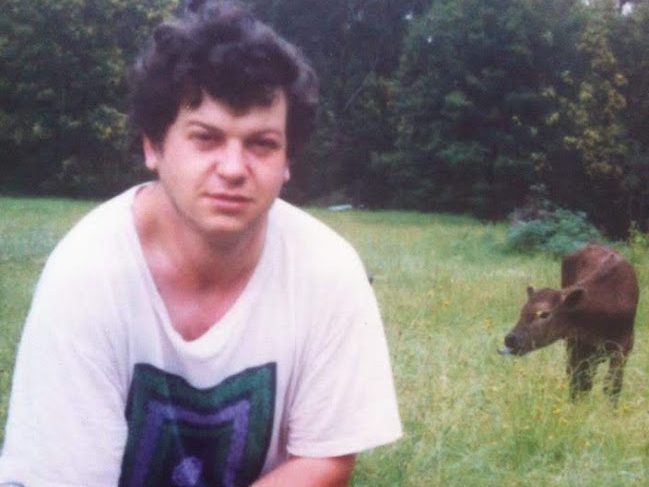
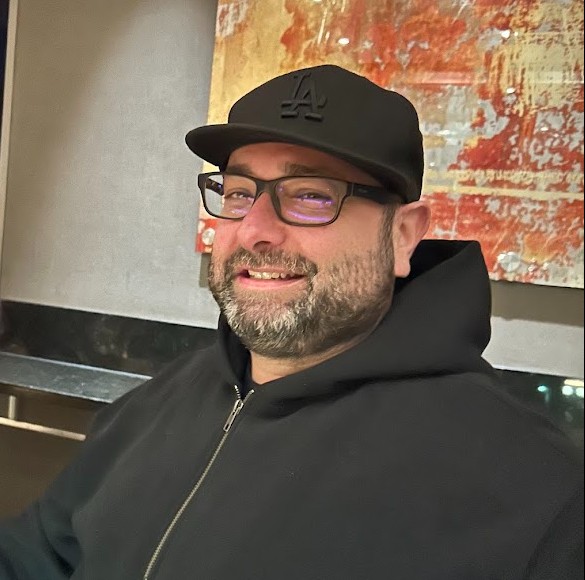
I had the absolute pleasure of talking with my friend Gerard Cohen by the Fireside a few weeks ago.
Gerard is one of those people that has consistently championed, and acted professionally to improve the accessibility of the web.
Hire Gerard!
Foolishly Atlassian laid him off recently so he is looking for his next challenge. Contact him before he is snapped up!
Transcript
Steve:
We'll do this. Well, hello Gerard, how are you? Is it Gerard or Gerard?

Gerard:
It's, I prefer Gerard.

Steve:
Yeah. Hard R, yep. Yeah, that's fine.

I'll call you Gerard from now on then. I'll get it. No, I won't, don't.

I'm just, yeah, sorry, I was just being an ass. That is one of my, the things that I do is just act like an ass. But I won't with you.

So welcome to the Fireside Chat. And what are you up to?

Gerard:
Well, first of all, thank you so much for inviting me, Steve, I'm very much so honored to. Yeah, spend the time to talk to you. So yeah, not much right now, just trying to get my affairs in order.

Obviously I was recently laid off from Atlassian.

Steve:
So tell us a little bit about that. You were at Atlassian for how long?

Gerard:
I was at Atlassian for a little over three years. I was working on accessibility for the design system.

Steve:
And the ostensible reason for your redundancy is due to being replaced with AI, is that? Or it's just generally they wanted to reduce the costs?

Gerard:
I have my own personal explanations, but I think really what it came down to was just that was the line item.

Steve:
And yeah, how many people work at Atlassian?

Gerard:
Oh, I think it was like 12,000.

Steve:
Wow. It's a big company. It's an Australian company originally.

I don't know if it still is, but yeah. I mean, anybody that knows, you know, knows bug tracking will know Jira. And probably disliked Jira.

I mean, I don't dislike it. I just think it's overly complicated. But I mean, you know, most software programs are, especially, you know, cloud programs or whatever, especially if they've been built up over time because there's a lot of technical debt that gets woven into the process.

And it negatively affects the, user journeys, user interface. I mean, it's just, yeah.

Gerard:
But I mean- It would surprise a lot of Excel use.

Steve:
Really? At Atlassian.

Gerard:
Oh yeah, yeah. A couple of teams that I worked closely with still used Excel to manage certain things. So, yeah.

Steve:
So they don't eat their own dog food then?

Gerard:
The teams that I worked closely with didn't so much. I'm sure the Jira team probably, you know, have used it a lot more. It's a lot of things to a lot of people, so, you know.

Steve:
Yeah, yeah, definitely is that. Mostly frustration, but anyway. So what were you doing, you know, what was your day-to-day when you were at Atlassian?

Gerard:
My day-to-day at Atlassian was just trying to encourage people to be as accessible as possible. When I first started, I was originally hired as an engineering manager, had a very small team. And some of them did not have as much accessibility experience as I had wanted.

But, you know, we all start from somewhere. So I had to bring them up, which was a lot of fun. We did a lot of great work.

And then probably like about three to four months into my time being there, they had this reorg. And unfortunately the position that I was at as an engineering manager was basically flattened. We called it the flattening.

And they gave me an option of I could stay there until December of that year. And then at which point, you know, I would say bye, or I could drop down to IC level as a senior engineer. And I took the senior engineer route because I felt it would give me the ability to keep doing, you know, the work that I wanted to do there, even though I chose to move away from IC work like eight years ago.

So I was cosplaying as an engineer, really helping a lot of other people do whatever they needed to do to be as accessible as possible.

Steve:
And who were you working with? There were a number of other people that I'm aware of that were working at Atlassian, Atlassian, Atlassian. So you always get mixed up with the name, Gerard.

So some other names that you can name that were there?

Gerard:
Yeah, so at the time that I was hired and up until, you know, about a year ago, Rob Sinclair was the head of accessibility. It was my first time working with him, great guy. Absolutely loved working with him and under him.

But I was in a completely different org and quite a few levels down, but obviously we're working for the same cause. So my team and his team, which was the central accessibility team had to work together. So yeah, a lot of great people.

Steve:
So is he still there or is he gone?

Gerard:
No, he left about a year ago.

Steve:
Right, and you worked with someone who I used to work with?

Gerard:
Oh, Andy LaHart. Yeah, yeah, Andy LaHart, great guy. He's still there, still doing a good job.

So yeah, he's a great guy.

Steve:
Yeah, no, no, I'm trying to remember, I think that at TPG, I, or TPG, I just call it TPG, where I used to work and he used to work, he was a manager. He wasn't a, yeah, he was a manager within the accessibility team, the TPGIs engineering team or whatever, but he didn't actually have, do a lot of hands-on accessibility as far as I can remember. I remember, yeah, like I don't think that his job required him, even though he had a good, a reasonable level of accessibility understanding, I don't think his job required him to do that.

I don't think that, oh, well, I'm glad at least that he is still working because I know that he left TPG to go to a startup, but that didn't last long. And the next thing he popped up at was seeing, got in contact with me because they thought they might have some work, but nothing's ever come of it, so that's okay.

Gerard:
Sounds about right, yeah. Do you know Matthew Brennan? No. Matthew Brennan, great guy, was at Meta working with Matt King.

Steve:
Oh, Matt King, who recently, he got the push as well from Meta recently during the big layoff.

Gerard:
Yeah, yeah, so Matt's a great guy. He's still there doing the good work, so yeah, shout out to both of those guys.

Steve:
Matthew Brennan, I mean, there are so many people involved in accessibility or related work these days, it's difficult to keep up, which is great. I mean, one of the things I was talking to Mike Smith about was that, well, my perception was when I started in accessibility many years ago, that it was a small pool of active participants, but now really through, I mean, I'm just looking at through the sphere of the W3C working groups, there seems to be a lot more positive, a lot more positive, a lot more technical people involved in accessibility, which is what we need, because a lot of it is technical. I mean, I'm not saying that there's no other aspects to it, but a lot of what it's about is, from the technical, I'd say it's getting stuff in the browsers, implemented in software in general, but a lot of web stuff, and having those people that feel comfortable and knowledgeable talking about that stuff helps.

Gerard:
Oh yeah, definitely, the more the merrier. I wish sometimes it wasn't so focused on commercial. Commercial.

If you know what I mean. Yeah. So, yeah.

Yeah, yeah. It always makes things a little difficult, but happy to see the help anyways.

Steve:
Talking commercial, who was I talking to? I was talking to Hidde. Did you meet Hidde DeVries when you were, you went to CSUN this year?

Gerard:
I did not go to CSUN, but I met him last year at A11YTO. So, yeah.

Steve:
Oh, I thought you went. He was at A11YTO last year?

Gerard:
Last year, yep.

Steve:
Did I? I was there. I can't remember meeting, seeing Hiddy.

Gerard:
Last year? I don't think you were there last year. I would've had pictures of you.

Steve:
Was it? What was last? Oh, fuck.

I mean, I thought I did. I went with, which year are you talking about? 24 or 25?

Gerard:
You know what? I don't even remember now. I'm sorry.

Steve:
Maybe it was two years ago. Yeah, I was definitely there last year because it was the first year that it was at the new venue. Okay.

And Eric Bailey spoke, and that was really, nice mug. It's my favorite. The funny thing is, is that so few of these products, of the hundreds of designs that I have, that are available, gets actually bought by people, it's really good to see.

Yeah, yeah. Ah, and that's cool as well. Well, I've got my version of it.

Yes.

Gerard:
I saw it, I saw it.

Steve:
Yeah.

Gerard:
PIGGYTRUMP is the code if you want your own people. Yeah. I highly recommend it.

So I would use these. Yeah, I would use these whenever I would do presentations at work. I would use these shirts as just kind of subversive messaging.

So it became a thing where people sometimes would join just to see what shirt I was wearing, just to try to catch the message.

Steve:
Well, as you know, which is probably the prime reason, one of the prime reasons you came on, was you get, as a interviewee, you get your choice of item from the HTMLZ store. So you can choose whatever you want. Tell me, and then I'll order it through Printful, because that way I don't have to pay Etsy money.

Yeah. Thank you. I actually did, I sold something the other day to a person called Gretchen Moore.

Do you know her? No. No, I mean, I only know her through, but anyway, I think she's blind.

But anyway, she saw the PIGGYTRUMP code and wanted to use it, but she couldn't find where to put the code in. And so, yeah, typical UI. And then, so I ended up, she bought something.

I ended up refunding her, but it ended up costing me like 10 pound extra.

Gerard:
Yeah. Wow.

Steve:
So.

Gerard:
Accessibility, it makes a difference.

Steve:
Yeah. So just to point out, I'm not making money out of these things. It's a labor of love as much of what I've done and what I'm sure what you've done over.

I mean, of course, we all do it to get a pay packet, because we've got to live. We've got bills to pay, and also in the States, especially, that it's tied to healthcare. Employment is tied to healthcare.

I have never had that particular chain around my neck. So tell me a bit about, like, I know you live in the States, but where in the States do you live?

Gerard:
So I actually live in Northern California, not too far away from Sacramento, which is a state capital. Oh, nice. About two hours north of San Francisco.

Steve:
I didn't know, I never knew Sacramento. I thought we thought Los Angeles was a state capital. See, so ignorant.

Gerard:
Yeah, well, if you ask me, it might be. I'm originally from LA, so yeah.

Steve:
Right, and what's, and how, is it a nice city? Is it, you live in the suburbs?

Gerard:
I live in the suburbs. So I lived in Oakland for about 12 years, which was great. Downtown, right in the middle of everything, fantastic.

But me and my wife decided it was time to grow up, wanted to buy a house, and that's impossible to do in the Bay Area. So we moved up a little bit north to a small little town, which is perfect for us because nobody knows us. Oh, yeah.

We just stay at home all day. We stay quiet. Yeah, it's great.

Steve:
And so what is happening as far as work? Are you looking, well, obviously you're looking, I mean, is there anything out there at the moment?

Gerard:
Oh, no, it's tough times for sure, for a lot of different reasons. But I got, you know, the thing is that the community has been so great to me. I'd have to say this is the second time I've had to deal with the layoff and everyone's just been absolutely great and sending me resources.

I've had just random people send me meeting invites just to talk to me to find out like, hey, how can we help? Well, that's nice. Yeah, it's been really great.

I'm very, very, very grateful for everyone's support. But yeah, you know, I'm also, you know, I'm not sure if I want to stay in tech anymore. I'm not sure if I want to keep doing accessibility.

I'm kind of beat up over it, but I can't deny the fact that I still feel like I have a lot to give, you know, you were talking about it being a labor of love. And I think it has to be, if you're going to do it for this long and at this level, it has to be something that you really genuinely believe in.

Steve:
And you also have to be a masochist.

Gerard:
Yeah, there's a lot of that. Yeah, definitely. It's not easy work.

I always tell people, you know, don't let your kids grow up to work in accessibility.

Steve:
Yeah, yeah. Oh, well, I mean, I've done okay with it, but I've led a pretty charmed existence because as you know, I used to work, well, you probably know, I used to work for Vision Australia. I worked there four or five years and I worked for TPG for 17 and a half years.

And then I, at the great age of 60, I walked into another position as director at Tetralogical. So I've been very lucky and I have never been laid off. So I'm pleased, but I know a lot of my friends that have within the industry.

So talking.

Gerard:
Yeah, I mean, you know, not to sound like a victim, it's been a great time. I've met a lot of great people. I've been able to work with a lot of great people and we've been able to do a lot of great things.

So, you know, I'm still grateful for the time, even if it was difficult.

Steve:
If you lose your job, which is your livelihood, things, you know, are not great. So you are a victim of something, you're not, you know, it's a first world problem, not a third world problem. Shouldn't say third world, but it's just, the one of my favourite songs at the moment is a song by Ian Brown, who was from the Stone Roses, still makes music and it's called First World Problems.

So it's just been going around in my head. So from your setup here, it looks like you're a pretty professional sort of audio person.

Gerard:
You know what? I've needed this. So first of all, a lot of this stuff I borrow from my wife, who's a voiceover artist and she sings.

But also, you know, I have courses that I've published on the Pluralsight Learning Platform. And I wanted them to be as professional as possible because I wanted people to take accessibility seriously. So, you know, I can see and hear as clearly as possible.

Steve:
Sorry. Tell me, so your wife's a, you said is a voiceover artist. So is she working currently or is she, does she do like short term work or is it a permanent position or whatever?

Gerard:
No, she's a self-employed. She has her own business. Oh, excellent.

And yeah, she does voiceovers for just about anything that you'll pay her for. She really excels at like cartoon voices and characters. She has a couple of toys out there that she's voiced.

Steve:
Wow.

Gerard:
So yeah, she has her studio right here. We've worked in the same house for the last eight years together. How long have you been married?

I think this year will be 16 or 17 years. We've been together for like 20 something. I lost count.

Feels like a day.

Steve:
Long time, but, and you're still very much in love by the look of it, which is excellent. Well, you've met her, right? I don't know if I've met, maybe very briefly, a long time ago.

Gerard:
I used to take her. Yeah, I used to take her with me everywhere to all the conferences I was at. So a lot of times people won't recognize me if she's not next to me.

Steve:
Well, maybe they recognize if you don't want to talk to you because it was talking to Gerard when he was wife hanging around. I think I did briefly meet her, but I'm sorry, I was just joking.

Gerard:
No, it's true. You don't know how many photoshops, pictures I've been photoshopped out of.

Steve:
Really? Yeah, oh yeah. Well, I haven't photoshopped you out of any.

And talking about pictures, let's, it's good times. I need to crack open the rogues gallery and we can have a bit of a chat about these individuals.

Gerard:
Now, this is- I'm a little nervous about this part because I don't get out of the house much. So that means I don't meet a lot of people.

Steve:
Oh, well, you should. What I tried to do, Gerard, is choose people that you may know or may not know. And look, well, you got to know yourself, my friend.

So who's top left here? Don't say you don't know who it is because I talk about him and he's one of my closest friends. He's also a very talented accessibility engineer.

Gerard:
Yeah, so I've never met him in person, but I do know you talk about him a lot. I want to say, is this Swallow?

Steve:
Yes, this is the Swallow.

Gerard:
David Swallow. Yeah, David Swallow, okay.

Steve:
And this is a picture of him. We're sitting in a cafe in Kingston. It was me and my daughter was there and she was giving Dave a hard time because he was drinking an effeminate drink, as she called it, which was a chai latte.

But also I just like, because you can see the shape of it. It's one of those glass cups that's shaped like a funnel. And it just really annoys the hell out of me.

It's got this really small little handle on it. So you likely drop it. But anyway, Dave, yeah, Dave came down and I think he was doing a, he was presenting at Goldsmith University or something.

He got invited to talk and he was, and then he came down and spent the night at my place. But also he's a park runner. I don't know if you have it in the States, probably do.

But there's this thing called park runs where people gather and they all run together.

Gerard:
Yeah. Yeah. We call them riots here. Yeah,

Steve:
I bet you do. But the park run is something that was started.

The original park run was at a park in, what the fuck is it called? See, that's what my memory goes. Well, it's a park just down the road, that very famous park.

It's just gone out of my head. But anyway, he went to do the run on the Saturday morning. And so I've got nice pictures of him in my house looking with his nipples taped up as you do when you go for a long distance running.

But yeah, so that's Dave Swallow. And I was gonna talk to Dave Swallow. He was actually gonna appear on the fireside last Friday, but he had to go and see his dad.

So we're doing it. I'm actually going up to York for, because of who I work for, Technological, because we're a remote company, we have a face-to-face on a yearly basis, sometimes twice a year. But we're having it in York this, in next month.

And so I'll see Dave, who lives in York. Yeah, so that's the Swallow. Do you know who that person is, the next person?

Gerard:
I don't know the guy's name. He was barman at CSUN, huh?


Steve:
Yes, yeah, I've just like, once, well, every year that I'm there in the Marriott, there he is. It's the same, there's about three or four of them. But funnily enough, there was another guy, a younger guy, who sold me a really nice tequila.

Somebody else bought it for me, because it was like 15 bucks or something it was. But it was the nicest tequila I ever had. But that barman, I said, like, when I was there last, which was last year, no, sorry, 25, not 26, I said to him, where's the barman?

And apparently the guy died. Oh no. Yeah, so he was only a young guy.

He was like, you know, probably in his 30s. Had a real chiseled sort of chin. Was, you know, handsome looking young barman.

And he was, he, yeah, I think he overdosed or something. I don't know. But anyway, it's, what I, you know, it's interesting to have a snapshot of these people that for the one week, you know, every year or so to see them, because they don't seem to change.

Do you know who the next person is?

Gerard:
Ooh, I am so sorry to say I do not recognize this person.

Steve:
That's okay. That's absolutely fine. I mean, it's a competition, as you know, and you're losing badly so far.

Gerard:
Yeah, I knew it.

Steve:
No, there's no competition. That is a person named Wendy Reid, who is Canadian, is involved at W3C. She used to be on the technical architecture group.

And she was also previously, I think she works at eBay now as an accessibility person. But she used to run the, well, she used to be a senior person at Rakuten Kobo. And she, so yeah.

So you used to do accessibility related stuff for all of the apps and e-readers and stuff like that. So- Nice, all right, Wendy. Yeah, she's an interesting person with whom I've actually met.

And she's coming on the fireside in the next couple of weeks or next month. So yeah, so that's Wendy Reid. I look forward to speaking to her.

So who's, well, there's obviously one dodgy, or it's two dodgy folk. Do you, you must know who this person is because you're standing next to him.

Gerard:
I am so embarrassed to say. He works at Apple.

Steve:
He's one of the few people who ever actually is allowed to speak. His name's James.

Gerard:
Craig, yes, yes, Craig, Craig, Craig. That was the only time I met him. And I wanted to talk to him more, but then someone came and pulled me away and I never found him after that.

So I hope to run into him again.

Steve:
Yeah, well, he seems to be a regular visitor to CSUN. He's also heavily involved in the ARIA specification and the ARIA working group at the W3C. It's very technical.

He's been around for many a year. And he's very senior and he knows his shit.

Gerard:
Yeah, yeah, you introduced me to him and I was really happy to meet him. But like I said, someone pulled me away and I never got to talk to him again.

Steve:
Another one of the, I can't seem to say, I've known this person for so long. It's just because I'm old. That's why, because I've just known people.

I mean, how long have you and I known each other?

Gerard:
No, I want to say maybe 15 years.

Steve:
15 years. Did I meet you, because I was thinking about it, because Wells Fargo, who used to work with me a year ago, was, you did work at Wells Fargo, didn't you? Yes, yep.

Yeah, was a customer of TPG for quite a few years. And I actually went to San Francisco and conducted some training. This was like, at least, it was a long, long time ago.

Gerard:
Were you there? I don't think I got to see that training.

Steve:
Well, you didn't miss much. I just remember, because it was, is there any, what's the area of San Francisco's right downtown? Is it like Embacado or something?

Gerard:
Yeah, that's the financial district.

Steve:
Yes, that's, I was staying in a really nice hotel there. And, but I remember that I did the training on the first day. I came back, I was, I felt absolutely jet lagged, fell asleep, woke up about 12 o'clock at night.

The only place I could find the food was open within, because I didn't want, like, I felt a bit uncomfortable sort of walking around at 12 o'clock at night down in the financial district. The only place I could find open was Subway, which.

Gerard:
Yeah.

Steve:
Yeah.

Gerard:
Yeah, so that area sits down like at about 5, 5.30, 6?

Steve:
Yeah, yeah. But, yeah, so I was living here. That, you know, that was the sort of experience I had of San Francisco at the time.

I did actually go to San Francisco for a TPAC as well with Ian Pouncey and various other people. And I did have a nice time walking around during the day, went along the pier and all those sort of things. So I quite liked it there, but always amazed at the amount of homeless people that are hanging about.

Gerard:
Yeah, it was really just, you know, you have these homeless people that are just laying on the sidewalk and then you have these really highly paid, you know, people just kind of stepping over them. It was a really weird place to be. I started working there around the time of the Occupy Wall Street movement.

Yep. Yeah, so it was, yeah, that place is, if you want to see, like, just complete opposites, that's a place definitely to see that.

Steve:
Yeah, yeah, definitely. Well, yeah, I mean, it's not dissimilar to some place like Mumbai or New Delhi. You know, you've got people living on the street there, you know, similar sort of scene.

So Wells Fargo, how long did you work there for?

Gerard:
I was there for eight years. I started off on the engineering side working on a front-end library. This was before it was called a design system.

Right. And was doing my best to get that to be as accessible as possible. And then there was the one accessibility person on the design side, you probably remember her, Claudia Case.

Steve:
Funnily enough, I was looking for a picture of Claudia Case to put on the Rogues Gallery, but I couldn't find one. But I do.

Gerard:
Oh, I'll have to see if I have one.

Steve:
Yeah, I do remember her. I mean, from what I could find out, she retired about 2010 or something. So she had been, yeah, but I do remember Claudia.

So it must have, it was then, that was, so it must have been the very early days of TPG that I, my time at TPG that I went, was working with Wells Fargo. Yeah.

Gerard:
So yeah, so that's where- She retired and I took her spot. So I made a very, yeah, I made a very big shift to move from the design, I'm sorry, from the engineering side to design side. It was a very big paradigm shift, but was awesome because I got to sit around designers and learn the design aspect of things and help them understand how stuff works in the browser and got to build a really cool team.

Started off with just me by myself. And by the time I left, I think there was like 12 people. We were doing some really cool things.

I mean, we were doing annotations before they were a thing. The broads. Not really the same, the way people do them now, but we were embedded in design projects from the very beginning.

So we got to influence the business requirements. We got to work with the designers to make sure they were building things properly. And then because of my relationships on the engineering side, was able to carry it through to engineers and then all the way to QA.

So we had a really, really, really strong program, really great bench of people working there. I hired Shell. If you remember Shell.

Little.

Steve:
Oh, yes. Yeah.

Gerard:
Which is a funny story. She's not Canadian. No, she might be.

No, she's from Michigan.

Steve:
I always thought she was always, because I thought she was Canadian because I always see her at A11YTO. Yeah. So, are you planning on going to A11YTO?

Gerard:
I am. I'm going to submit. So hopefully I get accepted.

And I'm trying to get Shell out there as well too. So hopefully she'll make an appearance.

Steve:
Oh, excellent. Well, yeah, I'm going to try very hard to make it this year as well. As I said, there might be a fireside related event if we can get it together, but I'll go anyway.

I would, yeah. I mean, because I didn't go to CSUN, I thought, well, at least, just to get out of the fucking house. I mean, I'm just stuck here most of the time.

Okay. Oh, well, that'd be great. It'd be great to see you both.

Yeah. And if you bring your wife, I can meet your wife again as well. I do remember, I think that I encountered you and your wife.

What's your wife's name? Her name is Crystal. Crystal, that's right.

I encountered you and Crystal in a elevator briefly. And I think that's where you would say nice things about me, which you always seem to, which I appreciate very much. You're my favourite.

I don't deserve, but I still appreciate. Well, yeah. Well, great.

If, you know, I look forward to, if you and Shell and Crystal are gonna be there. I remember last, you were there, so this was CSUN 2024, and there's a guy called Steve something that I was sitting at the bar with, and I think you might have known him as well, but anyway, I am hopeless at names. And I wanted to tag, like I would, I had a picture of him and his girlfriend, I think it was, and she was very short, short woman.

I wanted to tag him, but I couldn't remember his girlfriend's name. So I just ended up not, cause I felt embarrassed, you know, and I'm kind of hopeless with names, cause I got introduced to her about five times and I just.

Gerard:
Oh yeah. Yeah, just out the window. That's pretty bad.

That's pretty bad, Steve.

Steve:
Yeah, it is. I mean, it's just, but I remember that there was somebody who I used to work with at Vision Australia, who I knew, I knew him quite well, and I remember cause he had some sort of cancer of the tongue or something, but every time I met him, I could never remember his name, and it was just so embarrassing. I mean, it's just, it seems that like, oh, Bushy Park, that's what I was talking about earlier.

Gerard:
If no one has ever been to a conference with Steve, it's just a constant stream of people lined up to talk to you. So you meet a lot of people and those people usually bring you drinks as well.

Steve:
Yes, yes.

Gerard:
So it's okay if you don't remember people's names. Yeah, but. Well, it's not okay, but it's understandable.

Steve:
I wish, it's just, yeah, it's just something to do. It's not so much that I don't remember, like as I said, now I remember the park, where the park running was, it was a place called Bushy Park.

Gerard:
Oh, okay.

Steve:
How could you forget a name like that? Yeah, and it's a huge park as well. It's got deer running in it as well.

Oh, wow. I'm very lucky where I live because we've got these huge, huge parks that have herds of deer running through them, not just Bushy, but also Richmond Park. Anyway.

Do you go running a lot, Steve? Me?

Gerard:
Yeah.

Steve:
No, I either walk or crawl. No, I do go walking a fair amount because where I live in Kingston is very close to the shops. So I don't really need to use my car.

And also, yeah, I mean, when I do the big shopping, we go in the car because I can't be hauling that stuff back. But anyway. Bottom left, who we got?

You must know this guy.

Gerard:
This is Jared, yes. Of course, Jared. Really, really nice guy.

If you haven't had a chance to meet him, he's a really, really nice guy.

Steve:
Oh, no, I met him. That's why I took that picture. Yeah.

Gerard:
Oh, I meant if anyone else has not.

Steve:
Ah.

Gerard:
Of course, hasn't met him. Yeah.

Steve:
Yeah. Yeah. Is he, he's still a WebAim though, isn't he?

Gerard:
Yep. Yeah, I just put out the WebAim Million Report. What was that, last week?

Steve:
Yes.

Gerard:
There's also Rob Carr, his buddy.

Steve:
What were your thoughts on that?

Gerard:
You know, so two things. One, obviously, it was very sad to see that there was a 10% increase in errors detected on homepages, which is really sad that we're, you know, it's 2026 and we're getting worse, you know.

Steve:
Yeah.

Gerard:
And then the second thing.

Steve:
Sorry, I was just gonna ask about, were the errors in particular, you know, for particular things or was it just general errors across the whole spectrum?

Gerard:
The thing that always sticks out to me is they've been putting out those reports for a number of years. And every year, it's the same top five issues. Every year.

And they're the most basic things. There's color contrast. And then the rest of them basically have to do with labeling things.

Steve:
Yeah.

Gerard:
It's been the same for the last like eight, nine years. And since the report has been made, obviously it's been longer than that, but there is quantifiable proof of the top five things. And again, it's really two categories.

They're so easy to fix them and we keep having problems with them and it's getting worse. How?

Steve:
So we should say, or I should say at this point that it's the, it only lists automated errors. There's no auto, like errors that can be checked automatically. So there's a whole, there's a whole, but.

Gerard:
And then they're only homepages. So you have to assume that, you know, it's really bad marketing, you know, departments that are putting that stuff together. But still, you know.

Steve:
And you can assume that it gets worse from there.

Gerard:
Yeah.

Steve:
Yeah. So that's Jared Smith. And yeah, I mean, I've known Jared for a long time.

And yeah, he's a nice guy. Do you know who that next person is?

Gerard:
That's Leonie.

Steve:
Yes. Yes. That's one of my co-directors, co-conspirators at Tetralogical.

And that was her. I cut her husband out there, but he's a really nice guy. That's why I cut him out.

I don't want nice people.

Gerard:
See, husbands get photoshopped out of pictures. I told you.

Steve:
Yeah, yeah. Well, I don't know if you can see. Actually, she is thinner than that because the way I do this is just, you know, I sort of like squash people up together and stuff like that.

But yes, Leonie's very active. She's been involved, well, as you probably know, she's the chair of the board of directors at W3C. So she's very much involved in the, and she's also chair of the web apps working group, which covers all of, much of the web platform stuff that goes on.

Gerard:
Absolute boss.

Steve:
Yes, yes. She's, she's cluey and knows her stuff. So that's Leonie.

And do you know who the next person is?

Gerard:
Yes, that's Paul Adams.

Steve:
Paul J, yeah. Do you like Paul?

Gerard:
I don't have any problems with him. He's been really nice to me. I know he's, he rubs people the wrong way sometimes.

What?

Steve:
Yeah. I mean, I like him. I mean, the guy's a bit of a stoner, but so am I.

You know, what can you say? But I always enjoy seeing him. Yes, he can be a bit over the top sometimes, we certainly think, but who isn't these days?

Gerard:
Yeah, I've put my foot in my mouth quite a few times. I'm not saying that he has, but people seem to think, you know, that, you know, he's said things to, you know, which is fine either way.

Steve:
Yeah.

Gerard:
His contributions to mobile accessibility have been, you know, absolutely amazing. There's a lot of stuff that, you know, we owe to Paul Adams, so. Yeah.

He's always been good to me. I enjoy seeing him.

Steve:
Yeah, I always enjoy seeing him as well. He's got a lovely young family. He seems to like big cars though, big trucks.

He's always got a lot of...

Gerard:
I think he's in Texas. Yeah, he's in Austin, I believe. So Texas is, everything's bigger in Texas.

Steve:
Yeah. Well, he's got more than one. Like, I think he drives EVs, but he drives these big, you know, I'm sure he's the sort of person that would have got a Tesla Cybertruck if they weren't so uncool.

Yeah. But anyway.

Gerard:
Yeah, fuck Elon. That's all I have to say. Yeah, yeah.

And you know me, I don't curse very often, but that one's...

Steve:
No, no, I'm very surprised. But yeah, if you're gonna save the F-bomb for someone, you can always save for him and... Yeah.

Ah. Lastly, but not leastly, there's two people here. There's a, you've got a bit of a...

Do you know who the person in the foreground is?

Gerard:
This is the, probably one of the sweetest people I've ever met, Glenda.

Steve:
Glenda, the good witch. Yes. She, I'm actually interviewing her in the coming weeks.

So that'd be good. I mean, it's funny because she works at Deque, which I have always have a derisive comment about, but I love the people.

Gerard:
Yeah.

Steve:
Just, I'm not really, I mean, it's, there was a rivalry between obviously TPGI and Deque, but at a level access too. But I mean, I had the pleasure of working for an American company that didn't act like an American company. And that was TPG, because that was, Mike was, and not just Mike, but Debs and Charlie, they were just great people to work for.

And they really, they always looked after all of us. And I'll say it again, I've said it before, but I wouldn't be where I am today without the support of Mike and Debs and Charlie. Same.

Well, yeah, I think, I mean, that's, I'm not gonna go back in, I'm not gonna re-litigate, but I know that a lot of people will say it, but I know that a lot of people, or some people are peeved with Mike because he's working for AudioEye. I don't, I wouldn't do it myself, but it hasn't affected my love and friendship for Mike.

Gerard:
Yeah, I call him the Don, the Godfather, Paciello. He, I think there's a lot of us that wouldn't be where we're at without Mike. If you look back in his history over the last, probably even longer.

I mean, he's been there since the beginning and I'm actually, you know, I'm sure people have their reasons, but I'm actually disappointed at how people treated him when he made it.

Steve:
Well, that's what, that's what I, yeah, that's all I follow, the people that shouldn't, like, I don't, I said I wouldn't re-litigate, I don't, I don't agree with his choices to go and work there, but there's, you know, two things, which I've said before, I'll say it again, he's doing it with a pure heart, you know, he thinks he can make a difference. And also, he needs a fucking job, and, you know, because he's an older guy and he's got a, you know, he's got family and he needs health care.

Gerard:
Yeah.

Steve:
You know, whatever company, yeah, I mean, it's obvious that Audio Eye are a bunch of assholes, but, see, I can say that.

Gerard:
You know, they've, you know, on that part, they've done some horrible things to the community as well. They've been hurtful.

Steve:
Yeah, yeah, exactly.

Gerard:
But when you, again, when you look at Mike's history, he has always stepped into areas and, you know, technologies that were, you know, very antagonistic, if you will, towards accessibility.

Steve:
Exactly, yeah.

Gerard:
And has opened things up. So for me, aside from the, you know, the day-to-day logistics of he needs a job and he needs health insurance or whatever it may be, for whatever reason, I'm not gonna get in anyone's pocket, you know, that's their decision. But it did not surprise me that he joined an organization like Audio Eye to try to make that better.

Because I think, unfortunately, it feels like because of the marketing, like those of us that are doing it from the other angle, people are getting beat up by overlays, right? Like overlays are out there. And I think it's because people sometimes, companies that try to, I'm not making excuses, I'm just trying to provide, you know, different angles of perspectives.

But I think companies that use overlays, they maybe genuinely want to be accessible. They don't know how. And then on the other side, you have a very slick marketing guy come in and say, hey, we'll take care of all of it for you.

And they're like, okay, cool. Didn't know it was so easy. And then, you know, you get stuck using an overlay.

So I think he's doing great work at Audio Eye. I've seen some of the differences in their marketing and some of the tools, it still has a long way to go, but it would not be where it's at. Again, it would not be where it's at without Mike.

And I think he's trying to change that from where he can. And if there's anyone that's going to do it, it's going to be Mike.

Steve:
Exactly. I mean, one of the things I always appreciate about Mike is that he sort of looked at people and said that person, you know, has potential and he would support them, but he wouldn't tell us what to do. He never told me what to do.

And he just, you know, he just sort of got, he thought about, he saw the potential and he said, here, here's your support. And, you know, you could always, you know, go and talk to him about whatever, but he wouldn't, like he didn't micromanage. And that's the thing that, you know, one of the things I've been managing, well, I used to manage at TPG and I can never say I'm being a micromanager, but I'm managing now.

Like one of the people I manage is Patrick, who's virtually unmanageable, but not really. But I always talk about, I have a homeopathic sort of management style. Yeah, that's fine.

Gerard:
You know, yeah. There'll be no Mike Paciello slander on my timelines for sure, so.

Steve:
Excellent, excellent, yeah. Well, I mean, as I said, he's coming to talk. Did I mention that?

Anyway, he's a future guest and he get the opportunity to speak for himself about what's happening at AudioEye. I mean, the only thing I regret is that my other, another good friend, which is Adrian Rosselli, he was screwed over by AudioEye, you know, they, and so, and that's caused, I don't think that it's caused a friction between Mike and Adrian. It's just that Adrian cannot talk to him publicly because of what's happened with litigation in the past.

I mean, just messy American lawyering.

Gerard:
So it really is. And I can't speak to that. I'm sure both of them could speak to it more, but yeah, no, I mean, when you come for one of us, you come for all of us.

So that was, it was definitely not cool what they did to Adrian. And yeah, no, no, no, Adrian, a slander on my timeline either. And that's for me, Steve.

Steve:
I know you got that. Yeah, yeah, well, I, I, yes, I love Adrian. Do you know, you see, he's like a child that only a mother could love.

And so in that sense, Adrian's a mother. But anyway.

Gerard:
That's the nicest thing I've heard you say about him, Steve.

Steve:
I, yeah, I mean, you, you know, like, one of the things that I, like, I like a lot of people, but then I also respect people's technical and, you know, what they do. And it's, it's like with you, I like you, but also, because you know your stuff. And most of the people, you know, I'm talking about here, know their stuff.

If you know your stuff and, you know, you share your knowledge, it's great. So there's Glenda Sims. And do you know who that person is behind?

That is a really bad picture. Yeah, yeah, it is. I work with him and I also manage him.

And that's a really bad picture because his stomach's sticking out, but he's actually lost a lot of weight since then. So he's- This is Lloydi, right? Yes, this is Lloydi.

Yeah, Lloydi, yeah. You knew it. Yeah, I know, yeah.

I just, I just, I didn't mean to call out that bit. No, it's just that it was like, I needed a picture to stick there. And I had Glenda and there was Lloydy just behind.

As I said, like, like Lloydi, again, he's a person that knows his stuff and he shares a lot of good tools. What are the, yeah, I won't talk about that because he hasn't released it yet. But yeah, so yeah.

So Lloydy, if you want, if you need Accessibility tools, the free Accessibility, you know, bookmarks and things, Lloydy's the person to go to a11y-tools.com, I believe.

Gerard:
And he drops them like weekly. The guy's just pumping them out. Yeah, yeah.

So- He's a cool guy. I met him at CSUN a couple of years ago and he gave me a sticker. It was a Jay-Z, I got a million followers.

Steve:
Oh, yes.

Gerard:
Or something like that.

Steve:
Yeah.

Gerard:
And I passed them around at Atlassian and everybody loved them. So there's a lot of laptops at Atlassian that has those stickers.

Steve:
Oh, cool. He'll be glad to know that. Yeah, Lloydy is good value.

Always has been. And as I said, I won't further promote that photo because it's not the most flattering photo. It's just that he happened to be there.

So that's the new style, Rogues Gallery. I think it's, 8 is, or 8, 10, is better than having. One of the other reasons why I did it, less people was because people were going, who is that?

They couldn't see because the photos were so small. So- So small, yeah. Yeah.

All right. Let me just stop that sharing and get back to just you and I. Ooh, sorry.

I'm just enjoying, no. There we go.

Gerard:
Congrats on the fireside chat while you're doing all that. It's been great to watch and you've been, you're like the Johnny Carson of accessibility. Love to see it.

Steve:
It was something I just wanted to do a few, but it's just that I'm really enjoying talking to people and whoever, like, I've always had a good relationship with you, but some other people, there's stuff that I dislike more, I do. You know, I just, well, I talked about this with Mike Smith last. Mike's a really good friend that I've known for many years.

But he, but what I found is like, I was harboring sort of dislikes of people. Just because of the nature of the interaction that we have with, especially web standards is argumentative or combatitive. Yeah.

So it's nice just to be able to, it's like people like Bruce, who I've known for years. I, Bruce Lawson, that is, I've known for years. Yeah.

That it's nice to be able to sit there. Same with Karl Groves. It's nice to just chat because I, you know, sort of like when I'm interacting with people over whatever the social media is, I sometimes get a bit catchy.

So actually, yeah.

Gerard:
Karl's another one. No, no Karl Slander on my timelines either. He's always, he's been a great guy.

I've learned a lot from him. You know, accessibility, sometimes it can bring, it seems to bring out the worst in people and people may say things and, you know, I wish, you know, it's such a small knit community. I wish we didn't hold each other to such high standards with what comes out of our mouth.

Understanding that sometimes we can say things that actually have impact, right? We could hurt people if we're doing the wrong things or if we're spreading the wrong things. And I'll raise my hand first to say, I've done that a few times, but you know, if we judged people only by what they say in a small moment of time, there's a limit though.

There's certain things that absolutely, you know, should not be said, but I think for the most part, you know, we're just, we're kind of an angry bunch for understandable reasons, but we got to keep the anger at the right, you know, focused on the right things.

Steve:
Yeah, yeah, definitely. I mean, I think that I was a lot more fiery when I was younger or, you know, well, I still was young, but you know, when I was in my forties and that my earlier days of being involved in web standards, I was, well, I don't know if I was more passionate. I was passionate and I'm still passionate, but at the same time, I've just let things slide.

I've got, it's just, I'm not, I don't think it's worth getting wound up about certain things that I used to get wound up about because it doesn't do me or anybody else any good.

Gerard:
Yeah, there's a, you know, the thing about accessibility, I think is that we're, we shout as loud as we can and we invite as many people as we can. So that means there's always new people joining the fire. And, you know, this is not something you learn overnight.

You know, it takes a long time to, you know, it's stuff that you have to learn. It's people you need to talk to. It's people you need to work with.

And so it's very easy for someone who's brand new to be super excited and say something probably that was wrong, you know, I know people get really mad when they say like, for example, the alt tag, you know, people get really mad.

Steve:
Oh yeah.

Gerard:
It's like, okay.

Steve:
I mean, that's a minor, you know, like I don't mind that. I mean, I'll pick, I'll do pick those sort of things up, but it's when you get people that come into the room, you know, the virtual room that we are interacting. And I think they know everything.

That's really fucking annoying. Because, you know, people like you yourself and I have been doing this for years and years. I still don't know.

I don't claim to know everything. It's like, you know, the concept of an expert. I don't want to be called the expert because I don't feel as if I'm an expert.

I know some things about stuff. And I do know people who are experts. So, you know, people like James Craig and a guy called Rich Schwerberger who are used to Yenina.

Well, I can't remember. So I can see it's gone again, but Yenina is someone who's through W3C who's been involved for many a year. But, you know, I see other expertise in others, but I don't want to claim or think that I have the level of expertise where I can tell, you know, I can put other people down because of it.

Gerard:
I mean, how could you be an expert in a field? First of all, it's based on the human experience, which is changing constantly all day, every day. Then you have the technology.

Browsers are changing, you know, operating systems are changing. So much is changing and in flux every day that you can't, I mean, if you're an expert, you were probably an expert six months ago.

Steve:
Yeah, exactly. If you wanted to call yourself that. There's always something, that's part of the allure, I think, is there's just a constant, you know, you're constantly learning, constantly picking new things up.

And also, as far as, you know, when people talk about accessibility, they talk about the whole gamut. There's no way that I have any expertise. I do have expertise in, say, you know, particular aspects of the way the accessibility tree is implemented in browsers.

But beyond that, like, you know, there's quite often, you know, people will ask questions about, say, about audio description. I know about it, but I would never, you know, sort of think of, I would say, go to the people, usually, you know, people like Mel, is it Mel Evans?

Gerard:
Oh, Meryl, yes.

Steve:
Meryl, that's right, yeah. You know, people who actually, A, live it because they're deaf or whatever, sorry, not audio description. Well, Leonie's good for audio description.

That's what I mean. But things like captioning and stuff like that, you know, that's people who actually have to use this stuff and also have expertise in it.

Gerard:
Yeah, that was one thing that I absolutely loved about my time at Twitter. That team. Oh, that's right.

Steve:
You were working at, yeah. What happened there?

Gerard:
And it was- Elon, that's what happened.

Steve:
Yeah.

Gerard:
But how long were you working there for? Well, it was two and a half years before he killed everything.

Steve:
Oh, that was a reasonable time.

Gerard:
Yeah, had a great team. Everyone had lived experience with disabilities. And it was funny that, I'll tell you why I'm telling you this, but it was funny because I had a blind engineer and I had a deaf engineer and I would sit and watch them argue.

One said they didn't care about alt text and the other one said they didn't care about captions and they were, you know, in jest, you know, it's fine. But yeah, the one thing that I learned from my deaf engineer is that a lot of what we know about captions, a lot of the published documentation comes from TV media and movies and does not necessarily apply to digital media. So learned a lot from him.

Tim, he's at Apple now. He probably one of the best engineers, a great guy.

Steve:
What was the second one?

Gerard:
Kettering.

Steve:
Kettering, I don't know. I do know one guy that used to work, is it Chris Hayward?

Gerard:
Oh, that's Andrew, Andrew Hayward.

Steve:
Andrew Hayward, yes. Yeah, yeah, because I see his, you know, I see him on LinkedIn or whatever. But yeah, so it was unfortunate because you were making a lot of good progress and headway and now it's just turned into a dumpster fire.

Gerard:
Yeah, we had a great roadmap. Like everybody from like, everybody on the team was just really passionate about it. And Twitter was a great company at the time.

We didn't have to fight or sell anyone on like why to be accessible. It was just a great, you know, culture. It was more about, well, for one, some of the things that, you know, a lot of software that's coming out these days is really pushing the boundaries of what the browser can do or is meant to do.

And HTML and ARIA has not been well, like keeping up with these. So there's, you know, trying to prioritize, you know, just time and budgets and those kinds of things were really what we were at. But we had a really great roadmap for improving, you know, text alternatives on the platform.

You know, the stuff that we did for alt text. I, you know, I like to say that we taught the world how to alt text. And what I mean by that is some of the features, especially the alt badge that you see on images wasn't a new idea, but we just had the scale to be able to push that out in front of people.

Seeing that being adopted by Slack afterwards and by WordPress afterwards was probably some of the things. And that work was so important. We went from 0.006% of images on the platform having alt text to 0.1%. So it was a huge increase, but still nothing. It was still nothing. It was really sad, but we did, you know, we did great work. We taught a lot of people what alt text was.

And that was, again, the whole team, the designers, the visual designers, the content designers, some of the best people I work with, the engineers were great. Yeah, it was a great, great time. I still shed a tear every once in a while thinking about that team.

Steve:
No, no, I can understand. The alt badge thing that Blue Sky has it as well. And so does Mastodon.

Does LinkedIn, I don't think it does.

Gerard:
I can't remember. I don't think so, no. Yeah, I mean- And we still had a lot of work to do with that one too.

That was just our first version.

Steve:
Yeah, but you started, you know, you made some headway, which is important. I won't touch on the subject of AI. We can talk about it if you want, that's fine.

Well, I won't now, because we've gone for an hour and a quarter and I told my wife- That went by fast. Yeah, I know. It just seems to like, yeah.

My dinner is almost ready, so.

Gerard:
Oh, yeah, don't want to get in the way of that.

Steve:
No, no, have you had breakfast yet?

Gerard:
I had an early breakfast, yeah. I wake up at 4.30 to work out, because I have the time now.

Steve:
Yeah, well, I'm going to leave it there, Gerard, because I can't think, I can't say anything. I woke up at 4.30 to go back to sleep. Thank you, Gerard, it's been wonderful catching up with you, and we probably could talk for hours more.

But yeah, it was just, it's just, it's always fascinating to hear about other people's experience, work experience, and hopefully I will see you in Toronto in October. It's October, right? Yeah, I think it's October.

And fingers crossed that you will get a new position by then and you'll, you know, continue enjoying your life and say hi to Crystal for me.

Gerard:
I will. Thank you so much, Steve. I appreciate the time.

Steve:
And remember to have a look at HTMLZ there, see what you want.

Gerard:
Yeah, PIGGTRUMP for everyone else. Sweet. Thank you, Steve.

Appreciate it.

Steve:
Thanks, Gerard. And yeah, I'll send you the recording once it's done.

Gerard:
All right. Awesome, thank you. Look after yourself, buddy.

Bye. Thank you, bye.
Some stuff mentioned
- Accessibility testing tools by Lloydi available at a11y-tools.com
- Crystal Tamar – Gerard’s better half
- Jared Smith
- Twitter alt text feature
- #a11yTO Conf 2026
- Shell Little
- Meryl Evans
The Chocolate Watchband – I’m Not Like Everybody Else
Lyrics
I won't take all that they hand me down
Make out a smile, though I wear a frown
And I'm not gonna take it all lying down
'Cause once I get started, I go to town
'Cause I'm not like everybody else
I'm not like everybody else
I'm not like everybody else
I'm not like everybody else
And I don't want to ball about like everybody else
And I don't want to live my life like everybody else
And I won't say that I feel fine like everybody else
'Cause I'm not like everybody else
I'm not like everybody else
But darling, you know that I love you true
I'd do anything that you want me to
Confess all my sins like you want me to
There's one thing that I will say to you
I'm not like everybody else
I'm not like everybody else
I'm not like everybody else
I'm not like everybody else
And I don't want to ball about like everybody else
And I don't want to live my life like everybody else
And I won't say that I feel fine like everybody else
'Cause I'm not like everybody else
I'm not like everybody else
Like everybody else
Like everybody else
Like everybody else
Like everybody else
If you all want me to settle down
Slow up and stop all my running 'round
Do everything like you want me to
There's one thing that I will say to you
I'm not like everybody else
I'm not like everybody else
I'm not like everybody else
I'm not like everybody else
And I don't want to ball about like everybody else
And I don't want to live my life like everybody else
And I don't wanna say I'm fine like everybody else
'Cause I'm not like everybody else
I'm not like everybody else
Like everybody else (like everybody else)
Like everybody else (like everybody else)
Like everybody else (like everybody else)
Like everybody else
One reply on “Gerard does Fireside”
[…] Gerard does Fireside […]