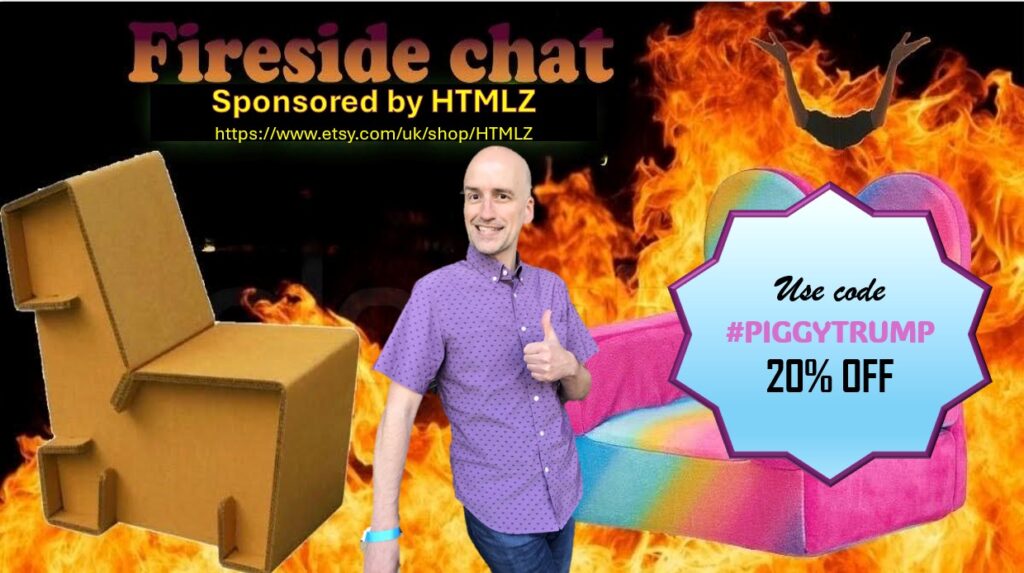
Adrian is one of those people I feel comfortable taking the piss out of as I consider him a friend and accessibility ally. That said I don’t give him much stick as we discuss a range of subjects such as AI, Conferences, WCAG, laws, the US and other stuff.
Adrian Roselli – Fireside chat 30/12/2025
transcript
Steve: welcome to the what is now the 5th episode of Fireside Chat and marking the first year of my endeavours to capture interesting people, talking about interesting things and me raving and ranting and generally taking over the conversation.

Steve: But I think with this particular person, Adrian Russelli, that I'll have a hard time getting a word in edge ways.

Steve: Welcome, Adrian.

Steve: And thank you for being with us today.

Steve: And thank you for agreeing to talk.

Adrian: Thank you for inviting me, Steve.

Adrian: It's an honour and a pleasure just to be nominated.

Steve: That's good.

Steve: Well, I mean, you're the one of the people that I know well.

Steve: Even some even may say that you're a trusted accessibility ally and friend.

Steve: I wouldn't go that far myself, but other people might.

Steve: Now, so as is as is tradition now that I start off with

Steve: With the rogues gallery of various folk.

Adrian: I need to get closer.

Steve: Yeah, so I just wanted to know, always I forget, which seat do you want?

Steve: Do you want the cardboard seat, which will quickly burn and your arse will be on the grill?

Steve: Or do you want the plushy seat, which will probably will also quickly burn, but it'll sort of envelope your skin and your body.

Adrian: Yeah, because that's more like

Adrian: Napalm, but it's rainbow, so I'll sit on that one.

Steve: Yeah.

Steve: Well, a bit of a bit of truth here.

Steve: It's not actually a real fire.

Steve: It's just a picture.

Steve: So you'll be fine.

Adrian: Oh, okay.

Adrian: I appreciate you telling me because my anxiety was starting to ramp up.

Steve: I understand.

Steve: So, Rogues Gallery, just to get the conversation flowing and

Steve: It's also just an excuse for me to use, reuse photos I've had in the past and name some of the rogues that I know.

Steve: So first up, on the top left, do you know who that person is?

Adrian: Dr.

Adrian: Sloan.

Adrian: Top left.

Steve: What?

Adrian: There's a doctor, there's a Dr.

Adrian: Dave in every corner.

Adrian: Okay, only the two left corners.

Adrian: Yeah, David Sloan, Dr.

Adrian: Dave.

Adrian: That is Dr.

Adrian: David Swallow.

Steve: And he was, we used to both work with him.

Steve: Not for him, but with him.

Steve: And he's a good friend of mine.

Steve: I don't know, do you and Swallow really, have you gelled with Swallow?

Steve: Have you sort of docked with the Swallow Mind Hive?

Adrian: Well,

Adrian: I'd like to think that we got along very well, especially when I was working with near and around him.

Steve: Of course, of course.

Adrian: Even if I don't have the same fascination with plumbing that he does.

Steve: Yes.

Steve: Well, he's always got something going on.

Steve: He's got a new bed.

Steve: Him and him and his wife, which I won't name.

Steve: Yeah, they got a new bed.

Steve: And one side of it is, one half is soft and the other half is hard.

Steve: Which do you think David would take, the soft or the hard?

Adrian: I'm going to go with the more rigid side.

Steve: Yes, When I think of David, I think of rigidity.

Steve: I'll tell you another story, but not online.

Steve: personally, about David and Rigidity.

Steve: Who's next?

Adrian: Wow.

Adrian: Okay, Mr.

Adrian: Elton.

Adrian: Mr.

Adrian: Elton, Belton.

Steve: Belton.

Steve: And again, were you there when Belton was working?

Adrian: Not only was I there, but when I announced that I was no longer participating,

Adrian: I dropped a project in his lap very unceremoniously, as in it was just crappy timing, and he got stuck with it.

Adrian: So to this day, I feel bad for leaving him in a lurch concept, not person.

Adrian: Yes, Well, lurch, yeah.

Steve: Well, that's another matter.

Adrian: But yeah, well, he's still, it's still grates on him to put it that way.

Adrian: Yeah, well, it should.

Adrian: It was kind of crappy of me.

Steve: Yeah, but he's smiling.

Steve: He seems to, he just takes everything as far as I can tell.

Steve: he just rolls with the punches and that's a good way to be in this world.

Adrian: So that's the thing, is he rolling with the punches or is he building it up inside and sort of containing this little rage furnace until one day he lashes out and destroys somebody, specifically me?

Adrian: I mean, I would respect that.

Steve: I don't think, I don't think he, I don't think he dislikes you that much.

Steve: I mean,

Steve: I think that he has a practical and healthy disregard for you more than anything.

Steve: So I wouldn't worry about that.

Steve: Okay, who's he next?

Steve: This is a bit of a twizzler.

Adrian: Yeah, I'm trying to figure out who Pat is wearing.

Steve: Pat, well, this is when I met the Swallow and Pat in Leeds.

Steve: It was a, I meet up with them a couple of times a year, once or twice a year.

Steve: And we were in Leeds and we were at the Royal Armoury and there was these sort of, whatever they are, you stick your head in.

Steve: And that's Pat being some sort of warrior or something.

Steve: I just thought I'd use it because it just jumped out at me when I was looking through my photos.

Steve: Now,

Steve: Yeah, the Leeds, the whole Leeds trip was, I mean, it was a nice trip, except that the moment I got in, got on the train, it's a couple of hours up to Leeds from London, the moment I got on the train, my hip started to play up.

Steve: So basically I was immobile while I was there.

Steve: Couldn't, I could hardly move without

Steve: without lots of pain.

Steve: It went away, which is good.

Adrian: That's good.

Adrian: Which is good.

Steve: But also the swallow took this photo of me from behind and I look like a fucking old man.

Steve: God!

Steve: It just, yeah.

Steve: Anyway, that was depressing.

Adrian: We're all getting up there, Steve.

Adrian: And I appreciate that you have a head start.

Steve: You're not, you're in your 40s, are you?

Adrian: I'm 23.

Steve: Yeah, that's it.

Steve: Now,

Steve: Next to Patrick, I thought I'd bring a musical twist, Belton, and we've got Kenny Loggins.

Adrian: We do have Kenny Loggins.

Adrian: You know what's funny about that variant of Kenny Loggins is he and I worked in the music, the band, hiring music bands, et cetera, industry at a similar time because I was booking shows while he was either booking and or performing shows.

Adrian: And this was well before the accessibility work or anything else.

Adrian: So our paths have crossed more than once.

Adrian: And I fear his and my lives are permanently and forever intertwined.

Steve: Well, you're both, you know, you're both a bit sort of... untrustworthy. I mean, that's what I can say.
Steve: But I mean, I like you both, but Kenny, AKA Karl Groves. And Karl has just agreed to come and speak on the Fireside Chat at some point. So I'm looking forward to that.

Steve: picture, when I first, the reason why I took it and then when I first saw it, I did, I looked over, this was at CSUN, year or two back. And I thought, fuck, that guy looks like Kenny Loggins. And then I realized it was Karl Groves.

Adrian: He's a man of many faces. We should never tell him that.

Steve: No. What?

Adrian: Tell him he looks good.

Steve: No. Do you know the person next to Kenny?

Adrian: I am struggling. I'm just going to say no, because any guesses I do will be disrespectful and wrong and hilarious.

Steve: Okay, bonus point. Look at the head that's the back of the head. Can you have a guess at whose head is that? To the right?
Adrian: Yeah. It's just a head. It's part of a head.

Adrian: No, it looks like an eraser.

Steve: You should know the person for sure.

Adrian: I mean, my gut wanted to go with Matthew, but

Steve: I mean, it was it was a it was a long bow to be drawn, I must admit. I just, I just thought that you might know.

Steve: This person is her name is Charu.

Steve: I can't remember her second name, but she used to work with TPG.

Adrian: That's why she's familiar.

Adrian: I know Charu.

Steve: Yeah, and she's and she's part of the WCAG or the Accessibility Guidelines Working Group. I see her name pop up there. I've never heard her actually speak about anything, but she's there. She's a silent witness, so to speak. And 2nd row.

Adrian: Starting with Doug, you mean?

Steve: Yeah, starting with Doug.

Adrian: Yeah, I don't know who that is.

Steve: Yeah, it's difficult to, you know, because he just looks so ordinary, doesn't he? Doug is another person that's going to be going to be sharing his thoughts with us at some point.

Adrian: Good.

Steve: And we've got a double act here.

Adrian: Yeah, that's a double wide. I think I only need to name one person and a double wide to pass.

Steve: No, you need to name both.

Adrian: I can name JJ. But yes, that's Jonny James. Why am I?

Steve: Next to him is Hester Man.

Steve: Jason Hester.

Adrian: Okay.

Adrian: I mean, I blame the flattened image.

Steve: Yeah, well, you know, but yeah, it's just a nice sort of sort of action, candid shot, creep shot even.

Steve: No, it's not a creep shot because they were posing.

Steve: This person, I put this person in because I don't know who she is, but I thought you might know because you were sitting next to her.

Adrian: I want to say Sveta, Svetlana, I want to say Kournikova.

Adrian: I'm probably dramatically wrong, in which case, because I usually am, in which case I'm terribly sorry to everybody.

Adrian: But she and I had a series of lovely conversations in Toronto.

Adrian: And she did a lovely talk in Toronto.

Steve: That's right, yes.

Adrian: Then I sent her some information about, I want to say, maybe it was Bergen, Norway or something, because we were talking about places to visit.

Adrian: But I blanked on her name and me throwing that out there in retrospect, I should not have done on camera.

Steve: I mean, I probably was introduced to her to introduce myself, but then I just completely forgot.

Steve: I have problems these days.

Steve: My brother rang me up the other day and was really concerned because he couldn't remember that he used to live in Sigrist Square.

Steve: And I said, don't worry about it.

Steve: He said, I can't remember. Like, I won't tell that boring story about the guy over the road. I couldn't remember his name for years, which I already told that in a previous, that's probably the point where lots of people turned off. But anyway, yeah, I'm not good with names and places and not good with anything really.

Steve: Do you ever get the, I don't know if you get it where you work now, but

Steve: When you're doing, sort of projects or whatever, then as soon as you've done the, well, okay, I'll talk for myself.

Steve: As soon as I've done the project, and then it just goes out of my mind, I can't remember anything about it.

Adrian: Yeah.

Steve: People will come back to me and say, oh, you remember when you did that?

Steve: I said, no, I've got no idea.

Adrian: That's very much how I work.

Adrian: But part of that, though, was sort of enforced because of, you know, decades now working with clients and NDAs and not able to discuss from project to project.

Adrian: So my inability to remember

Adrian: has manifested as people think I'm just really good at not talking about other projects, when largely I just have no recollection what I did last week.

Steve: Yeah, well, yeah, I'm the same.

Steve: I mean, it's everything tends to blur into each other.

Steve: But there's one person that doesn't blur for me and is always there.

Steve: Well, not always there.

Steve: I mean, he goes by a number of names, but you

Steve: But you must know who that is, the person next to pseudo Svetlana.

Adrian: Well, he goes by everything from WebAx to web overhauls to Dennis.

Adrian: Yes, I don't know.

Steve: This is something that always blows me away.

Steve: When he, like he had like several accounts, Twitter accounts, I don't know, he's probably got other accounts.

Steve: And he would refer to himself in the third person when we all know it was him.

Steve: Anyway, Dennis is someone that I've never worked with closely, never worked with, but it's just been around.

Steve: And apart from the fact that he
... scene cut

Steve: at and I manage him at Tetra Logical, which is where I work, yes.

Steve: So, you probably heard that there's the, you know, there's been a number of layoffs at our alma mater, but I just heard that somebody else got laid off.

Steve: I'll tell you about that after.

Steve: But it's just, what I heard was that also, was that people were pissed off with me because I'd actually said that I was sad about people losing their jobs.

Steve: And that was seen as inappropriate.

Steve: I don't know.

Adrian: I don't know the context, but I'm always sad when somebody loses their job provided that they didn't mean to.

Steve: Yeah, I just said it unjust.

Adrian: The socials.

Steve: Yeah, one of the socials.

Steve: And I just said, you know, I heard that people have been laid off.

Steve: I mean, fuck.

Steve: I mean, if you can't, you know, there's quite a few people such as Cedric, who I've worked with for many years.

Adrian: Cedric was the OG employee.

Steve: Yeah.

Adrian: Happily, Cedric's got another job with Temesis now, which is great.

Steve: So he's got a, he's French, lives in France, and he's worked for a French-based accessibility company that's been around for years.

Steve: Orien and Levy, I think his name is, Aurelian Levy.

Steve: Anyway, yeah, so that worked out well.

Steve: But I was sad, and it wasn't

Steve: I wasn't, don't worry about it.

Adrian: Was somebody, was it about Cedric?

Adrian: Because Cedric is a peach and anybody who was celebrating Cedric losing a job would be trash.

Steve: It wasn't celebrate, it's just that I think that I shouldn't have mentioned it publicly, even though everybody, because I was getting these pings from people and I

Steve: that had just lost their job.

Steve: And I didn't mention any particular people.

Steve: I just said, I'm sorry that people lost their jobs.

Steve: And that wasn't the right thing.

Steve: So I think people such as Mater maybe is pissed off with me.

Steve: But anyway, what could you do?

Steve: Next person along.

Steve: You should know this person because they're a friend of yours.

Adrian: I do happen to know Sarah.

Adrian: In fact, Sarah made me this lovely mug.

Steve: All right, "fuck accessibility overlays".

Steve: Have you asked her yet?

Steve: Because she doesn't, she keeps me at a distance.

Adrian: Have you asked her if she's about coming to talk?

Adrian: I have passed along your message.

Adrian: And yeah.

Steve: All right, say no more.

Steve: Who's next?

Adrian: Who's Laura?

Steve: Yeah, Laura Carlson.

Adrian: Laura Carlson.

Steve: This is actually not a photo I took, the rest of them I took, but this is a photo from the internet.

Steve: It's the only photo Laura Carlson.

Adrian: Yeah, I think it's her university profile pic.

Steve: Yes, yeah, she's a quiet achiever and she's, but I've known Laura Carlson since about 2005.

Steve: She's always been like, we're involved in the early days of the "accessibility for all" HTML stuff.

Steve: And she helped with the development of the writing of the alt text advice that eventually got published in.

Adrian: I think I joined the W3C HTML working group just as she left it.

Adrian: So we interacted outside of that, but that was the ships in the night thing.

Adrian: So I didn't get to work with her directly.

Steve: Well, she's in the AG working group.

Steve: She's been like, you know, after years, I rejoined the AG and the Accessibility Guidelines working group.

Steve: And she's still there.

Adrian: Well, I'm not I'm not in the AGWG.

Steve: Why?

Steve: not?

Adrian: Because Pat's there.

Adrian: Yes.

Adrian: There's a limit to how many angry people you can have in a working group, really.

Adrian: I'm sorry.

Adrian: Angry slash insufferable people.

Steve: I don't think Pat.

Steve: Pat is cementing his position, which is.

Steve: I want to clarify.

Steve: I don't.

Adrian: I'm kidding because I like Pat.

Adrian: He needs to be there, but mostly I just don't have time.

Steve: Nasty Wanker, as far as I'm concerned.

Steve: I like him, but he's...

Adrian: I think Nasty Wanker is a disease, isn't it?

Steve: What?

Adrian: Isn't Nasty Wanker a disease?

Adrian: Like you need to see a physician.

Steve: Nasty Wanker is a disease.

Steve: Talking about the moving on from that unsavory subject, who is the second to last person?

Steve: I see you, Janina.

Steve: Yes.

Adrian: And then I want to jump to the last one because I thought that was Matthew and it's so hard to tell with the mask and the light and the.

Steve: I know I gave you a bit of a curly one.

Steve: But then, but then you, but then it was the top of Matthew's head with Charu.

Adrian: So now I'm, I don't, I got, I'm.

Steve: Okay, so this person, you'll know who it is.

Steve: The company he works for has recently changed name from

Steve: from N starting with N to starting with G.

Steve: And he lives in Bristol.

Adrian: The hell changed their name.

Adrian: Oh, is that's not Alistair, is it?

Steve: Yes, it's a really bad picture, but I'm pretty sure it's Alistair Campbell.

Adrian: I totally, totally couldn't tell.

Adrian: And again, it's not because Alistair doesn't look like Alistair.

Adrian: It's simply because it's a small image.

Steve: Yeah, and it's been sort of munged and it was also the picture was from further away.

Steve: So I think that in pulling it forward has made it a bit grainy.

Steve: So that's it.

Adrian: That's it for this.

Adrian: I'm going to try something here, Steve.

Adrian: Yeah.

Adrian: What we're going to do is we're going to pretend that the woman in the 4th column, 2nd row, we're going to pretend the conversation we had about her never happened.

Adrian: And you're going to take this next bit of conversation and drop it in over that.

Adrian: Okay.
Adrian: So I can be like, oh, that's Ina Svetkova.

Steve: So you know how you are, right, okay.

Adrian: Lovely.

Adrian: She works in Norway.

Adrian: I met her at the Accessibility Toronto event.

Adrian: where she did a lovely talk, had a number of pleasant chats with her.

Adrian: She's great.

Steve: What did she speak about?

Adrian: That's...

Adrian: Look, I'll hang on.

Adrian: No, it has to come back.

Adrian: I didn't go to her talk.

Adrian: It was it was about users and behaviour and every like distractions and misunderstandings, and it was long enough ago.

Adrian: And I was distracted while preparing for my unintended talk.

Steve: So you weren't you weren't talking.

Steve: Yours was one of the few that I did actually sit through.

Adrian: Mine was unscheduled.

Adrian: And because of that, I didn't get to watch all the other talks that closely because there was the quick panic prep.

Adrian: And then there was the after the talk coming down and thinking in my head all the things I said that were wrong that I would love to go back and edit.

Steve: Well, I mean, to be honest with you, I mean, you know, I think you're the entertaining speaker in general, but it was a bit dry.

Adrian: No shit.

Adrian: It was a talk about tables.

Steve: Yeah.

Adrian: I felt terrible for everybody, especially the people in the front row who I kept looking at, who are thinking in their heads, well, shit, I can't just walk away.

Adrian: He'll notice.

Steve: Yeah.

Steve: Well, that's a good, way.

Steve: I scan through the audience just to let everybody know that I would notice.

Steve: Paying attention.

Steve: On the rare occasions that I do get to speak.

Steve: I'm actually doing a, I'm.

Steve: Hidde got me a, or got me, I got a invitation to talk through Hidde at the Dutch, some Dutch accessibility conference.

Adrian: Nice.

Steve: Not Fronteers, it's like the government, I don't know, but Hayden talked there last year or the year before, so.

Steve: In March, and they pay money and everything, and they pay, I'll do it.

Adrian: How long is your how long is your speaking slot?

Adrian: For how many minutes?

Steve: 40, 40 minutes.

Adrian: And how many slides will your deck be?

Steve: It won't be that...

Steve: I've got to.

Steve: I'm speaking about the WCAG EM.

Steve: So and what I know about that is minimal.

Steve: So

Adrian: So you might actually stay in the time limit.

Steve: Yeah, there'll be lots of filler material.

Steve: No, that is actually coming along quite well, I see, as I should say myself.

Steve: But I will admit, I mean, I have made some contributions to it, but I think my main contribution has been to give Hiddie license to be more bold about the changes.

Adrian: So it's a bowl.

Steve: I mean, it's just making it, because there's this tension, obviously, between WCAG, W3C, and the reality on the ground where people use WCAG to test things more than websites, you know, to test.

Steve: And I don't think it's not that W3C don't want to, but they

Steve: the certain members that don't like the idea of WCAG being used to test native apps on mobile, for example, on devices, which is fine.

Steve: I mean, they can, I mean, what do you think about the use of WCAG to test things other than websites?

Adrian: I think that WCAG was, the current version was scoped to the web.

Adrian: And I think extending it for native and PDF and other things is a hell of a stretch.

Adrian: So while I'm glad the Mobile Accessibility Task Force has been doing its best to create mappings, I think that there should be some more explicit statements from the working group.

Adrian: And maybe we'll see that in version 3, if it happens, when it happens.

Steve: Yeah, that's a whole separate statement.

Adrian: But I also recognize that at some level,

Adrian: All WCAG is sort of a shield so that when a vendor does receive a complaint, they can at least say, but we're satisfying WCAG.

Adrian: We're doing these things the way we're supposed to.

Adrian: So it's at some level kind of a shield as well as that baseline minimum.

Adrian: So of course there's going to be novel indications.

Steve: It's a rather jaundiced view of the WCAG.

Steve: Jaundiced?

Adrian: Yeah.

Steve: You mean vaguely yellow?

Steve: Well, no.

Steve: When somebody has a Jaundiced view, it's like they have a view, skeptical, negative.

Adrian: Oh, I don't think, I think I've always been clear about my view, though.

Adrian: WCAG is a bare minimum.

Adrian: It's just a baseline.

Adrian: It doesn't guarantee accessibility.

Steve: Oh, no, of course it doesn't.

Steve: I mean, if you pass, if you conform to the WCAG success criteria, that's what you do.

Steve: You conform to WCAG.

Adrian: Yeah.

Adrian: So when people say, hey, this thing passes WCAG, therefore it's accessible, that makes me frowny because that doesn't mean it's accessible.

Adrian: It just means that you've earned your right to at least do your thing now.

Steve: Yeah.

Adrian: I'm trying to I'm trying to sit up.

Adrian: I think that, yeah, I tend to sort of.

Adrian: Is that are you because the cardboard chair is collapsing in it.

Steve: Yeah.

Adrian: This is why I'm standing today.

Adrian: I put the standing desk up so that

Adrian: I'm doing a lot more pacing and walking around.

Steve: Yeah, I can see that.

Steve: It works.

Adrian: But I do, yeah.

Steve: I've been, it's not because I'm falling asleep or anything.

Steve: Anyway, now I've lost the train of our conversation.

Adrian: Don't leave.

Steve: Let's move on to the questions.

Steve: So I'll get rid of this.

Adrian: Oh crap, there's more.

Steve: Oh yeah, there's always more.

Steve: What do you think you can get away with like a 10 minute conversation?

Steve: This is just.

Adrian: I mean, when I bill by the hour, I sure as hell do.

Steve: Oh, well, you do get something for being on this.

Steve: You get your choice of item from the HTML Zed store.

Steve: You can choose anything that you want.

Adrian: I like this thing.

Steve: Oh.

Steve: Did you get that recently?

Adrian: No.

Steve: you've had it for ages.

Adrian: It's a lovely.

Adrian: I always like to have it a little offset.

Steve: You see, you've got the right, my head, like I've got one.

Steve: Well, I've got one, a similar one, but when I put it on my head, this is, it's sort of like, because my head's so large, it just, I don't know.

Adrian: I don't have hair, so that helps.

Adrian: Also, I've got a tiny head, so this is basically like a golf club sleeve for my head.

Steve: Oh, it's cool.

Steve: It looks good.

Steve: I'm glad you like it.

Steve: Well, you can get yourself another one.

Steve: Yes, so that's, I was going to keep that back as a surprise, but choose what item, whatever you want, and I'll send it to you.

Steve: Now, oh, what am I doing?

Steve: Okay, that's right.

Steve: Yes, here we are.

Steve: We're back at

Adrian: We're back.

Adrian: There, I've given my, I've given myself a halo.

Adrian: I'll take my, I've got my haircut recently.

Adrian: I don't know if you've noticed.

Steve: No.

Adrian: But okay, so questions.

Steve: Yes.

Steve: Questions for you.

Steve: Okay, first, first question, somewhat controversial.

Steve: not really.

Steve: Tell us about your thoughts on overlays.

Steve: Oh, yes.

Steve: Yeah, is that it?

Steve: Nothing more needs to be said.

Adrian: Did you see that?

Adrian: We need to describe that for the benefit of our viewers.

Steve: Oh, yeah.

Adrian: You can't see that I'm holding this lovely hand-thrown mug.

Adrian: that says "fuck accessibility overlays".

Steve: Yes, so that's what, yeah, is that your...

Steve: Is that your dissertation on them?

Adrian: I think I have written so much, said so much, and had enough legal briefs about it that my opinion is pretty well known.

Steve: How's your legal griefs been resolved now?

Adrian: Oh yeah, that was over a year ago?

Adrian: More than a year ago now?

Adrian: I don't know, everything blurs together, but yes.

Steve: Yeah, but I mean, these things can take time.

Adrian: I have received no follow-up threats from any other overlay vendors.

Steve: Oh, well, that's good.

Steve: Well, that's because you succumb to being silent about these things.

Steve: You're toeing the line now.

Adrian: I'm, oh, I'm being silent about these things.

Steve: there's only so much that can be said about overlays, isn't there?

Steve: I mean, really, it's the AI that's become the dominant sort of whipping post.

Adrian: Yeah, it's hilarious because a lot of these overlay companies for years claimed that they were using AI, and the air quotes are intentional, and they weren't.

Adrian: It was just, you know, crappy JavaScript bookmarklets that half of us could write.

Adrian: And then, AccessiBe was fined by the FTC for lying about AI stuff, but they're all claiming it.

Adrian: And some of them are actually using LLMs to generate alt text.

Adrian: And it's like, well, I can get that for free from the browser.

Adrian: Why are you wasting my time?

Adrian: Yeah.

Steve: Talking of overlay companies that I haven't heard a lot from UserWay since they.

Adrian: You mean Level Access.

Steve: Yeah, well.

Steve: subsumed by Level Access.

Adrian: I think that it is still, their marketing hasn't changed very much.

Adrian: I just think that there's a more crowded pool.

Adrian: And I think Level Access recognized that it took a reputational hit and had to change its overall marketing tactics.

Steve: So.

Steve: Do you reckon?

Adrian: What's that?

Steve: Well, you.

Steve: You're implying that they had a reputation to start with.

Steve: Lovely people who work there.

Adrian: are some genuinely nice people who work there.

Adrian: I wish I could helicopter out into less problematic employers.

Steve: Well, it's the same as Deque.

Steve: They have some great people working there as well.

Adrian: They do.

Adrian: They have some genuinely smart people, and I'm counting on them by tomorrow evening having solved accessibility 100%.

Steve: that's right, yes.

Steve: Yeah, it's the WCAG 100, yes.

Steve: I have caught on to that in a small way.

Steve: Hidde is a person that writes quite a bit about AI and ethics and stuff like that.

Steve: It's quite interesting.

Steve: It's well worth, I'm sure you already do read your stuff on, I know that you do, because you think you

Steve: commented on or re-shared one of his posts recently.

Steve: So.

Adrian: Yeah, I had a qualifier because he talked a little bit about Mozilla's change in mission for Firefox.

Steve: I missed, I totally missed that.

Steve:I didn't know that because I don't tend to use Firefox as much as I used to.

Adrian: I still have it.

Adrian: But it's my daily driver.

Adrian: So I'm, you know, I pay attention to it.

Adrian: I follow it.

Adrian: I didn't want to jump on the bandwagon about blowing them up until I had more clear message from them.

Adrian: But the justification like, oh, we'll do alt text in the browser.

Adrian: It's like actually my screen reader will do that.

Adrian: Like built in.

Adrian: I don't need that.

Adrian: You don't, you don't need to say we're going, we're adding features for accessibility when those features.

Steve: It is clutching at straws really.

Steve: I mean, Mozilla's just a spent force, unfortunately.

Steve: I was thinking back, it reminded me of when they went all in on mobile OS, Firefox OS or whatever it was.

Adrian: I really wanted Firefox OS.

Adrian: I really wanted that to succeed.

Adrian: To work.

Adrian: Yeah.

Steve: But it didn't.

Steve: And they poured lots of money into it and then they just moved on.

Steve: It's a bit like Meta with AI, with their.

Steve: Yeah, with the.

Steve: the metaverse.

Adrian: So, but there's also two dramatically different things.

Adrian: You had Firefox who saw a gap in the market and interest, but for whatever reason, wasn't able to navigate the business side of it and finances, et cetera.

Adrian: And then you have Facebook, a demonstrably amoral organization who found, who decided that it could twist the world to use the, you know, to use VR so it could make more money.

Adrian: and wasn't successful.

Adrian: And yet these people are paid crap tons of money, highly educated and are massive teams.

Steve: So I don't think it's a, I don't think it's a one-to-one comparison.

Adrian: No, I wouldn't, I wouldn't compare the two, but still that Mozilla seem to, I feel, has lost a lot of its polish in regards to what it does and its ethics and things like that.

Adrian: There's been,

Steve: There's been other stuff where they, I think MDN sort of brought in the use of an AI chatbot.

Adrian: Yeah, and people lambasted that as well.

Steve: Yeah, because it was shit.

Steve: I mean, that's.

Steve: It really was.

Adrian: I don't know if it's still there because I write styles and stylus in my browser to just hide everything AI.

Adrian: And I say AI in air quotes again, like Gmail, the button gone.

Steve: that's nice.

Steve: And in the end, when it had the LLM abstract feature, whatever it was, I just displayed none it.

Adrian: Yeah, I just clear that stuff out of pages all the time.

Steve: It's a good idea, actually.

Steve: It'd be good just to have, I might use AI to build a bookmarklet to get rid of AI.

Steve: So yeah, but hold on, I was going to say,

Steve: On the subject of AI, what I'm waiting for, because all of these companies are saying, oh, you know, they're building AI into their, I mean, accessibility companies and how, you know, well, obviously with DQ talking about 100% automation for testing, but I just haven't seen any, like, you have, we have the,

Steve: automated tests that rely upon, logic, the, sort of normal rules that are used by the, and then purpose-built algorithms that can do things like identify if there's an alt attribute or identify if the title element is missing.

Adrian: You don't need an LLM for that.

Adrian: Those are just pretty simple checks.

Steve: But, exactly.

Adrian: So, you can do, and they, work they will identify, it's because it's, a bit of code and it's numbers, yes, the alt attributes there or it's not.

Adrian: I mean, it can be get confused because now you've got ARIA label and you've got all these different things.

Steve: But the main point is, that I, and I,

Steve: I wrote this article called Mind the WCAG Automation Gap, WCAG Automation Mind the Gap or whatever, and I actually used AI to help me develop that list.

Steve: I didn't, the output is not AI, but you know, I used it to, because

Steve: One of the things that I find is that if I'm going to criticize something, I want to be able to understand and use it, not, it's like, saying something about a film or, interview that you saw that you didn't see, but you've got a great opinion about it.

Steve: I mean, you really have to get your hands dirty to be able to understand the limitations and have a critical analysis of anything.

Adrian: But that's the thing.

Adrian: One of the, like,

Adrian: All of these, the marketing teams for these accessibility companies and companies in general talk about, the benefits of AI.

Adrian: I haven't seen any of it yet.

Adrian: They don't, like just show me, how it's superior to, using traditional automation.

Adrian: Show me how it can do things that, for me, that I can't do for myself better.

Adrian: I tend to agree with that part, but I have to recognize that I'm reasonably good at accessibility and web technology, so it's easier for me.

Adrian: The challenge though is, so everybody wants to say, well, human in the middle, put human in the loop.

Adrian: And now, you know, we don't have to worry about it.

Adrian: We can blunt that effect.

Adrian: The problem there, of course, is the people need to know what to look for.

Steve: Exactly.

Adrian: They're getting paid less to have to know the same amount of knowledge without getting trained by, there isn't another generation they'll be training behind them nor forward.

Adrian: And it still requires a ton of work.

Adrian: So they're babysitting versus engaging.

Adrian: And that's really challenging.

Adrian: I spent a lot of time looking at

Adrian: outputs from LLM-based WCAG reviews and content evaluations and vibe-coded projects.

Adrian: And it's infuriating because when your entire, well, first of all, it's generative AI is what they call it.

Adrian: It's not analytical.

Adrian: So it's always going to be doing the stochastic paired approach, which means it's leaning on its training data and his training data is usually crap.

Adrian: So you always are running up against a deficit no matter what.

Adrian: You know you're always going to have some percent, 1%, 5%, 20%, that's going to be wrong.

Adrian: But that means you can't trust one, you can't trust the other 99%, 95%.

Adrian: You have to evaluate that as well because

Adrian: All of them could be wrong you can't ever just say, Well, we, yeah, you've got to know what is good output versus not good output, because otherwise you've got no, there's no...

Adrian: quality assurance.

Adrian: And I have no interest in being yanked into an ecosystem that is burning energy at insane levels and giving it to us thanks to venture funding and the like, so that if it ever does prove to be useful, that's when they yank it back and demand all the money because organizations have retooled their entire development and analysis teams.

Adrian: so that they don't have expertise anymore.

Adrian: And now they're completely dependent on this system that now is going to cost them a crap ton more.

Steve: Yeah.

Steve: I mean, I can see that is the possible future.

Steve: At this point in time, I don't know if I'm a luddite or a dullard or whatever, but I just don't see the utility of it.

Adrian: So it doesn't help me do my job.

Steve: Right.

Adrian: Yeah, same.

Adrian: I have found that it's slowed my work down.

Adrian: And that's partly because other people are so cavalierly relying on it, that it creates more problems and more stuff I have to review.

Adrian: Because there wasn't a person who thought, I'm going to use this code from the previous project that worked and lean on it, or I'm going to use this evaluation of a similar thing.

Adrian: Because every time it's from the stuff I'm reviewing was generated from scratch by a bot.

Adrian: and always to be evaluated from scratch.

Steve: So are you saying that in your current position that you have to consume and QA AI generally?

Adrian: I don't do QA, but I am regularly consuming stuff, whether intentionally or not.

Adrian: And it's not always technical stuff.

Adrian: And it's not a function of my day-to-day either.

Adrian: Like I participate in the

Adrian: the accessibility Slack, for example, and on the social medias and another fora.

Adrian: And I have watched people post, hey, Bard or whatever the hell or Copilot has suggested this approach.

Adrian: And I'm like, okay, I can either waste my time that you clearly didn't spend because it took you 1/4 of a second to dump this trash in front of me.

Adrian: And now I can burn my time or I can just block you and move on with my day.

Adrian: And I got to tell you, the options between those, it's pretty compelling to just block and move on.

Steve: You're a hard nut to crack old Adrian Roselli, that's for sure.

Adrian: I give a lot of time away to people.

Steve: I'm sure you do.

Steve: No, I'm not saying you don't.

Adrian: And I will not give time away to a machine.

Steve: Yeah, but you, yeah, you don't suffer fools gladly.

Steve: You're like Lauker like that.

Steve: I keep trying to say his name correctly.

Steve: I'm never quite sure.

Steve: I mean, I'll just go back to Lork.

Steve: I've always known he was a Patrick Lork, but I do actually think his name's Laoca.

Steve: But yeah, but I mean, I see the utility and the importance of individuals with knowledge being involved in the development of standards such as yourself, as such as Patrick.

Adrian: I don't see any place for that.

Adrian: Any, you know,

Adrian: the actual development of standards.

Adrian: I don't see any role for AI, LLM type stuff at this point in time.

Adrian: I just put something on my blogotron yesterday where I outline all the cases where I have used LLMs on my site, which is never.

Adrian: All the cases I've used generative images, like Dolly or one of those, which was 21 cases.

Adrian: And

Adrian: I'm going to go back through and replace those except for the ones where I'm being critical because I recognize, even though I didn't steal work from an artist, because I wasn't going to hire a designer to do these stupid blog post images, but it is basically I created this stuff using stolen content.

Adrian: And so that was me trying to reconcile, hey, I have also participated in this degradation of everything.

Adrian: So, 2026 going forward, I want to make sure that I'm not doing that again.

Adrian: And while I haven't done generated images in over a year, it's still one of those, I did a wrong, bad thing, and I need to correct that, and I need to make up for it.

Adrian: And I put that statement out there partly because it's sort of a stake in the ground.

Adrian: People can come back and point to me and point to that and say, you said that.

Adrian: You made a commitment.

Adrian: Now you need to do it.

Adrian: And part of that is because I keep reading

Adrian: technical articles and non-technical articles and blog posts, et cetera, that are either clearly co-written by an LLM or they just say outright, yeah, I used it to draft this thing.

Adrian: And it's like, okay, at least you're being honest.

Adrian: But when I get 3 paragraphs in and I can see there's no more human voice in here, I'm moving this site to my kill file and going on with my day.

Steve: Have you looked at any of the articles that Dennis Deacon has been putting out of late?

Adrian: I have.

Steve: And I haven't actually looked, but I've seen lots of feedbacks from his posts on my site for the WCAG, mind the gap, WCAG gap, which in which I talk about things that possibly you could use AI for.

Steve: But the bottom line is that everything needs some human interaction, some human judgement, expertise.

Steve: But yes, so you, I noticed that when I asked you that, you were quite quiet about it.

Steve: So I

Steve: I'm taking from that you don't think what he's putting out is overly useful.

Adrian: I've only looked at two or three of them.

Adrian: And they're in each case, the section on how AI can be useful, I think was the same for all three posts.

Adrian: And I felt was largely bunk.

Steve: Right.

Adrian: I want to be clear, in no way am I attacking Dennis here.

Adrian: I understand Dennis said up front that he was using it to help him craft these posts.

Adrian: And he is churning them out at a rate.

Steve: Yeah.

Adrian: Which means these could just be things he missed.

Adrian: But when I saw those, I just stopped reading.

Adrian: Yeah, I mean, I don't have the bandwidth to actually

Adrian: provide feedback at this point in time on it.

Steve: But I mean, as I said, I haven't even looked at it, but I thought you may have, because you're a bit more industrious than I.

Adrian: have.

Adrian: So you know how every December I do the Advent calendar roundup?

Adrian: There are so many damn things to read during December, which is arguably the worst month to be reading anything.

Adrian: I'm still catching up on stuff weeks, sometimes months later, like Manuel's HTML Hell Advent

Adrian: which I think went past 24 days.

Adrian: I don't know what the number is.

Adrian: I think so.

Adrian: I was like, crap, I only got to read like three of them.

Adrian: And now I need to go back.

Steve: I'm sure there are.

Steve: There are always some good posts.

Steve: But at the same time, there are always posts.

Adrian: When you're doing that kind of volume, whenever you're doing that kind of volume, any site, just this big push, there are going to be some misses.

Adrian:: And those misses are usually minor.

Adrian: They're small, but they can

Adrian: they can sort of cascade a bit.

Adrian: Somebody could say, hey, a live region on a button is a great idea.

Adrian: And this was not said in one of any of those posts that I read.

Adrian: I'm just making one up.

Adrian: Live region on a button could be a great idea.

Adrian: And I see that and I'm like, well, clearly they never actually tested it.

Adrian: And if they lean on that at all in the rest of the article, then the entire article is wrong because it's based on a false premise, which is a real bummer.

Adrian: And it also means that when I read these things, I need to set aside time to actually read them because I want to know, did they discover a new thing?

Adrian: And I love it when they've discovered new things, bugs, features, tweets, settings, et cetera.

Adrian: But I also need to pay attention to when they messed up because that's the crap that ends up as a comment on one of my sites, an e-mail from a client, a question in the Slack.

Adrian: And it's like, okay, not only did the author mess this up, but you as the reader,

Adrian: don't have the tooling or the experience or the background to understand that.

Adrian: And you're taking it at face value.

Adrian: And that's tough.

Adrian: It's tough.

Adrian: Those are simple mistakes.

Adrian: We're all guilty of them.

Adrian: I have 800 some blog posts on my site and probably 790 of them have bad information in them.

Adrian: So I get it.

Adrian: It's not easy to stay on top of this stuff.

Adrian: But yeah, I wonder about that being, but it.

Adrian: The maintenance of information is a chore and it's hard work.

Adrian: Because once you've got something out, you think, oh, I'll just leave it alone now.

Adrian: I don't have to worry about it anymore.

Adrian: And then the HTML living standard goes and updates and there's no effing clue when they made the change or why they made it unless you have spelunking GitHub.

Adrian: And then you've got, you know, the same with all the other specs.

Adrian: And then you've got browsers pushing out.

Adrian: Releases every, what is it, six weeks roughly?

Steve: Constantly.

Adrian: And never mind the underlying operating systems are getting updates.

Adrian: Yeah, it's a pain in the nuts.

Adrian: Yes, it's a pain in the nuts.

Steve: Okay, yeah, so I mean, we could go on about AI for, yeah.

Adrian: We could, and that's kind of bad form because, you know, we do accessibility work.

Steve: but I mean, I was looking at it through the lens and also that while this discussion is about accessibility, it's also about many other aspects, the human aspects of our work and our lives that affect everything that we do.

Steve: Question.

Steve: Do you, do you, does your personal politics affect your work?

Steve: Do you bring your personal politics?

Steve: to work?

Adrian: That's an interesting question.

Adrian: I try not to, but at the same time, I have absolutely fired clients and walked away from projects when I have determined that they are amoral or when I don't trust them anymore.

Adrian: And some of that is a function of politics.

Adrian: Like if I, if

Adrian: if I think that you're going to be offended by this, I'm not a good vendor for you.

Steve: Right.

Adrian: That's arguably a political decision, arguably.

Adrian: But considering the climate in the US is where if you don't agree with the current government position, that it's somehow politics as opposed to I just don't like setting people on fire.

Adrian: You know, that's the answer to that question, I think, is kind of like an Overton window, as in

Adrian: Whether or not it's politics depends on whether the person disagrees with you.

Steve: Yeah, I mean, one of the standard questions I have, especially for people from the US, is, you know, what the fuck is going on in your country?

Steve: I'm not going to ask you.

Adrian: We wonder as well.

Steve: Yeah.

Adrian: All I know is that it's every day is a, you know, new surprise of how

Adrian: mad and evil or whatever the individuals can be, especially when they have power.

Steve: Yeah.

Adrian: And listen, I'm arguably insulated from it more than most.

Adrian: I'm an able-bodied white guy who's in a reasonably stable financial position, who speaks English.

Adrian: Like, I have all these things going for me, right?

Adrian: And it terrifies me.

Steve: Yeah.

Steve: Understandable.

Steve: I mean, I'm insulated from it for much the same reason, but also I don't live in the same country, but still it terrifies me because what happens over there affects us all.

Adrian: I mean, it's just.

Adrian: It really does.

Steve: Yeah.

Adrian: I mean, this stuff about attacking the EU, you know, privacy and AI, back to AI, AI laws, et cetera.

Adrian: Their ability to be able to ring fence or control the big companies such as Meta and Google is based on laws.

Adrian: And essentially, those laws are being tested and undermined because the tech bros want to be able to do anything with impunity.

Adrian: Yeah, I tend to agree.

Adrian: And to drag this a little bit back to the work that we do, I'm curious what's going to happen with things like TPAC.

Adrian: You know, TPAC was in California in 2024, and it was in Japan, this last one, and I'm still sad I was unable to go.

Steve: It's Dublin this year, or in 2026.

Adrian: Right, Dublin coming up.

Adrian: But I look at that and I'm like, there are, it's a global

Adrian: participation.

Adrian: And I know a lot of people who very rightly would not want to come to the US to attend TPAC right now.

Adrian: It's just, it's too much of a hassle.

Adrian: If you get the tiniest thing wrong on your paperwork, you're out of here, like just the expense alone.

Adrian: And while that's intentional, it's a huge problem for the kind of work that we do, especially since so much of it is

Adrian: global standards and global efforts and aligning global laws and global conferences and peer review and face-to-face events and things like, it's affecting our industry.

Adrian: If it's affecting our industry, you know it's affecting every other industry as well.

Adrian: But yeah, it puts people like me, you know, accessibility practitioners in the US on the back foot.

Adrian: It harms our credibility on the global stage.

Adrian: It means that I'm less likely to get

Adrian: a European contract than I would have been a couple of years ago.

Steve: Yeah, exactly.

Adrian: It makes it better for people that are non-US based companies.

Steve: Yeah, absolutely.

Adrian: Good for them.

Steve: Yeah.

Steve: I mean, the EAA and the implementation of that has definitely focused larger companies

Steve: minds in or resources in because they don't want to be fined.

Steve: Because, I've talked about this before, but not with you, but the carrot or the stick.

Steve: I mean, the stick is, yeah, I like the stick.

Adrian: We don't kink shame here, Steve.

Adrian: It's okay.

Steve: No, I mean, I appreciate the carrot, but

Steve: I think companies recognize the EU is more likely to take action than the current US administration.

Steve: Well, they already are.

Steve: That's the thing.

Steve: I mean, one of the customers we have, we don't call them clients, I don't know why, but we call them customers.

Steve: But one of the customers that we had based in the EU was, they had some, you know, country, some country in the EU

Steve: come at them for accessibility, non-conformance or whatever, which was a direct result of the laws that have been in place.

Steve: And they did the same sort of thing that they just came to us and we helped them to navigate that and provide the information that was needed.

Steve: It wasn't, you know, I think it's a good thing.

Steve: One of the other, like talking about US-based conferences, is CSUN is, for all its warts, I know it's got a lot of shittiness about it, but I always enjoy going to CSUN.

Adrian: Yeah, I do too.

Steve: And I ain't going this year.

Adrian: Well, that makes me sad.

Steve: Yeah, well, I mean, I just, I.

Adrian: No, I get it.

Adrian: You don't have to explain it.

Adrian: There are a lot of people I know who aren't going to CSUN simply because they don't want to risk coming to the US.

Steve: Yeah, I'll go to a11yTO again instead.

Adrian: Yeah, because that's not the US.

Steve: Yeah, exactly.

Steve: But it's near enough when I get to see you, even though we don't.

Steve: It's interesting because when we're actually in the same room together, we don't talk that much, but we tend to talk.

Adrian: We kept getting separated.

Adrian: So hanging out in the lobby, people kept plopping down.

Adrian: It didn't help that you had fans fawning over you.

Adrian: Fans?

Adrian: Seriously.

Adrian: I'd come in there and there are people gathered around you to hear Steve lay down some wisdom and also some randomness.

Adrian: It's like, yeah, it's a little bit more randomness, less wisdom.

Adrian: I think it was more randomness, yeah, especially the later the evening went.

Steve: Yeah.

Steve: I was thinking about the guy that the barman with his book.

Adrian: Oh, yes.

Adrian: Interesting.

Steve: Did you, did it get read?

Adrian: It's not on this shelf.

Adrian: It's on, it's in another room right now.

Adrian: I have not read it because he didn't gift it to me.

Adrian: But apparently he's coming to the UK, to Liverpool to do a

Steve: Yeah, there's a writing, there's a writers conference there.

Steve: He's definitely an interesting character.

Steve: Yes.

Steve: I should write a story about him, that's what I should do.

Steve: Well just write down my experience of him.

Steve: But anyway, but yeah, so CSUN's really, it's sad because even though it's an expensive

Steve: I don't know.

Steve: I like the mix of people.

Adrian: You get to meet people with disabilities, whereas most conferences... at CSUN, there's a good proportion of people that are just,

Adrian: And whereas some other conferences I've attended, it's more lip service.

Adrian: It's more like, look, at the good work that we're doing for those disableds.

Steve: Yeah, exactly.

Adrian: Yeah, it's difficult.

Adrian: And that, you know, I've even had that conversation at some conferences when they've talked about the things they're doing and all the help.

Adrian: I'm like, oh, so you had disabled people participate in this particular product launch or other thing.

Adrian: They're like, oh,

Adrian: We're going to.

Adrian: Fuck you.

Steve: Yeah, it's, yeah, but there's always a certain amount of, yeah, pearl clutching going on in that.

Steve: But yeah, so I am sad that I won't be going to CSUN this year, but I just, I'm not planning to go to America until the regime change, to be honest.

Adrian: And a lot of people I know have said that and I understand that.

Steve: But I think now that even to get a electronic travel authority that you have to provide them with access to all your socials for the last five years, that's fucking no WAY.

Adrian: Yeah, I'm still a little confused on that and I haven't dived into it simply because I live here and I don't need to and none of my friends are coming over anymore.

Adrian: But yeah, that's kind of alarming.

Adrian: Yes, I didn't.

Adrian: I didn't have to do that when I went to, I don't know, China.

Steve: No.

Steve: Yeah, well, yeah, that says, yeah, it says a lot.

Adrian: Or Australia even.

Adrian: And they rule with an iron fist.

Steve: Sort of.

Adrian: I'm obviously kidding on that.

Steve: Yeah, they're an odd bunch, the Australians.

Steve: But I was going to say, I'm losing it now.

Adrian: All the words.

Adrian: The words.

Steve: I mean, I drove back from Birmingham today, and so that was like 3 1/2, 4 hours in the car.

Adrian: Yeah, that's right.

Adrian: You actually had stuff going on today.

Adrian: You moved this to accommodate my weird schedule, or I came here all fresh.

Adrian: Other than bringing in logs, but yeah.

Steve: Well, also it's I'm sunsetting, you know, because it's like evening time here.

Steve: Yes.

Steve: Those, that's what happens.

Adrian: Right, you're at, you're at what, 7pm right now?

Adrian: Yes, yeah.

Adrian: And I'm at 2pm.

Adrian: Yeah, and it's dinner time.

Adrian: So what I could, what I'll say is that let's leave it there because A, because you're hungry.

Steve: I'm hungry and I think that I'm getting the message.

Steve: And B, because I do tend to

Steve: have long, sprawling conversations.

Steve: And I would like to invite you back again at some point to talk more about other multivarious subjects.

Steve: But yeah, I think that if we wrap it up now, then we actually haven't done too badly.

Steve: There's no, well, apart from me calling Dennis Lembree a fascist, I mean, everything else is okay.

Adrian: And getting Ina's name wrong on my part.

Steve: Oh, yeah.

Steve: Well, I mean, that's, I couldn't remember her name at all.

Steve: I have seen her in the AG working group because there's quite a few people that turn up to that.

Steve: So there's masses of people on the screen.

Adrian: Yeah.

Steve: So are you doing Axe-Con this year?

Adrian: I don't do Axe-Con.

Steve: Oh, okay.

Adrian: I've never done aXe-Con.

Steve: Nor have I, but I've never been asked, but I wouldn't accept it.

Adrian: When you said doing, you meant speaking, I presumed.

Steve: Yeah.

Adrian: No, I don't do it.

Adrian: And I will attend some of the talks, but I skip all the product pitches.

Steve: That's, yeah, that is, yeah.

Steve: I mean, that's one of the things about CSUN as well.

Steve: There's lots of product pitches, but you don't need to go.

Adrian: No, you can have a good hallway conversation outside the vendor room.

Adrian: You can't do the same with aXe-Con.

Steve: No, that's the thing is that it's a more controlled environment in that sense.

Steve: And basically, it's a marketing vehicle, unfortunately.

Steve:: But that's part of the reason why I don't have the greatest respect for the company itself.

Steve: But I don't really have respect for any companies, to be honest.

Steve: I mean, I like this, I like people that work with companies, but I can't say, companies aren't anybody's friends.

Adrian: I think that's the ongoing challenge.

Adrian: Like, you know that I've been pretty aggressively angry at Google lately for pushing out inaccessible crap on the regular, whether it's forcing it through a working group or in its own products.

Adrian: But I also, and I try to at least, and I say it on a few of my posts,

Adrian: I try to be very clear that I'm not beating up people.

Adrian: I'm not trying to beat up people because I know most of these people are just trying to put food on the table and they are working underneath systems that are forcing them to do a lot of these things.

Adrian: And that's tough because, you know, DQ is a good example.

Adrian: There are wonderful, smart, talented, capable people there who are doing what the system, what the corporation tells them.

Adrian: And I get that.

Adrian: So it's that whole player, hate the player, not the game.

Adrian: I mean the and that is a subject that I.

Adrian: See how I flipped that.

Steve: I worked, worked, it's sort of a thought about a lot because, and this is something that is very close to both you and I, it was is our, well, it's whatever you call him, a friend anymore, but my friend, Mike Paciello, and

Steve: his I know that some people just treat him like he doesn't exist anymore.

Steve: And I find that really difficult because I don't think that what he's done is that egregious.

Steve: But I am I have not been personally affected by it.

Steve: But

Adrian: You've had a long relationship with Mike.

Adrian: Same as mine.

Adrian: And done a shit ton of good work.

Adrian: And I was pretty frank with him about, you know, his decision to go where he was.

Adrian: And I recognize that it's a paycheck.

Adrian: I recognize that he genuinely thinks he can do good work over there.

Adrian: I recognize and appreciate all of these things.

Adrian: He and I just have different ways that we might try to do good work.

Adrian: I think you probably know my opinion, and it's probably driven largely by the leadership there that decided to sue me.

Steve: Yeah, no, it's a, you know, it's a very personal animus that was produced.

Steve: By the way that I've said to Mike, exactly the same thing.

Steve: I said to, well, not exactly the same thing, but I said, not a decision I would make.

Steve:: I don't think that you, I'm not positive or optimistic about you actually being able to make effective change.

Steve: But I do believe in the sincerity as an individual that he actually thinks that he can, and he sees it as a reason to actually go into the lion's den, so to speak, or go into that, you know, in order to affect change.

Steve: But

Steve: What I can't abide is that people just not, I could understand why you might not be able to communicate with or feel comfortable with him.

Adrian: Well, I can't because he works for a company that sued me, which means every communication we have is the property of them and they can use it.

Adrian: And if I say, hey, they're a bunch of amoral assholes,

Adrian: they could use that to sue me.

Adrian: I'd rather just say it publicly.

Steve: Yeah, no, I perfectly understand that.

Steve: But there's other people within the accessibility community that have sent him to Coventry.

Steve: And like, I just, yeah, I don't know.

Steve: It just doesn't sit well with me because, but I am fairly.

Adrian: I think there are also a lot of people who don't necessarily know him.

Adrian: or his, or understand those motivations.

Adrian: And that's really hard to tease out if you've never met him, if you've never worked with him, if you don't know his work history.

Steve: So I'm also, I get it.

Adrian: I don't want to judge Mike.

Adrian: I don't want to judge the people who are judging Mike.

Adrian: I've mostly come to terms with my relationship with Mike until such time as he leaves that terrible amoral organization.

Adrian: And that's just how it is.

Adrian: And when he leaves, I will be delighted to, sit down with him again and have a beer and have those lovely chats we used to have.

Steve: Yeah, I mean, as you know, that I've got a great love for Mike and Debs and Charlie Pike for whatever, for multivarious reasons, but they always looked after me really well.

Adrian: yeah.

Steve: And allowed me to do the work that I became known for.

Adrian: And frankly, if it weren't for Deb, I probably wouldn't have lasted there anyway.

Steve: Sorry?

Adrian: If it weren't for Deb, because she would look, when I was traveling all the time, when I was on the road, two, three weeks per month, she was looking out for me.

Steve: Yeah, she was, she always, yeah.

Steve: I mean, they looked out, yeah.

Steve: I mean, when my

Steve: like Blanca, she was, had breast cancer.

Steve: And I was basically, I wasn't working full time for six months.

Adrian: Yeah.

Steve: But there wasn't any question, like, they just accepted it and worked around, they were, yeah.

Adrian: If you've got to work, that's the thing.

Steve: I've worked for an American company, but I haven't really ever worked for an American company.

Adrian: Yeah, you've been fired.

Steve: So yeah.

Steve: So thank you, Adrian.

Steve: It's been wonderful to have spent a little bit of time talking to you.

Steve: And hopefully I'll see you sooner rather than later.

Steve: Hopefully you'll be able to come to Dublin this year for a TPAC.

Adrian: I would love to come to Dublin this year.

Adrian: And this time I'm not, you know, buying and selling a house right in the middle of it.

Adrian: So it's more likely.

Steve: And you've got to come over and visit me next time you're in the UK.

Adrian: I mean, you just.

Adrian: I mean, I know you have, but I would, for the benefit of viewers, I would just like to note that the last time I visited you, I think you dropped me off in a park and drove away.

Adrian: And I had to, Kingston Park, and I had to walk out of that damn park.

Steve: Richmond Park.

Adrian: Richmond, that's, I'm sorry, Richmond Park.

Steve: Yeah, it's only 7,000 acres.

Adrian: You brought me in from Kingston and then I had to walk out to Richmond.

Steve: Yeah.
Adrian: It was a good hour walk or something.

Steve: but it was a lovely walk, no?

Adrian: It was a lovely walk as I watched your car speed into the distance without me.

Steve: All right.

Steve: Thanks, Adrian.

Steve: I'll talk to you, I'll stop the recording and then I'll, because I'll chat to you briefly.

Adrian: Record.

Adrian: Sorry, go ahead.

Adrian: By everybody who's still watching.

Steve: Yeah, I think there's a, there's a increasingly small percentage of people that would be watching this point.

Adrian: Do you think your recording again has overwritten the previous recording?

Steve: No, I paused it.
Some people/stuff mentioned
- Adrian Roselli blog
- Nationaal Congres Digitale Toegankelijkheid (NCDT) 2026 – www.ncdt.nl
- Mike Paciello
- Hidde Devries blog Note: I referred to him as Hiddie in the captions/transcript
- Dennis Lembree Note: he is in no way a fascist.
- Dennis Deacon
- Karl “Kenny” Groves
High Flying Bird
Lyrics
There's a high-flying bird, way up in the sky now
Yes, and I wonder if she looks down as she flies on by
Well, she's riding on the air so easy in the sky
Lord, look at me (yeah)
I'm rooted like a tree, hey, yes, I am now
I've got those sit down, can't cry, oh Lord, I'm gonna die blues
Well, I used to love a man, he worked in a mine, Lord
Well, he never saw the sun, but he never stopped tryin'
Well, then one day, my man, he up and died
My man up and died, Lord
My man up and died, oh yes, he did now
Well, he wanted to fly and the only way to fly was to die
There's a high-flying bird, way up in the sky now
Yes, and I wonder if she looks down as she flies on by
Well, she's riding on the air so easy in the sky
Lord, look at me, yeah, uh-huh-huh
I'm rooted like a tree, hey, yes I am now
I got those sit down, can't cry, oh Lord, I'm gonna die blues
Yeah, I'm gonna die now
I got those sit down, can't cry, oh Lord, I'm gonna die blues
Yes, I am, yes, I am
3 replies on “Adrian Roselli – Fireside chat 30/12/2025”
I enjoyed the chat with Adrian, Steve. My favourite recurring theme concerns the drop in quality in online content — especially if AI enters into the generation of the content — and how subpar blogs and articles, when combined with naive and inattentive reading, perptuates bad outcomes. I began to imagine a world where machines are both generating and consuming this information, and we all eventually end up in a place where we lack the competency to assess the quality of ANY of it (not to mention how inaccessible it becomes).
Charu’s last name is Pandhi, BTW.
YES! Thanks Mike 😄
[…] Video: Adrian Roselli – Fireside chat Steve Faulkner: we discuss a range of subjects such as AI, Conferences, WCAG, laws, the US and other stuff. […]