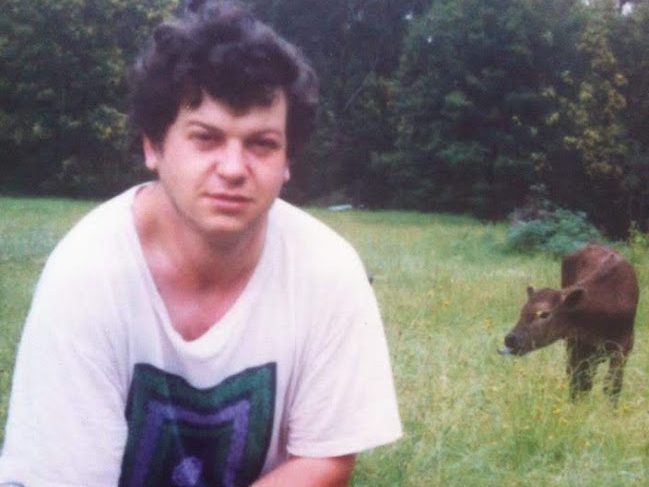
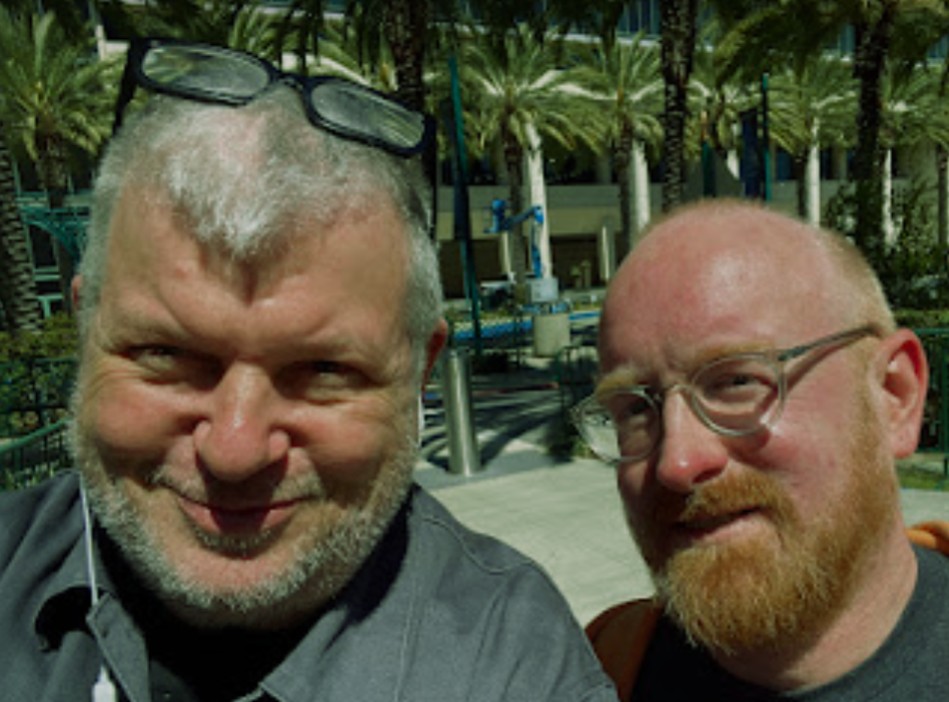
I have known Matt for yonks. He has been a part of the accessibility/web standards industrial complex for too long… He shares his experience and supports others in many ways.
Transcript
Steve:
Welcome back, mate. Thank you for taking the time to be on the fireside chat, the resurrection. How are you today?

Matt
I'm pretty good. How are you doing?

Steve:
All right. Where are you today?

Matt
I am in Mexico.

Steve:
And what are you doing there?

Matt
That's a good question. So I've lived in Seattle, which is pretty far to the, you know, to the to the north for almost 30 years.

Steve:
And I didn't realize.

Matt
Yeah, I've been here for about, well, only about three months. But I had come like last winter just because I had started needing to do like jailbreaks because of just how dark and dank. And I mean, you're British, so I don't need to explain to you that.

Steve:
But I'm not British.

Matt
Oh, you're Australian, but you're living in UK.

Steve:
Yeah. Yeah. Yeah.

Yeah. Yeah.

Matt
Exactly. So it's just I've known you for so long. I know you're Australian.

Anyway, the I've been just kind of dealing with the, you know, seasonal affective disorder kinds of things, and it's exhausting going through a winter. So I finally came down here and had a reasonably decent time. So I was deciding what I wanted to do with the rest of my life.

And a good chunk of it, I think, is going to be spent down here, at least in the wintertime. So, yeah, it's great.

Steve:
So you got your own place or you're renting?

Matt
Yeah, I just rented an apartment here. But it must be much better than up there. Yeah, there are places in Mexico where it's really reasonable.

Like you can get an apartment for five or seven hundred dollars a month and, you know, the whole cost of living would be like two thousand dollars a month. But I got the premium plus plan, I guess, so more. But yeah, so it's it's great.

I have I'm literally looking at the parking lot of the Costco out my window. So, you know, the creature comforts are here.

Steve:
Right. I thought you were going to say, oh, you know, I've got a beautiful view of rolling sands and rolling seas and white sand.

Matt
No, I got I got to walk away for that, but I got the mountain view. That's that's that's pretty nice. So, yeah.

Steve:
But you are in a coastal city. Yeah. Nice.

Matt
So, yeah, it's working out pretty well.

Steve:
Yeah. Well, that's good. You seem very relaxed and happy.

Matt
I know for once, right?

Steve:
Well, I don't know.

Matt
You've known me for a good long time.

Steve:
Yeah. One of the things I realized from having these conversations with various people is that I haven't I don't tend to talk to people a lot. And this gives me the opportunity to to have a chin wag.

I mean, yeah, we've known each other for too long, but I don't think we've ever really spent any quality time. We're always, you know, we know each other and we acknowledge each other, but we don't tend to hang out.

Matt
Like I'd see you outside the conference hotel, like, you know, having a vape and, you know, have like have a little chat. But I don't think I think this is probably the longest we'll have been been sitting around without a beer in front of us.

Steve:
Yeah, yeah.

Matt
For sure.

Steve:
For sure. I mean, when I'm at places, you know, when I'm at conferences like CSUN, TPAC, I just get overwhelmed anyway. And also I tend to be, well, I do get a bit stoned at times.

And so I don't think that helps my being sociable. But also just I just got overwhelmed because I've been working from home for the last 20 years. Now, let's let's get this.

So what was I rolling? Now, I'm going to bring up I'm going to share the the Rogues Gallery. And obviously the Rogues  Gallery is a spruced up each time.

So we try to find it now.

Matt
But I will confess, like this is the part that's giving me the most anxiety because it's the because of the you know, what if there's one person that I've that I've met a thousand times and I'm like, who's that?

Steve:
I mean, I don't know who most people are myself.

Matt
Not a big face guy. I could probably tell you their email address before I could tell you their face a lot of the time.

Steve:
Yeah, it's. What happens is I lose the. Oh, OK.

So. There we go. This is the before we start.

Can you see that?

Matt
No, is that what I mean?

Steve:
Well, I haven't.

Matt
I'm only seeing you.

Steve:
So don't worry. Over shoulder. OK.

This is not. This is the this is the fireside chat sponsored by HTMLZ with the URL. .com or UK. This is the. As I said, this is the sponsor of fireside chat. And as a willing participant, you get an item of your choice from the HTMLZ store.

Yes. So you can choose whatever you like. Tell me and I'll send it out to you.

But obviously, you'll have to give me your address. And for anybody else out there in the web, if you use the code piggy Trump, you get 20 percent off. OK, now.

This is where it becomes. Becomes rather ropey. My whole thing, because I just want to be able to.

Oh, what the. OK, I'll stop sharing. OK, don't worry.

Just check. Well, you don't worry at all. Actually, you just look a little bit amused.

I know people do get somewhat overwhelmed by my level of professionalism.

Matt
That's never been a concern of mine.

Steve:
What my level of professionalism.

Matt
I've never been I've never been concerned about your level of professionalism.

Steve:
I remember just going off pist for a moment. I remember you and I did a presentation for Adobe.

Matt
Yeah, I remember this.

Steve:
Yeah. And yeah. And I get I was I was was being a choose because I didn't realize the fact that the smell of piss was coming from someone in the audience.

Matt
Yes.

Steve:
Yeah. But it was honestly, I just I just I thought it was for me around. But yeah.

Matt
And it was. Yeah. It was one of those.

Yeah, it was just one of those moments where, like, it just kind of happened out of nowhere. I was like, I don't know what to do. Because you called it out.

And I was like, this is not like you're in here. And I was like, I don't I don't know.

Steve:
I honestly thought I'd just like pissed my pants or something. I actually did piss my pants at TPAC recently. That's another story.

It's ancient. But what was going on was that the TPAC was in Anaheim at the at the Hilton. And it was all across the road from from where CSUN is just right across the road.

And it was all in the middle of being constructed. So there was all everything was was was blocked off. A lot of, you know, it was like a construction site.

And I'd been up the road to this Mexican place with Pat. I bought this giant drink and I drank it all. And then I was going back to the to the Hilton.

I thought I need to do a wee. But the toilets downstairs in the in the foyer were were locked due to the construction. So I had to run up the stairs and go.

My room was about, I don't know, 15 mins away. I don't know if you've been to that Hilton, but it's like 15 minutes walk. You can, you know, is it?

Yeah. So anyway. And so then I had to go the other stairs got caught short.

That was that's the end of my tale. You ever been caught short?

Matt
I remember like a Boy Scout jamboree when I was nine or something like that. Yeah. Couldn't be helped.

Steve:
Where did you where did you grow up? What's your your history? You're comfortable talking about it.

Matt
Yeah, I was born in Massachusetts, like outside of Boston. And then lived there until 13, you know, 13 years old and then moved to Arizona. And so I went to, you know, I went to high school living in Arizona.

That's where I picked up at least the beginning of my Spanish. And then, yeah, I've been around. I've lived in Austin for a year, but most of the rest of the time I've been in in Seattle.

Steve:
So obviously you picked up your Spanish. You're reasonably fluent in Spanish.

Matt
I can get what I need. I have a certain there's a certain threshold where my anxiety takes over. And so I'm very short and I forget, you know, I fumble over some of the the cultural conventions here.

It's there's a fairly long handshake before you get done to business. And a lot of in a lot of cases here where it's like, you know, you go to a restaurant in the States and somebody comes up and they're like, what do you want? You tell them and they go and there's no like, hey, good evening.

How are you? Like, here's the you know, like, would you like it? So I tend to I tend to like cut things short and come off rude here.

But I I'm doing about 80 percent of my, you know, conversations here in Spanish and I'm doing OK. But I kind of think like basically after about like two drinks, I'm more comfortable in Spanish. And then after three, that's when the French kicks in.

So that's where it gets confusing for everybody. But, you know, we have a lot of French Canadians here, too. So it works out some of the time.

Steve:
Well, down in where you live.

Matt
Yeah.

Steve:
Yeah.

Matt
So they actually they come earlier because the winter happens first up there. So they'll be done here like October, November. And usually the gringos, the Americans come down, you know, after Christmas.

Steve:
So there's quite a large population of immigrants there.

Matt
Yeah.

Steve:
It's not like a white sort of gringo ghetto, though, is it?

Matt
It it's complicated. There's I mean, there are lots of there's a marina here and off of them off at the marina. It's probably, you know, 90 percent Americans and Canadians.

And if you and if you want to just basically live in your own little enclave and never set foot into the rest of like Mexico, except for a doctor's visit or going to the immigration office, then you can do that. But it's it's a it's fairly limiting. You know, it's kind of why would why would you do that when there's this beautiful country around around here?

People that I know that have been. Yeah. Yeah.

Because you can't afford to live in Monterey. I think that's kind of the idea that you, you know, and I don't know. It's just it seems just kind of cynical and especially the people that I've that I've met here, that have lived here or wintered here like for 10 years and still don't speak like a Spanish.

Steve:
Yeah.

Matt
Make an effort.

Steve:
You know, the Spanish, the English people to go to Spain and then sort of have their English breakfasts and their pubs down the south. And yeah, they just like little ghettos. Yeah.

Luckily. Yeah. Luckily, I haven't fallen into that trap because my wife being Spanish, she's she's a bit more anti British, but anti sort of, you know.

Matt
People going and the cultural hegemony.

Steve:
Yes. Yes.

Matt
But I think that's the that's the thing about like people like calling themselves expats when they're actually when they've actually immigrated. Here. I got balloons.

Yeah.

Steve:
Yeah.

Matt
I think it's this like a cultural hegemony. That's it. That's it.

That's the that's the Zoom cultural hegemony filter. But yeah, like if you're, you know, if you are changing countries, there's there's more to it than that. You know, I just don't think it's that that that clear cut.

So I don't know.

Steve:
So here we go. Hopefully you see the Rogues Gallery. Matt's Rogues Gallery.

Matt
Yeah.

Steve:
You can.

Matt
All right. Yes, I can see it.

Steve:
So top left, we've got someone wearing a common drain T-shirt. The common drain is a landmark in Dunnington in Yorkshire where the Swallow lives. So who is that person?

Matt
I don't think I have to look here.

Steve:
It's the swallow. It's the swallow.

Matt
I can't tell. I don't know.

Steve:
David Swallow. You can't see him.

Matt
Oh, yeah, I can see him. I don't think we ever really crossed paths.

Steve:
No, no. Yeah, well, that's why that's why I always I always feature him on the Rogues Gallery.

Matt
Is it?

Steve:
It's a it's it's a Klout thing. No, I promised him that I'd improve his Klout. So.

Matt
Excellent. OK, my apologies. If you're if you're watching, like, I don't know, we probably we may have met.

Steve:
The Swallow, the Swallow works. So he's a he's got a doctorate in web accessibility, believe it or not. Oh, wow.

And he's worked for TPGI or whatever it's called now. Vispero for loads of years. He's Yorkshire born and bred.

And, yeah, I was with him on the weekend. And that's he was wearing his Common Drain shirt, which I made for him for his birthday, which is so it was all very lovely. Who is the next person?

Matt
That looks to me like a. Young, younger side Ian Hickson.

Steve:
Yeah, I couldn't find any pictures of him older. Yeah, he seems to have disappeared. But yes, that is indeed Ian Hickson, who was the prime mover behind HTML5 or HTML as it's now known again.

Very. He was a very cluey guy, but he was also a bit of an asshole. And so, I mean, we're all assholes.

Matt
I'll tell you my one story. And the reason the reason why I'm in the acknowledgments of the HTML or the W3C version of the HTML5 spec and not the what working group version. I raised an issue where basically they had put a loophole in alt.

By which it was basically optional because of all of the different, you know, like it was this or a figure catching or this or that or the other thing. And then I had raised that and the issue got escalated to the point that Tim Berners-Lee had to make this like to make a decision on it, which went my way. And so alt remained mandatory.

And it had to do basically with like Gen AI versions of alt text because he was convinced. He had been convinced by fellow Googlers that alt text would be a solved problem by 2022. So I think I won that one.

But that was what was going to be in the spec. And so as a result, it was forked in the what working group HTML5. And then in the diffs, it says it was for political reasons.

The political reason was that he lost the decision to me.

Steve:
Yeah, he was. Yeah, he was. He was quite obstinate.

I had arguments with him about both the outline algorithm and the main element. That was lots of fun. Yeah.

It burned me out a bit. But, you know, I came back stronger than ever. Now.

Matt
There you go. Yeah.

Steve:
Who is next to Ian Hickson?

Matt
Okay. So this is again, this is small. But judging by the head, I'm guessing is Patrick.

Steve:
Yeah. Is that better? Okay.

Matt
No, that's worse. Worse? No, now it's better.

Leave it. Leave it. I don't know if you could blow it up.

Is he talking to Steven Pemberton? No. Okay.

That's Bruce. Right. Okay.

I was like, it looks, it looks a little, you know, with that, with, with the.

Steve:
It's not a good picture. And also that I've cut it out. And then this is sort of last Friday night.

We met Bruce in this pub.

Matt
Okay.

Steve:
In Birmingham called the Craven Arms, which is like a real down to earth. You know, Birmingham pub. Yeah.

Yeah. And that's them sitting there chatting.

Matt
Yes. We have, we have all three hung out in various combinations, I think, over the, over the years. So good to see the two of them.

Steve:
Yeah. Well, I mean, Pat and they, you know, they used to work at Opera together back in the day and they've known each other for years, but they hadn't seen each other for a while. So it was, they got together.

It was nice to see Bruce. And previously what I was talking about was not, you know, chatting to people that much. I, my conversation with Bruce when, when I interviewed him was, was I really enjoyed it.

And it was something. Yeah. I got into the weeds with things that I never normally have with him.

So.

Matt
I, but I just, I, I don't know how to feel about, about the Mankini photo being put in front of me once again. So if you know, you know, you don't need to go back for it.

Steve:
No, no, no. Bruce has got an interesting. Yes.

That's for sure.

Matt
Next. All right. So funny story.

I actually met the next two in the same place. At the same time. So.

Steve:
Which was where?.

Matt
It was the worldwide, the ninth international worldwide web conference in Amsterdam.

Steve:
Wow. So.

Matt
Yeah. Yeah. Well, so I, I remember basically there was the, the little mixer that they had at the first, the first day.

So we're talking about Wendy Chisholm, Cynthia Shelley.

Steve:
Yeah.

Matt
Yeah. So I'm, this is my first trip to Europe. I'm 20, whatever, years old.

Yeah. Yeah. That's a lifetime ago.

And so I, you know, chatting with people, Cynthia comes up and I see on her badge, it says Seattle, Washington. I'm like, Oh, Seattle, Washington. And come and then come to find out that she was already friends with like my friends in Seattle.

Like she worked at Microsoft and I was, you know, I had just spent a couple of years there and then she, and then Wendy comes over. And so we like, we start hanging out. And then Charles McCarthy Neville comes over and then William Loughborough, like he was, he was kind of part of the, of, of the mix there.

The late great William. And the, and then like most of us all gather up and go to like this Argentinian steakhouse in, I think Iain Jacobs was in the mix there too. So like basically all of the people that I ended up working with a couple of years later at W3C.

And I just kind of bumped into them at, you know, and at the time Wendy was still living in Madison at like working at Trace. So she moved. Yeah.

And then since she moved to Seattle, you know, a couple of years after that, after that too. So yeah, long story short, I know Wendy fairly well because we wrote a book together.

Steve:
Yeah. Well, that's why I picked Wendy. Cause I knew that she was one of your, you know, that you knew her and also was a contemporary of the, you know, I mean, did you work on WCAG one or two or neither?

Matt
I was, I had just joined as an invited. Expert. So it came out in 98 and I was there like during the finishing touches of it.

So I wasn't even there long enough to be in the acknowledgments of one, but I was there kind of for the basis of two. So my.

Steve:
Wendy was an editor of two, I think.

Matt
Yep. And so then after I was hired at W3C, I was working on the authoring tool and user agent accessibility guidelines alongside that. And I was in the protocols and formats working group.

Steve:
And so was, was Jeanne (Spellman) there when you were working? When she came after you?

Matt
Yeah. Jeanne was around in the, well, I was like, did we overlap or do we just about each other? So I don't know.

It was, it was close. I know Jeanne.

Steve:
Jeanne's a good person. Yeah.

Matt
And, and so like, yeah, we, we worked you know, pretty closely together. I was still in the WCAG working group for the, the run to WCAG 2.

Steve:
Yeah. Yes. We, we, we get to hear a lot about that in the current discussions because there's the, the veterans from WCAG 2 and WCAG 1 even that are still in the working group and WCAG 2.

Yeah. Talking about the authority of the past. I know we decided X, but there is no actual record of why or whatever, but trust us.

Matt
Yeah. I think it was funny. Like the, you know, it, it was a good, I don't know, was it eight, 10 years between the, between one and two.

And I think what had happened was that every time we, every time a new person, it was a relatively small group. It was a really good size by the, by the end of it. But we had this cycle of, there would be a new invited expert that would come in and then they would be like, well, why, you know, like they basically rehash what was a solved or at least like rough consensus or really well trodden kind of, of issue.

Well, why don't you just kind of, kind of thing to, to the point that I think they, they really had to just kind of pave the cow paths. We've done this before. We're not going to completely reformulate this because of this one thing that has already been addressed over the last several years.

And I think finally they kind of had to ratchet it down and be like, look, we got to get this thing out the door one of these days. And that's kind of, I think a lot of what standards work is. You just get to the, you, you get to the point where you can, you can talk and argue about this until you're blue in the face, but ultimately you have to release this imperfect thing where you just, you really want to go back and change it.

And I think that probably was what led to the, the more iterative dot release kind of approach. And as far as, you know, silver, the new accessibility guidelines. I don't know.

I, by this point I had, I had been doing standards work for 15, 20 years. And they're like, we're going to redo this thing from scratch. And I'm like, have fun with that.

Steve:
I mean, they're doing it, but it's, it's difficult work. And at the same time, the person on the left Patrick is, is doing a lot of the WCAG 2.2 backlog, which is essentially, you know, all the voluminous amounts of documents and understanding and techniques documents that go along with WCAG 2.2 progressively being improved, which is important work. Not only for 2.2, because I think that the, you know, it's making clarifications that will be good for, for WCAG 3 as well, if it occurs. Yeah.

Matt
Yeah. I'm glad for people like that because I am not that person. I realized after the fact that I had been editing, you know, a spec for, for years and the, and the test suites and the, and the backlog and that, that level of constant refinement, consensus seeking, you know, clarifications and core agenda, that stuff.

Just it, it, it broke a little part of my brain when I was, when I was doing it, which kind of launched me into doing the, you know, the engineering work and, and that broke it in a different way, you know, just.

Steve:
Yeah. So, so from the W3C, you went to Adobe.

Matt
Yes. Well, in the middle, I did a startup, but yeah, that, that lasted for, you know, the company itself lasted a few years, but I only, I only spent about a year working on it and then ended up, actually funny story. I spent about five months at Amazon and then in the meantime, building a third party website on their platform.

Then I went to Adobe. Yeah.

Steve:
And you were at Adobe for years though, weren't you?

Matt
About 16. Yeah.

Steve:
16. Wow. That is a long time.

And you worked with Kirkpatrick, the Oracle?

Matt
Yeah.

Steve:
The whole time?

Matt
He was my, he was my boss for the first like 10, 10 ish years. Yeah.

Steve:
So, and you obviously got on well with him.

Matt
Yeah. He's, he's great and, and thoughtful and thorough and the kind of person. Editing us back like WCAG 2, right.

Yeah. And I know that guy.

Steve:
Yeah. That's you. I took that from a picture that you put up somewhere about something.

Yeah. With more of that.

Matt
The sugar skull.

Steve:
Yeah.

Matt
Yeah. That's, that's Katrina. So that's the, the kind of the, the icon of like the day of the dead.

So that was, that was a portrait that was, that was hanging in the, the last, the first rental that I had here.

Steve:
Gotcha.

Matt
Yeah.

Steve:
Excellent. So to the left of you, do you know that person?

Matt
I believe that is Sarah Swaden.

Steve:
Oh, is that how you say her name? Cool.

Matt
If it's, if it's the Arabic way, then it would be Sarah. It would be Sarah otherwise, but you know, I, we have never spoken. And I think I've only ever seen her, you know, on a panel or giving a talk or something like that.

So I've read a lot of, I've read a lot of her work. But I've never actually interacted with her in real time.

Steve:
I've never spoken to her, you know, conversed with her over email, DM or whatever a few times. She's going to, I'm going to be talking with her in the next couple of weeks. So that should be an interesting time.

Obviously you're interesting. Who's this person next to you?

Matt
Is that Thomas Tobin?

Steve:
That, no.

Matt
Oh, is that, is that, is who Michael Cooper? Michael Cooper.

Steve:
Oh God. Okay.

Matt
Yeah. Thomas Tobin has a, it's more like a handlebar. Sorry.

He's a universal design person. Okay.

Steve:
Michael.

Matt
Okay.

Steve:
He lived in Japan.

Matt
Thomas Thomas Tobin. He's a universal design.

Steve:
Yeah.

Matt
Okay. It's the beard that threw me off, Michael. I'm sorry.

Steve:
Yeah. I mean, I just, I mean, he was a, you know, a long-term resident of the Wai, wasn't he? I don't know what he's doing now.

I know he's doing something, but, I don't quite know what he's doing now. Since you left Adobe, what have you been doing?

Matt
First off, I was kind of recovering from my own burnout from working in the, in the field and then started doing, helping other people with theirs. So I. I.

Consult with people. I'd never liked like coaching as a, as a term, but mostly just listening to people. Process out the stress that they go through from.

You know, the day-to-day working in a field that. A lot of the time kind of makes you feel like it, it doesn't matter if you're there or not.

Steve:
So, so this is what you, this is what you do. You make your living from.

Matt
I I'm lucky that I don't have to force it, but you know, it's, it's something that I make available. I. I don't know that I'm cut out for another full-time job, certainly not in technology of that, that ship has sailed.

So. So mostly. I'm more focused on having a good time.

And I, I know that I'm not going to do that as an engineer or, you know, Like doing the full-time block and tackle work that I, that I used to do.

Steve:
Yeah.

Matt
But what I do see. People are struggling with and that there aren't really resources for. Is that burnout of having somebody that has been through it.

And. And. You know, it doesn't want to gaslight them into, into thinking like, well, it's okay.

Like all you got to do is just keep pushing that rock up the hill. Knowing that sometimes the rock just rolls over you.

Steve:
Yeah.

Matt
So, so yeah.

Steve:
Yeah. I mean, I, I, in the past, I found it difficult to understand the concept of burnout from. That is particular to accessibility work.

But what I realized when. When I, I was, went to access me to last year and I saw Eric Bailey talk about, well, just talk about his, you know, he's lived the experience type thing, but also. The announced stuff like that.

And I finally got it because I, I've been lucky enough to always have, you know, always be part of an organization that, that is about accessibility. So there was always lots and lots of people around me that were doing similar work, but that is, isn't often not the case for people working in accessibility. So that's.

Matt
Yeah.

Steve:
I'm just glad.

Matt
Yeah.

Steve:
Yeah.

Matt
I think another part of that, and, and this kind of comes in because the way that I structure. Talking people through this is. There are some people that are like, I'm done.

You know, I, I don't want to, I don't want to work in accessibility anymore. I don't want to work for like in tech for a corporation, but I want to do something else. Or then there are people that are just, you know, they're like, where am I in this continuum?

Do I want to stick into the job and try to be more effective doing it? Or have I more or less kind of given up on my current working environment and want to go do something else. And so a lot of that is what you're talking about.

Like they're doing the same work as every everybody else that has a title of engineer or product manager or something like that, but they're measured against things that, that they can't affect, right. They're a product manager, but they don't manage the feature set for accessibility. They're just going to product teams and saying like, would you please do this?

And the teams could just tell them to fuck off and that's it. And that's fine. But somehow the consequences fall back on them for not the, the influence without authority kind of situation.

And that just compounds that. So, so I have a chapter in the, in the book that's coming out in, I think it's April now.

Steve:
Tell me about the book. I didn't know you had.

Matt
It's the, the, the accessibility ethics book.

Steve:
So what are the authors of that? There's all these. Who else is there?

Laney Feingold.

Matt
Yeah. Laney, Chancey Fleet and Regina Gilbert are the, the editors. Yeah.

And then I think there are like 29 of us that are, that are authors like, but my chapter is, is called like burnout is an accessibility ethics issue. Cool. Walking people through kind of my, you know, my story and the, you know, and like a little bit behind the, the psychology of it and how it's socialized within, within corporations to, to basically localize the responsibility on you for the lack of responsibility on, on like on everybody else, right?

Like why aren't we, why aren't we better at this and it's because you're not as effective, but we never gave you the resources to do anything meaningful with, with the work in the first place. So.

Steve:
Yeah.

Matt
That's, that's what I get. A lot of people that have, you know, the, the, have talked with me about the, about the sub have been dealing with that. And like, this is so fast forward to this.

Like I, I do office hours every Thursday. So anybody that wants to talk through this stuff, I do, I've done them for eight years. They're free.

There's, it's not like a pipeline to come and do, you know, coaching things with me or whatever. So anybody that's listening, that's, that this is resonating with and wants to figure out like, what am I doing with my life? That's, that's what I'm doing now.

Steve:
So, so like, it sounds to an extent, like you, you're a, a therapist for accessibility engineers, accessibility practitioners.

Matt
I'm, I'm more of a listener. There, there are certain points, there are certain points where like having a therapist is, is, is really in, you know, is, is, is really important or a psychologist or, you know, a psychotherapist or whatever.

Steve:
So you're not claiming to be a professional, you know, in this, you're just a listening, a listening ear with, yeah. Yeah. Having a similar experience.

Oh, that's cool. I don't know. Yeah.

I didn't think I could, yeah. Well, I like to think that I could share my time, but I don't, yeah. The thought of doing office hours and listening to it.

Yeah. More power to you, my friend, more power.

Matt
I didn't know. I didn't know that I could do it. Like I just kind of hung out a link to, to my calendar once and, you know, I've done probably, I don't know, 500 or so, you know,  of the office hour sessions over the, over the years.

And it's, it's great. I mean, it's, it's, it's great practice for actually listening to somebody and kind of understanding what they're going through when for most of your career, you're just kind of like, okay, like, how do I solve the next problem? Right.

Like if you were, you're trying to do, you're trying to make a business decision and not trying to deal with the welfare of the person that sits right in front of you.

Steve:
Yeah. Cool. Okay.

So do you know who this person is?

Matt
I am afraid I'm drawing a blank on this person.

Steve:
That's that's fine. That's she's her name is Lola. ODELOLA.

Matt
Oh, okay. Yeah. I've heard her name before.

Yeah.

Steve:
Yeah. She's on the TAG currently with Matthew Atkinson amongst she's doing the accessibility compatibility data. She's trying to pull together browser accessibility implementation data and make it available.

Like, you know, sort of, can I use type thing, but simple sort of stuff. So funnily enough, Cynthia is involved in that as well. So she's come back cause she's recently moved to Amsterdam.

Matt
Amsterdam.

Steve:
Yeah. Yeah.

Matt
It's a popular thing. Like yeah, the yeah. And there's a, there's, there's a program called this is true.

It's called DAFT the Dutch American friendship treaty. Yeah. So you can, if you, if you start a business in the, in the Netherlands, then you can get a pathway to like to, to residency.

So that's another way of doing that. So, yeah. So yeah.

Steve:
Yeah. Well, I believe these go well with four of the next person on, on this is a, well, you both don't, that's Andrew Kirkpatrick. He's working for evinced.

Matt
Yeah.

Steve:
Yeah. Do you know anything about this company?

Matt
Relatively little. I think, I mean, it's like a PDF. It's like a PDF.

Is it like an AI product or something? Like it's basically a mediation tool for, yeah.

Steve:
Let me look, I got, I mean, they've got, they've got a range of things, but I think they're, they're actually, I'm looking, I'm pulling up the website now. So yeah, a lot of these companies, well, no, not a lot of these companies, but this is another company that's based in Israel. I think a number of the overlay companies were based in, or came originally from Israel, such as, which was then bought by Level Access.

But anyway, yeah. So Andrew's there now. And another person, James Nurthen, who you probably know, he works, he used to work at Adobe under Andrew.

Now he's at events, presumably under Andrew. I don't know. I don't know.

Maybe it's the side of Andrew or whatever, or at least maybe he spends some time on top as well. Who knows? I don't.

Matt
I'm not going there.

Steve:
Yeah, I'm not going there, but yeah. So it's moved on. So obviously again, must have been a good working relationship he had with Andrew, had with James because they continue their work.

Yeah. Bottom left.

Matt
Bottom left. Yeah, that's Karl Groves.

Steve:
Yes. This is a shot of him from CSUN. And wow.

It's really bad. That is just a bad picture. But he reminded me of Kenny Loggins.

I thought it was Kenny Loggins at first, but then I realized, no, it was Carl Groves. Carl's good. Yes.

Karl's another one that's been around. Fucking yonks. Always doing something that was causing some disruption somewhere.

Right. And he's going to be coming on to talk. I think his latest thing is eventably some sort of accessible events app.

Matt
Yes.

Steve:
Do you know anything about that?

Matt
I think as soon. Yeah. That is basically a full service like events, you know, like planning tool where you could register people.

And I think I talked with him about this some time ago where he was talking about this. Basically that event tools are miserable.

Steve:
Yeah.

Matt
Like from an accessibility standpoint. And I mean, I think the same thing could be said about like the calendaring apps that just haven't done. They haven't done the work necessary to, you know, to actually hold themselves out as accessible.

So I wish him the best of luck for that, because I think especially if you could have like a complete solution where, you know, you could do a webinar.

Steve:
Yeah.

Matt
And, you know, like, and collect money for the session and provide, you know, a reasonably, like, I don't know if he's carving off the whole web, like the actual streaming experience part of it.

Steve:
I have no idea. I'm sure that it'll go into detail.

Matt
I mean, because that's busted too, right? Yeah.

Steve:
It's all busted. Yeah. I just noticed that he got the hump because people weren't supportive enough of it.

So, which immediately made me feel less supportive. So, but I will find out more when he comes on. Do you know the person next to Karl?

Matt
Would that be Shell Little?

Steve:
It is Shell Little. Wow. Okay.

Well done.

Matt
Good for me.

Steve:
I've met her a few times, but she's definitely a larger-than-life character.

Matt
Yeah. Actually, Shell has done, like, she's done a talk about burnout too. Yeah.

I think. I want to say she did it at, like, Accessibility Toronto or something. Yes.

Yes.

Steve:
She comes from there. I think she did a couple of years back.

Matt
Yeah. Yeah. So, I tried, actually, I think to co-write this article with her, and we can never get our wires, you know, like, we never get, we got our wires crossed.

We couldn't sync up on, like, sitting down and talking and outlining it. And at that point, I was like, I hope this does justice to, like, what people are feeling. Yeah.

But, like, I think a lot of, a lot of people are, like, are coming to the same conclusion. Shel and I had a good conversation about that.

Steve:
Good. Good. Yeah.

I didn't see it, like, last. I didn't bump into her, but I usually have in the past bumped into her. Person next to Shell?

Matt
Eric Eggert.

Steve:
You know Eric?

Matt
I don't know. Yeah, we went back a ways. Like, he, yeah, was working on the, he was working probably in the WCAG working group.

Like, he was in W3C Sphere for a while.

Steve:
Yeah, he worked for W3C, and then he worked for Knowbility, and now he works for Axess Lab. I chatted to him a couple of weeks ago. I'll still do the post-processing of it, but that will appear.

And the person next to Eric?

Matt
That is Natalie Patrice Tucker.

Steve:
That sure is. Do you, is she somebody that you know, or somebody that you?

Matt
Yeah, we've, like, she was, probably, I think probably Accessibility Toronto was the last time that I saw Natalie, like, three years ago or whenever it was that I was there. And then previously, like, at XSU. So, like, yeah, we've always, we always, like, run up against each other at these conferences.

Steve:
I mean, I first met her at CSUN when it was down in San, was it? San Diego? San Diego, yes, at CSUN down there.

And she was with some guy, Tom Babowski or something, a blind guy.

Matt
Yeah.

Steve:
I mean, I'm talking, you know, 2006. No, yeah, no, I'm talking about, because there was a guy called Jason Kiss. I don't know if you've ever met Jason.

Matt
Yeah, I know Jason.

Steve:
Yeah, and he just fell off the radar. He was working on the AAM, the Accessibility Implementation, browser implementation stuff with me back in the 2010s. He moved to New Zealand and then never heard from him again.

But I remember me going with him into somebody's room and Natalie Patrice was there and we were all smoking doobies. So it was good times.

Matt
I never get to the cool parties, I guess, so.

Steve:
No, well, you should get, hang out with the right people.

Matt
Yeah, but you're thinking of, so you're thinking of Tom Ledkowski.

Steve:
Yes.

Matt
He was the VP at Comcast for accessibility.

Steve:
No, no, not him.

Matt
Oh, no, no, no.

Steve:
Okay, somebody else. I know he's the old, he's an older guy, isn't he? I mean.

Well, I mean, he was, well, I mean, I'm old now, but I mean, he was more contemporary than me. This guy was a blind guy and he was young. I'll find his name.

But I just remember him rocking out to some music sitting on the bed. Anyway, that was.

Matt
It was like CSUN behind the scenes.

Steve:
Yeah, yeah. Are you going this year? No, no, I don't plan to go to America until there's a regime change.

I don't think I can, but I want to go.

Matt
I do not blame you for that, in fact. So because, so I'm actually going home in a week for another conference. But as far as like flying into the L.A.X. and, you know, hoping for the best, I'm going to pass. Yeah. I'm not going to make any frivolous trips to the United States. And I don't recommend basically anybody outside come in for the time being.

Steve:
Well, no. Yeah, well, that's the thing. I mean, I just made the decision that even though, I mean, I am sad because I love going to CSUN.

It's always been something I've enjoyed. And also this CSUN is going to be the last CSUN that Mike Paciello is going to CSUN. So, but anyway, what can you do?

Exactly. So, yeah, so I'm going to, but I'm going to go, I'm going to try to go to A11yTO again because it's not in North America. Well, it is in North America, but it's in Canada.

Yes. Yeah.

Matt
As long as you can, as long as you can fly into Canada directly, it's a much better deal. Like the rules for even transiting through the United States are kind of onerous.

Steve:
Yeah.

Matt
A lot, a lot of actually the new routes are opening up between Canada and Mexico so that they, so that nobody has to even set foot in the, it used to be you just connect through Atlanta or Houston or whatever. And it wasn't a big deal. But now a lot of the people that I talk to around here are like, we fly nonstop.

We don't want anything to do with any of that. Yeah.

Steve:
Yeah. Well, that's the thing. I mean, just the idea that I want to look at my socials, you know, for five years.

Matt
I've seen your socials. Yeah.

Steve:
Yeah.

Matt
You know, it is, it is reasonable for you to be concerned.

Steve:
Yeah. So that's, that's why, that's why I don't. Last person on the Rose Gallery is.

Matt
I would say, so like if you, if you drew, like if you do like a tic-tac-toe line here, probably three of the, of the like four, most people that I've most interacted with in this entire list are like right in a row there. But that is Makoto Ueki. Yes.

I have stories upon stories about Makoto. Awesome. He's a, huh?

So I first met Makoto the first time I went to Japan in, I think that was 03. Yeah.

Steve:
Yeah.

Matt
At the time, Makoto didn't speak English, but he was a reporter who had kind of picked up the accessibility beat. And so he interviewed me for like a mobile, like is a mobile magazine called Keitai Watch. So like mobile watch, I guess is in Japanese.

And so he came out to Keio University. So like, you know, out into the sticks basically, or no, I went to Tokyo, met him there. And so he interviewed me through an interpreter and we, you know, and, you know, very respectfully, like, you know, I got the full bow from him as like a thank you for meeting.

It was like the first time I had actually gotten like the full like Japanese style. And then about like several years ago, several years later, I met him probably at CSUN and he was like, I speak English now. And I'm like, so fast forward.

So my wife and I have been like assistants at a Buddhist temple in Seattle for 15 years or so.

Steve:
Yeah.

Matt
And in 2016, we went to Kyoto and got ordained. So we're both Buddhist ministers. And so we were there for basically two weeks.

And for the majority of that, we were like cloistered in this Buddhist temple in Kyoto. And then we went, had an ordination ceremony and they like let us out. And so we're going from basically this really quiet, no electronics, nothing kind of thing to a bullet train to Tokyo to meet Makoto and his wife Junko.

And they took us off to their like family's village, to Junko's family's village. And we stayed at Junko's house with her parents and her nieces and had like this fantastic time there. So they took us back and, you know, reintroduced us into civilization with sucking.

And yeah, it was an amazing experience. But it was like for about, you know, it was probably three days that we were there with them and just the shock of just going from this like complete quiet studious, you know, like experience to like, you know, let's get a bento and get on the bullet train to Tokyo so that we can go to, you know, sake breweries. Yeah, that was a good time.

Steve:
Excellent. Yeah. Pat was there, T-PAC was in somewhere, Kyoto or somewhere recently, last year, late last year.

And he had a great time.

Matt
Yeah.

Steve:
Loads of photos. He loves to take photos and loads of photos.

Matt
Oh, yeah. He had that street corner that's like kind of a meme that has that with the, it's like a little market or something, like a weird little corner, you know.

Steve:
Yeah.

Matt
I know the thing you're talking about. Yeah.

Steve:
Yeah. So we had lots of fun. That's the Rogues Gallery.

You didn't do too badly.

Matt
Yeah. I apologize to Michael for not recognizing him, even though I've known him forever, but he was clean cut when I knew him. And also I apologize to Lola, but I did see your session at ID24.

So, yeah, it's not, yeah, it's not her fault for like not being influential enough. It's just, I was already kind of gone from the scene by the time.

Steve:
Yeah.

Matt
I, you know, I had seen her in the, like in the W3C space.

Steve:
So are you sort of retired from web standards now?

Matt
I, you know, I've been calling myself semi-retired, you know, and I think honestly a part of it is I moved from accessibility into inclusive design. So I started the inclusive design practice, which is now called product equity at Adobe. And as a, basically as a result of the election with the focus, you know, the project 2025 thing, like all of that, they were, they were targeting DEI and then January of 2025 rolls around and it happened to be DEI A.

So the, you know, so at that point, basically this, all of the things that I had trained myself in, my degree is in inclusive design. All of that stuff just became like unhireable. And, and so I think a part of this is, is more like you can't fire me.

I quit. I don't want to be contributing to window dressing around this work. When, when in, in reality, if I were to move to another country, there would actually be people that care about doing this.

But like, honestly, the way that I feel about what's happening in the, in the United States was we put so much weight on the, on the federal government being the driver is everybody's number one customer. And when that got dismantled, you got to see basically how raven and opportunistic the employers were in that space. And so at that point I was like, well, I'm not working in tech in the United States anymore.

And the longer I spend over here, I just think in terms of my connection to the United States, like I don't want to be, I don't want to be contributing to a system that's not, that's not in line with my own values. I would rather be contributing to it elsewhere. So, so I'm calling it semi-retired and, you know, wherever, wherever I can help with, with people or be an advisor to, to things.

I do that, but I also don't feel like it's fundamentally going to change in a theoretical 2027 or 2029 or something like that. I think it's just that we had this belief that maybe companies were going to do the right thing in the absence of any evidence. And once they learn to work the system so that they didn't have to do it, they don't do it anymore.

And I, I just don't, I don't want to play a role in that. And so I would rather kick back on the beach. I'm not, not on the beach.

I'm super pale. So like, I just kind of, I'll sit in the shade, but yeah.

Steve:
Yeah. Okay. Well, thank you, Matt.

I'm going to have to go purely because I'm dying for a wee. Okay.

Matt
Well, we'll see what happens if that doesn't. Yeah.

Steve:
Yeah. But thank you. And I will, yeah, I'll be in touch soon.

Matt
Okay. Great. Thanks a lot.

See you, Matt.

Steve:
Bye-bye.
Some stuff we talked about
- Matt May Office hours
My office hours are for people with questions about:
- product equity, inclusive design, accessibility in general
- careers in all of the above
- dealing with depression/anxiety/stress due to all of the above
Free sessions are available on Thursdays. If these times aren’t convenient for you, please contact [email protected] for one that is.
- W3C
Zappa – Inca Roads
Lyrics
Did a vehicle
Come from somewhere out there
Just to land in the Andes?
Was it round
And did it have
A motor
Or was it
Something
Different
Did a vehicle
Did a vehicle
Did a vehicle
Fly along the mountains
And find a place to park itself
Or did someone
Build a place
To leave a space
For such a vehicle to land
Did a vehicle
Come from somewhere out there
Did a vehicle
Come from somewhere out there
Did the indians, first on the bill
Carve up the hill
Did a booger-bear
Come from somewhere out there
Just to land in the Andes?
Was she round
And did she have a motor
Or was she something different
Guacamole Queen
Guacamole Queen
Guacamole Queen
At the Armadillo in Austin Texas, her aura,
Or did someone build a place
Or leave a space for Chester's Thing to land
(Chester's Thing... on Ruth)
Did a booger-beer
Come from somewhere out there
Did a booger-bear
Come from somewhere out there
Did the Indians, first on the bill
Carve up her hill
On Ruth
On Ruth
That's Ruth
2 replies on “Matt May speaks”
[…] Video: Matt May speaks Steve Faulkner: Fireside Chat with someone who “has been a part of the accessibility/web standards industrial complex for too long”. […]
[…] Video: Matt May speaks Steve Faulkner: Fireside Chat with someone who “has been a part of the accessibility/web standards industrial complex for too long”. […]