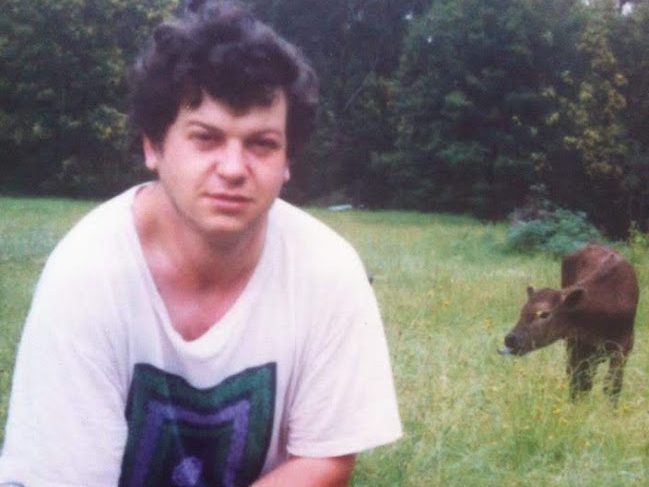
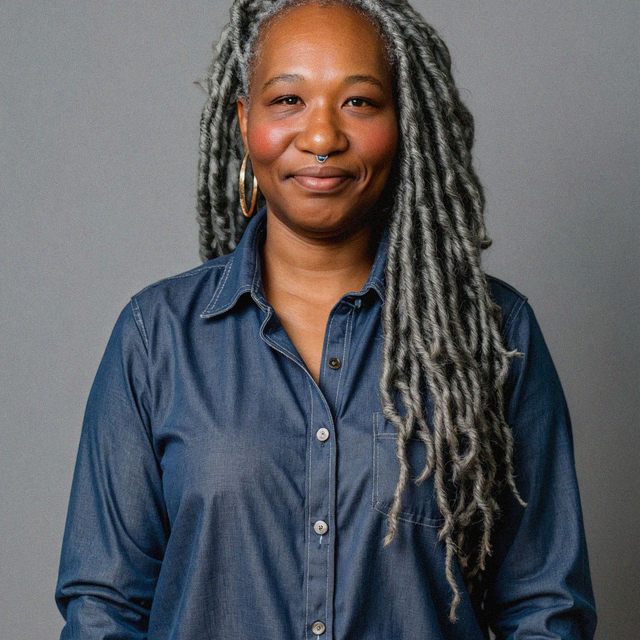
I first met Natalie at CSUN in San Diego around 2016, we hung out and socialised a bit. Natalie has been a prominent Accessibility advocate for much of the 2000’s.
Transcript
Steve:
Well, hello, Natalie Patrice Tucker and welcome to, is it Tucker or Parker? Tucker. Tucker, yes, sorry.

I just suddenly thought I'll say your name, I'm really bad with people's names generally, but I do remember your name because it's quite an interesting double barrel. How did you get a double barrelled name?

Natalie:
Natalie Patrice Tucker. Well, so my middle name is Patrice. So I was named after Patrice Lumumba, who is the first democratically elected leader of the Congo, the DRC.

I was never let to forget that growing up. And so I use it prominently now.

Steve:
It's a cool name.

Natalie:
Thanks.

Steve:
Very cool name. I don't have a, my parents weren't rich enough for me to have a middle name because it costs like an extra 10p or something. So I didn't get one.

No, I don't have one, but it's not true. They couldn't, well, it didn't cost anything extra. Obviously I was just being silly, but that's, that's me.

Okay, so just tell us a bit about yourself, Natalie, because I don't really know much about, I know you work for Knowbility. I know that you enjoy having a good time because that's the, you know, like partying and, but I also know that you are heavily involved in accessibility and, and work, you know, with organizations to help make stuff more accessible. So, yeah, tell us a bit more.

Natalie:
Okay, great. So, Natalie Patrice Tucker, I live in Atlanta, or just outside of Atlanta, Georgia in the United States. I have been in Atlanta for about five years, but I was raised in central Virginia and I moved to DC in the early or late 90s to save the world.

I moved there to be a, you know, to work in nonprofits and I started out as a political organizer, and that was hard work, hard work. And it wasn't, I wasn't inspired, deeply inspired by it. So, the tiny little organization I worked for had a database.

I taught myself SQL so that we could reach out to our members more effectively and understand what we were, what their engagement was. And I realized that helping nonprofits with tech was a way that I could make a difference. So, I started doing admin in nonprofits with constituencies in developing countries and was asked to build websites or to fix websites, you know, to add things to websites.

And so, you know, I was like, sure, you know, like, I didn't, I didn't know a thing about it. And I taught myself XHTML, HTML, CSS, and enough JavaScript to be dangerous. And this was, this was a wild, wild west of the internet at the time.

And I...

Steve:
So, sorry, what, when was this? What year?

Natalie:
This would be 1999, 2000. Yeah. So, one by one pixel GIFs and JavaScript ninjas and the browser wars.

Steve:
Yep.

Natalie:
You know, and so the constituencies that we were building for, that I was building for had slower internet access, older browsers, things, you know, we have to be concerned about actually getting the word out and being able to communicate with folks. And so, I just, well, so initially I was deeply in love. I've always been deeply in love with, with the standards, with the standards and the standard-making body.

I devoured the standards. I learned HTML by reading the standards and then by practicing, you know, like I learned CSS by reading the standard. I learned ECMAScript by reading the standard and trying to parse it, which was daunting.

And part of the reason why I think I'm no good at JavaScript. I'm still not as good as I'd love to be. Anyway, so I, when, when WCAG, when, when WCAG 1, I discovered WCAG 1.0 and I was like, this is it. This is how, you know, like I can make a difference. If people find out about what is possible with the web, you know, access to information, everybody has access to information, blah, blah. I was like, this is it.

This is where it's at. So I sort of pivoted to learning more about web accessibility, moved. And because I had been doing work to develop sites that were WCAG compliant at the time, I moved into the federal government to support building websites and electronic documents in the federal government.

I was not, I did not love working in the federal government.

Steve:
Right.

Natalie:
Huh?

Steve:
Yeah. Sorry. I'll just, yeah.

Yeah.

Natalie:
Yeah. And so I, I reached out to a man whose work that I respected. His name is Tom Babinski.

He's an amazing, amazing gentleman.

Steve:
He's a young guy, isn't he? Well, he was young. He was young, was.

No, I just remember at CSUN in 2014 that sometime, that's where I met Tom Babinski is his name. I was with you and I ended up in a, in somebody's room. Yes.

Having a party. And that's why I said you like party. That's my main experience.

But we were with a guy called Jason Kiss. I don't know if you remember Jason. Like, he's just disappeared.

He used to work quite closely on web standards with me. Back in the early 2010s. But then he just, well, he lives in New Zealand.

He's obviously got better things to do, which I don't blame him.

Natalie:
He's got sheep now.

Steve:
Yeah. I understand. Yeah.

No, I understand as well. I mean, yeah. I mean, sometimes I think, you know, what, why the hell do I continue to do what I do?

I feel you.

Natalie:
I feel you. Especially now. It's an interesting time.

Yeah. I reached out to Bob or Tom. I had left his work and I reached out to him.

I was just like, you're doing amazing work. I'm a fan. If there's any way I can be of service, let me know.

And he was like, wow. Basically, I don't think he'd ever gotten a fan letter before. And he was like, okay, yeah.

So he took me under his wing a bit and helped me understand screen readers better. And for context, Tom is blind. He had an accessibility consultancy that was based in Northern Virginia at the time.

That's why I was a fan. I was a fan of his blog and his work. Right.

And then so I started doing accessibility testing, training, PDF remediation with Tom.

Steve:
But he's consulting.

Natalie:
Yeah.

Steve:
Yeah.

Natalie:
And then I worked with another small consultancy, eventually opened my own little consultancy. And then in about 2007, 2008, there was a sea change, as you're well aware, when WCAG 2.0 was starting to come down the pike. And there was harmonization all around the world around.

Steve:
Hold on a sec. I just got to go put the dog back in the other.

Natalie:
Do it. Do it. I'll keep going.

Steve:
Hold on.

Natalie:
There was harmonization around the WCAG standards federally, internationally.

Steve:
I've got a child gate to stop the dog coming through the area. But I just realized that she's worked out. There's a hole on the side and she's worked out how to come through it.

So I have to block that up now somehow.

Natalie:
Yeah.

Steve:
I mean, we've had some problems with the dog because she's on steroids for arthritic condition and she just pisses everywhere. So that's why I'm trying to keep her on the wooden floor. But things are improving there.

So I'm happy about that. Sorry, I lost my train of thought or the train of the conversation because of the dog.

Natalie:
No, it's perfectly fine. I was telling you about how, you know, in early 2000 or like the early 2000s, 2007, 2008, there was a sea change that allowed me to work with bigger organizations on, you know, and start building teams, start building accessibility programs. So I worked on building ACA portals, which that was when the Obamacare started in the United States.

And there were these portals for each state to get folks registered. And I worked on those for a number of states and then got to work with Benetech, redesigning the Bookshare, worked with Microsoft to build an accessibility program at Bing and Cortana.

Steve:
So you worked for Microsoft or were you contracting?

Natalie:
I was a consultant.

Steve:
How long were you there for?

Natalie:
A year and a half, a year and eight months, something like that.

Steve:
Yeah. I've never worked for Microsoft. I've never worked for any companies, actually, apart from, well, accessibility companies.

I worked for Visual Australia, then TPG for 18 years and now TetrLogical.

Natalie:
That's really interesting. I was just thinking earlier about the nuances of doing this work in different contexts and what that takes and what's required and what you learn inside of that. That's really interesting.

That would be a good, you know, thing to talk about.

Steve:
One of the things that I really, because I was speaking with Eric Bailey a couple of weeks back, but I saw Eric Bailey at A11yTO and he did a really good presentation talk. But one of the things that came through to me was because I've never really grasped the concept of burnout in the accessibility context. But that's mainly because I worked out, because I've always worked in companies where I've been surrounded by other people doing, you know, the same or similar work.

And I've been surrounded by people with disabilities, you know, various blindness or whatever. And so it's just, yeah, I haven't been in a situation where I've been the only Accessibility person in the room type thing. It sounds like you have been.

Natalie:
I've very much been. And I've also gotten to work with incredible teams, got to build teams to run accessibility programs. It's, you know, it's an interesting space.

It's an interesting space to be in, going from an individual contributor to building teams. I have to say that, of course, it's a lovely experience to work with a group of people who is engaged and passionate about a web that works for everyone, as I am.

Steve:
Yeah, definitely.

Natalie:
It's a rare opportunity to get to sync with folks like that, which is why it's lovely to be working with Knowbility right now.

Steve:
Yeah, well, I'll drill down into that a bit after I've got the Rogues Gallery going. OK. Because there's a couple of people in there which I'm sure you definitely know because they work at Knowbility.

OK. So just bear with me for a moment. This is where I've got to share screen share now.

Oh, it always. Yeah, sorry. Yeah, this is one of the things that I will.

All right. Here we go. Can you see all these people?

Natalie:
OK. Yes, I can.

Steve:
OK.

Natalie:
So I'm happy to say that you've actually got people in there that I know. I was a lot of people I don't know.

Steve:
What I try to do is is have a look like I had a look at who you're connected with on LinkedIn and. But also there's people that I know or want to learn more about. And also I threw in a few of the of the reports.

So top left. Who is that?

Natalie:
Who are you? That's a tiny picture. It's hard.

Steve:
OK, hold on. Let me just.

Natalie:
Yeah, that's good. Thank you.

Steve:
He's always in the top left. It's always him.

Natalie:
So now now you're going to show me. I don't I can't. I don't know.

Steve:
It's Dr. David Swallow.

Natalie:
Oh, yes. OK, of course. OK.

Steve:
He's one of my muses. Dr. Swallow. Oh, it's also he's a very good friend.

This picture was that I recently a couple of weeks ago we met in Birmingham, which is in the Midlands of England. It's where all my family actually come from, except me. I was born in Australia, but I've got family still cousins and stuff there.

And so anyway, we I've been out with him and Pat for the weekend in Birmingham. And that was actually the original picture is actually it's got like a heart thing that goes around. It's like an installation.

There's me and me and Dave sitting there in the in the heart.

Natalie:
But you I think the reason I didn't recognize it because the picture is so recent. I haven't seen it. Yeah.

Steve:
And also he's got this sort of he looks a bit like you probably wouldn't know this show called Steptoe and Son. But it's about a rag and bone man. It's an old English series.

And he looks like the the old guy in the rag and bone, the steptoe. But I always say, yeah, I always try to find some way to undermine that. Not Patrick, David's confidence.

And so that I've done. So moving swiftly on. Do you know who the next person is?

I'm connected to it on LinkedIn.

Natalie:
Yes. The name is is is Mark.

Steve:
Marku Hakkinen is his name.

Natalie:
Yeah. OK, great.

Steve:
Yeah. He's I chose him also because I used I worked with him for a time at TPG many years now. And we did some training together in some god awful places in America.

But, yeah, he's an interesting character. He works at a university in Norway or somewhere up there, swinging up in the air. And he does some really interesting stuff to do with haptic and other stuff.

He's still active and is an interesting guy. Interesting. Fairly interesting.

Not as interesting as you or I, but still interesting. Talking of interesting people, who is that next person?

Natalie:
OK, this is someone I should whose name it should be on the top of my tongue and it's not.

Steve:
That's all right. He's always here as well. That's Patrick.

Yeah. Yeah. That is another one of my my compadres.

And this, again, was in Birmingham. We're in a coffee shop and he was he has this sort of like to have this flourish when he presents food to people. But anyway, that's Pat.

And next to Pat.

Natalie:
That is my dear friend and colleague Sharon Rush.

Steve:
Sharon Rush. And what what is her role at?

Natalie:
Sharon Rush is the director and founder, one of the founders of Knowbility. So it's been running Knowbility for about 27, almost 30 years.

Steve:
Has it really? Is it Knowbility that run, they run a AccessU, is it? The conference?

Yes.

Natalie:
Yes, that conference. The call for speakers is happening right now. So if anybody wants to present and access you, which happens in in Austin, Texas, in May, that's an excellent, excellent opportunity to do that.

Great time. But yes, accessU.

Steve:
I've never been. I know some people I know have been says it's a great conference, but I've never been. And it's very unlikely.

Well, it's there's no chance I'd be going to America at this point in time. But I met Sharon several times over the years and I was actually presented with I did try to find it, but I got some sort of. I can't remember it was like Hero of Accessibility Award from Knowbility back in the day.

It was organized by a guy called Rich Swertdfeger, who used to be part of the Knowbility.

Natalie:
Yeah. One of the co-founders. I think Rich and Sharon started Knowbility together, actually.

Steve:
Oh, really? I didn't realize it was that. I knew he was involved.

But anyway, he and I worked closely together during the development of HTML5. And he was my contact. He actually could get stuff put into JAWS screen reader.

So because he was CAO of IBM at that point, I think he's a great guy. I really like it. I call him the godfather of ARIA because he was one of the instigators of ARIA spec, et cetera.

But yeah, so because of that, I think it was at CSUN and they gave me an award. And I've got it somewhere, but I don't know where it is.

Natalie:
Well, Sharon wanted me to give you her love.

Steve:
Oh, thank you. It's a shame. Yeah.

I mean, I know that lots of people, there will be people going to CSUN this year, but normally it would be something that I would definitely attend. And sadly, it will be the last time that my good friend Mike Paciello will be attending CSUN. Wow, really?

Well, he's talking about retiring. You know, he's threatening. Hasn't he been threatening like that?

Yeah, he has. But I think that his experience working with AudioEye and how that has been reflected within his relationships in the accessibility community have made him think maybe it's time to exit stage left. I don't know exactly.

I plan to have him talk at some point on here. Hopefully we'll get the truth.

Natalie:
We'll get the truth.

Steve:
Yeah. Yeah. Exactly.

So, yeah. So, Sharon is the, what did you say? She's the head of...

Natalie:
Current Executive Director of Knowbility.

Steve:
Okay. And how many people are employed or with...

Natalie:
Knowbility is nine, I want to say. Nine full-time folks.

Steve:
Yeah.

Natalie:
And then, you know, consultants and the board and advisors and...

Steve:
They did the AIR rally as well?

Natalie:
Yes.

Steve:
Yes. Yes.

Natalie:
Yeah.

Steve:
They do lots of good stuff. I know that much. I remember years ago, 10 or more years ago, 15 years ago, that they were doing some third party contracting for TPG at the time.

And it was when Molly was working there. So, that was a good few years. Nothing.

Yeah. But, so, yeah. So, even though I've never been to AccessU or been involved in the AIR rally, so I have had experience with Knowbility.

And I like them. I think they're a good organization.

Natalie:
Yeah. Knowbility has been killing it for a long time. And I think moving into this new phase, I'm really excited to see where things go.

I'm doing my best not to sort of, like, provide any spoilers or anything, but...

Steve:
Ah, so there's changes afoot, you're saying?

Natalie:
There's changes afoot. There's changes afoot.

Steve:
Okay. Well, we'll look forward to it. Well, hopefully there are positive changes, and we'll look forward to finding out at the appropriate moment.

So, there's nine people who work there, or nine. And so, there's Sharon, yourself, and who else?

Natalie:
Julie, who is on this list.

Steve:
Julie, yes, yes.

Natalie:
There's also, you know, I don't know. Jen Soorley. Oh, yeah, yeah.

Gillian Fortin. People's last name, I can't, it's slipping my mind.

Steve:
It sounds like it's mostly women that work there, which is not a bad thing.

Natalie:
You know what? I think you're right. I think a lot of our full-time folks are women, and a number of the consultant folks are men.

Steve:
Okay. Interesting.

Natalie:
I think that's not entirely true, but because there's, but anyway, yeah.

Steve:
I mean, as, you know, in regards to representation in the workforce, I think the accessibility industry, if you want to have a better word for the access, the people that are employed in the accessibility, doing accessibility, there is a fair representation of women compared to other, you know, sections of the workforce.

Natalie:
Yeah. Especially.

Steve:
Which I think is a positive. I was just trying to think, because at Tetralogical, well, there's four directors, two of them are women, Leonie, and Henny, and then we have, we have about, we have 15 other employees, 16 other, well, 16, sorry, 14 other employees. I'm sorry, I can't remember what the number is, but probably about half of them are women.

So it's reasonable in that sense. My wife's home, which is good. She works at a local university, and then she, but she only has to go in a couple of days a week, so she works from home otherwise.

Sorry, it's just like, you know. It's great. It's like I'm sitting in the middle of the thoroughfare here.

Okay. So just hold on one second, because I've just got to tell my wife, her name's Blanca, by the way. So I need to tell her that the dog and the two cats, we've got two cats and a dog, and none of them have been fed yet.

So I'll just tell her. I'll be back in a second. Blanca?

I haven't fed the animals. Okay, I'll just, yeah. All right, done that.

Okay. There's Sharon, and then do you know who the next person is?

Natalie:
I do, I do. But their name is flipping me. I know them.

Say it again?

Steve:
Cynthia. Cynthia Shelley.

Natalie:
Oh, of course. Of course. I saw.

Yes.

Steve:
Yes. Yeah. Cynthia is someone that's been around, well, like myself, has been around for years, like you too.

She's become more active. She's recently moved to Amsterdam. And it's obviously a refugee from the American fascist regime.

But she's, yeah, she's getting back into, I mean, she's worked in web standards and accessibility for probably longer than I have. And she, but she started, she's getting more involved in, again, in the actual web standards work. So she's popping up everywhere.

Every meeting I go to at the W3C meetings or whatever, she's there. So that's nice. Yeah.

It's nice. Nice to see her. And I had a chat with her a month or so back.

Moving on to the next person.

Natalie:
The next row is my dear friend, Angela Hooker. I think most recently have been with Microsoft. I'm not sure quite what she's up to right this second.

Steve:
I've actually met Angela a number of times. I haven't seen her for years. But when I was, ages ago, I developed a tool called the Web Accessory Toolbar, which was a plugin for Internet Explorer.

And it was very popular back in the day. And when I ran into Angela somewhere, I think at CSUN, and she was, yeah, she was very nice to me and very complimentary about the tool at the time. But I haven't seen her for years.

And I just, when I was looking through LinkedIn, I saw that you were friends or, you know, connected to her.

Natalie:
That's another one of those people who's not just a friend or not just a colleague, but as a friend, you know, like I appreciate my relationship with them in the real life. Although I am notoriously terrible about staying connected to folks and in touch. But Angela is one of the folks I've been able to stay connected to throughout my career.

Steve:
Well, that's good. That's good. And she's, yeah, she's obviously been around for quite a while as well.

I've been working away. Next to Angela?

Natalie:
Matt May.

Steve:
Matt May.

Natalie:
I have so much deep love and just absolute magnificent respect for that man, that gentleman. I have known him a large chunk of my career, mostly started off as a fan, which is the way it goes. I'm, you know, like I'm a sick fan when it comes to like the things I'm passionate about.

So, yeah, on the next row, I'm going to have stories to tell. Oh, excellent. About that as well.

But moving on about Matt. Yeah. Matt, some years ago, started doing office hours.

Yes. Yeah, that was at a point in my career where I was still in the beginning of building accessibility programs and was having, you know, some heart wrenching moments and, you know, like had some conversations with him that like still to this day make a difference. And so I appreciate his work, his scholarship, his, you know, you know, Matt is, is a white guy who's willing to say things that, you know, folks with less power don't often get to say without a lot of consequences and repercussions.

Steve:
And so, yeah. He tells the truth as he sees it, which is these days. Funnily enough, I mean, this is totally non-separate.

Well, not totally non-separate, but somewhat. I was just, I've just been thinking about the way that the corruption and just the nastiness of those in power is actually, you know, is more, is laid bare now. Like we all know, you know, that those people, especially not just in the States, but elsewhere, that the people that are in power are just screwing and fucking people over full stop every which way.

And, but in the open, that's, that's the thing is that all this stuff goes on in the open now.

Natalie:
And that's a good thing, quite honestly, because it shakes people out of their complacency. Well, yeah, that's, yeah.

Steve:
I mean, that's what I, what I was thinking Natalie was that, that perhaps, you know, this is a phase that we need to go through where the ugliness of men in particular, but you know, the ugliness of powerful men is laid bare. And then we, because, you know, in the past when we, we, we tried to, you know, sort of make a better society by controlling, you know, the use of words and things like that, that it hasn't worked because all we've done is suppress this, the evil shit. You know, whereas what we really need to do is, is come to terms with the fact that some people are evil and deal with that, deal with the reality rather than the, I don't know.

Sorry, I'm just going off on a strange tangent now.

Natalie:
I mean, there are lots of ways to think about how to like rebuild, disrupt, recreate a world we're living in. And I think, you know, like getting the, having the conversation and being in conversation with folks about it is the first way to get us started. So it like, you know, there's, I'm prone to say there are as many ways to be human as there are human beings.

And the, you know, like experiments, experience of creating, like I said, a world is worthy of us all. I think it's worth, worth the work.

Steve:
Oh yeah, it's definitely worth the work. I suppose in the end I'm trying to be optimistic about, you know, for as horrific as things appear at the moment, that something good will come. Well, we can only hope that something good will come.

But when there's people like Matt May and yourself and Sharon, et cetera, you know, in the world trying to do good stuff, then I think that we've got a fighting chance.

Natalie:
Yeah. There's always, you know, there's always, change is inevitable. Change, you know, like the only thing you can count on is change.

Steve:
Yeah, I suppose. Yeah. I mean, I don't know.

I suppose the thing, you know, because I've just turned 62, so I'm getting on. And throughout the majority of my life, things have been, you know, the politics have been fairly the same and there's haven't been, you know, involved in any major wars and things like that. So, but I don't feel that the coming period is going to be as settled as the rest of my life.

And, you know, yeah.

Natalie:
Good for it. You know, like.

Steve:
Yeah.

Natalie:
Some of that calm was a mask for. Yeah. Horrific, horrific things.

Yeah, exactly.

Steve:
And I think that's what I was trying to say. Yeah. Before.

Yeah. It was the, you know, the mask has come off and we can actually see people for what they are. Whether, but it's amazing to me that.

Natalie:
We can also see ourselves for who we are. Right. Yeah.

I think that's the biggest opportunity right now. It's not so much looking outward, but like looking inward. Who am I for this moment?

Steve:
Yeah. I don't know if I want to look at it too deeply within myself.

Natalie:
That's the call. That's what's being, that's what's being asked of us. Yes.

You can't, you can't expect to root out evil doers outside of yourself if you're not willing to look.

Steve:
Yeah. Yeah. That's true.

That's true. Moving swiftly on to the person in the middle. Now, I don't know anything.

I don't know if I've ever met her or talked to her, but she's someone that, you know, obviously.

Natalie:
Yeah. I know her very well. We work very closely together at Knowbility.

Julie is the Director of Accessibility Services, which is the team I'm on at Knowbility. And has been with Knowbility for a number of years, I think. I don't know how many.

What, Sue Rowland? Want to say? She's the Director of Accessibility Services.

So the arm of Knowbility that helps organizations and companies build better web products and digital products and training and, you know, all that.

Steve:
Excellent. Do you know the person next to her?

Natalie:
Okay. That face looks exceedingly familiar. I want to say she is.

Nope. I don't know her name.

Steve:
Yeah. I met this person in Toronto last October, and I did have a name, but I've lost. Does she work at Fable?

I don't know. I don't know where she works. I don't know.

I mean, I had the name in my head, but it's just disappeared straight away. So, but I know that she, I think. Yeah, I can't remember what her name is.

Totally gone. I did have it on the tip of my tongue before, but I will put the information into the article where I published it.

Natalie:
Yes. That is Diane Coe. Diane Coe.

Yes. Yes.

Steve:
Yes.

Natalie:
Thank you. Who is an engineer. Yes.

Steve:
Yeah. I don't know anything more about her. But I thought you may know the person next to her.

Natalie:
Yes. I worked with, that's John Avila, right?

Steve:
Yep.

Natalie:
I worked with John when I worked at Level Access a million years ago. Not a million years ago, but some time ago. One of the most brilliant lights in the space.

Great, great, great person. I haven't talked to him in a few years, but always like deeply respected his work.

Steve:
Yeah, I don't think I've ever actually, I think I've met him briefly and we've appeared in the same email threads and things like that, you know, or GitHub. That makes sense. But yeah, I don't think I've actually spent a lot of time, well I don't, yeah, I can't actually remember.

Natalie:
You might have spent some time arguing with him because he's a very opinionated character in this space.

Steve:
Yeah, yeah, yeah. Well, yeah, I am. That's one of the things I've been getting older is that I've just lost a lot of the fight.

You know, like, I spent a lot of time arguing to, you know, despite myself arguing about semantics and HTML and accessibility and stuff. But now I'm just more sanguine, which is, I think, reasonable, more sanguine. But yeah, I know that John has been a constant presence and he's a big wig in Level Access, isn't he?

Natalie:
I have been. I'm not sure. I think John is still there.

I just haven't been in communication with him for a while.

Steve:
Yeah, I think he is. Moving on to the bottom row.

Natalie:
Okay, this is where it gets interesting. So our first up is the great Karl Groves, who I am sycophantically in love with, just have been absolutely enthralled with his work my entire career. And, you know, the funny story that I was going to say is just that I, you know, like, I think I worry that Karl thinks I'm a weirdo.

I am a weirdo. I am a weirdo. Who is a weirdo?

Karl?

Steve:
Who is a weirdo? Karl's a fucking weirdo.

Natalie:
Yeah, it's true. It is true. But, you know, like, every time I am in his presence, I lose my words and I can't really talk and I'm just a weirdo.

So hopefully he just thinks I'm an axe murderer as opposed to, like, I don't know. But, like, I think Karl is one of the people that I have written, like, a fan letter to. Way back in the day, Karl gave a speech to the Access Board about, like, updating the Section 508 guidelines, I think.

Steve:
Yeah.

Natalie:
It was around that time. And, you know, I was actually there in the room when he gave the speech because they were taking comments at CSUN, public comments about the rule changes. And Karl just wrote them anew in a way that just, like, before that I was, like, quite the fan, but then it was just, like, over.

Steve:
Yeah, he's extremely erudite and, yeah, he knows his shit.

Natalie:
He knows his shit.

Steve:
His shit is solid.

Natalie:
He doesn't take a lot of bullshit. He speaks up. He speaks out.

I really appreciate the, you know, like how, like, thoughtful, innovative, you know, reasons he has while maintaining a sense of humor and not taking any bullshit. Yeah.

Steve:
Really appreciate that.

Natalie:
Him and Matt have that in common.

Steve:
Yeah, that does some Karl. Like, I've worked with Karl and known him for quite a few years. I've worked with him in the past.

At TPG, like, many of the people I've worked with, he worked at TPG for a number of years under Mike's tutelage. And also, he's friends with Billy Gregory, and they did the Viking love affair back in the day.

Natalie:
Yeah.

Steve:
Yeah. So, he's an interesting character. That picture there was from CSUN, and when I first saw him, I mentioned this previously, but when I first saw him, I thought he looked like Kenny Loggins.

So, I sort of did a double-take. Oh, no, it's Karl, it's not Kenny.

Natalie:
Did you call him that? That he looks like Kenny?

Steve:
Oh, yeah, yeah, yeah.

Natalie:
That's funny.

Steve:
Oh, yeah. I pull no punches with Karl.

Natalie:
Like, nice. That's wonderful.

Steve:
That's wonderful. So, yeah. Karl, again, Karl is someone who has agreed to be interviewed, so.

Natalie:
Oh, fun! Yeah. You've been hitting the greats.

Adrian Roselli, I have to say, is one of my absolute favorite people. Like, not just in this space, but in the world. I could not love that person more if you gave me money for it.

And so, you know.

Steve:
I have a great affection for Adrian, too. He's another person I used to work with. Oh, great, yeah.

Even though we haven't worked together for years, we keep in touch. And, you know, we see each other at various conferences and things. I saw him at a11yTO last year.

And I like Adrian because I'm able to call him a wanker and he doesn't mind.

Natalie:
Yeah, no, yeah. No, he's a straight shooter.

Steve:
I mean, I have a great respect for him. The people that I like best are people that both are really good at what they do, and weird enough that I get on with them, you know? Yeah, exactly.

Natalie:
Same, same. Very much the same.

Steve:
Talking of weirdos, do you know who the next person is?

Natalie:
Yes, absolutely. So, I'm probably going to mangle this, but I want to say it's Whitney Queensborough?

Steve:
It's the other one.

Natalie:
Oh, no. Sarah Horton. Sarah Horton!

Oh, my God. I saw it. They're fused in my mind.

Steve:
Yeah, because they did the book together, didn't they?

Natalie:
Yeah, yes, they did, which I have used and given to people and thought multiple times over. That's probably why.

Steve:
Yeah.

Natalie:
I'm embarrassed.

Steve:
Yeah, it's called something.

Natalie:
But for everyone, I think it's gone.

Steve:
Yeah, a web for everyone or something.

Natalie:
Yes, web for everyone. Yes.

Steve:
Yeah. The best thing about that book is that it's got an interview with me in it, that Sarah did. Yeah, because we used to work together, of course.

Natalie:
Oh, delicious. Okay, great.

Steve:
So, there's a lovely picture of me and some questions at the time. But yeah, I think she's working in university now. She's, again, I just reached out to her.

Teach Access 2, right? Huh? Isn't she working with Teach Access 2?

Yes, I think she may be or she was working with it. But yeah, I don't know. I contacted her today and asked if she wanted to come and have a talk, which hopefully she will.

Natalie:
Lovely.

Steve:
I won't get her and David Sloan on as a double act. I'll do them separately, I hope. I'm not sure whether Dave Sloan would actually want to be interviewed by me at the moment.

Inadvertently, I'd stirred up a bit of shit about people leaving TPG, my old employer. But anyway, yes, that's Sarah. She just put out recently a new book with David Sloan about web development, etc.

Natalie:
Interesting. Okay, great.

Steve:
The next person?

Natalie:
Eric, and his last name is killing me.

Steve:
Eggert.

Natalie:
Eggert. Okay, thank you.

Steve:
Cheap pun about calling him the accessibility egg. Because usually when I refer to him, like to, you know, when I'm chatting to my friends, I call him eggy.

Natalie:
That's hilarious.

Steve:
It's an affectionate term. He's a really nice guy.

Natalie:
Eric is one of those folks in the work that I know because of folks that I know. But I don't think I've ever actually had a personal conversation with him. Yeah.

But I deeply respect his work and his perspective and all of that jazz. He's doing awesome stuff, so far as I can tell. But like we have not, you know, like made IRL friends.

I think we're connected on LinkedIn. And I'm actually connected to loads of folks in the space, partially because when I started this work, there were so few people, it felt like, who were doing it. And my mom thought I was a front for terrorist activity.

She's like, you do what, baby? You know, and especially in the beginning when I was scraping out a career out of nothing, out of actual nothing, because I loved it and I wanted to make a difference. And so, like, in the beginning, I was anybody who was doing accessibility, I was like, I wanted to follow them.

I wanted to see the work. I wanted to try to learn from them. I wanted to connect with them.

I wanted to see if everybody was having the same problems I was having, you know? And so I just, you know, like became a sort of open networker on LinkedIn for people. And it just like spiraled and spiraled.

And it's been wonderful. Like I, you know, like I get folks reach out to me from all over the world. I get to talk to them about their work and provide insight where I can.

Sometimes get to connect folks to each other, which is fabulous. You know, like I get to see what's going on all over the world sometimes in ways that keep me emboldened even when things are looking a little bleak closer at home. So, yeah.

Just to say I know Eric sort of through that process of wanting to stay connected with folks is fantastic work and not necessarily personally.

Steve:
I've had a similar view that the amount of people involved in the accessibility space over the period of time I've been working has grown exponentially.

Natalie:
Exponentially. It's crazy.

Steve:
That's the thing, you know, especially.

Natalie:
I'm actually ecstatic about it. What I'm not as ecstatic about is the barriers to entry that have come along. Like, I would never, you know, like, I think there's, you know, IAP certification is, it's interesting.

You know, like been part of the whole conversation since the beginning of it. I had certification. I let it lapse a couple years ago.

I had it for almost a decade. But it's, you know, like having job requirements, you know, reference IAP certification is really interesting. There are people who have been doing accessibility for 20, 30, 40 years now who like that work is not as powerful as, you know, as getting a certification in some, you know.

Steve:
You think that having the certification will give you the opportunities that experience and skills won't?

Natalie:
I think that folks who, by and large, the folks who make certification a requirement are using it as a proxy for experience, given that they don't want to understand the depth and nuance of the space. And it's not often a one-to-one correlation between, you know, like depth of experiences and having certification.

Steve:
Now I'm in a position where I'm actually involved in the employment of people. Me too. We don't, yeah, we don't expect or require anybody to have a certification.

I mean, you know, because most of us that are involved in technological work in the space for years, before there was certifications, but also that while they, you know, it's like any qualification. I've got a bachelor's degree, but it does fuck off for my work. It may have helped me, you know, to think logically or think, you know, whatever the words are.

It may have helped my thinking processes to provide insights into the accessibility of stuff, but I definitely wasn't trained, you know, definitely didn't provide that. Yeah, it's the whole certification thing is interesting because I know somebody who is, has a IAB certificate, and just the troops they're going to jump through to keep it current.

Natalie:
Oh my God, that's part of the reason why I stepped out of it is not, you know, like it's what, it's a little bit over $1,100 to get certification. If you're not a member, I think it might be $900 if you are a member. But either way, it's, it's ungodly expensive, right, especially if you're just starting out.

Yeah. And then if you, to maintain it, the hoops and, you know, what you have to go through to maintain it is just absolutely ridiculous. They recently changed the rules to make it a little bit easier to maintain the certification, because otherwise you have to be speaking four or five times a year, you know.

Steve:
All I heard about was that, you know, you've got to do a certain amount of approved courses or webinars or whatever, but you need to take like screenshots of throughout the time that you're watching something else. Anyway, I mean, it just seems like, yeah, it just seems like a lot of administrative overhead. But having said that, well, not having said that, because it sounds like we're going to say something positive, but one of the things is that I'm starting to find that the organizations that come and, you know, are interested in paying for our accessibility services, part of their, in some instances, they require IAAP certification.

And I, you know, I'm just too old to be able to do that. And also, I mean, I don't know, you know, I work with people such as Patrick who are involved in, you know, maintaining and updating all the WCAG documentation. I mean, yeah.

I mean, it's just, I don't know. But at the same time, I don't want to shit on people who do get this information.

Natalie:
I think it makes a difference, right? Like, I'm excited that folks want to deepen their experience. I'm excited that it's an avenue, you know, like I just, I wish that it weren't such like a gatekeeping function.

Steve:
I've got a couple of, Adrian did a shirt design, which I published, which I put on my store, which was, I can't remember, but it's about certification. It's obviously not a positive statement about certification. Okay, so we'll skip over you because you're there, but it's a particularly nice photo.

Natalie:
I do want to say that I've been trying to scrub the internet of this particular image. Really, why? Because, like, number one, it's like 10 years old, so I look like a fresh-faced baby.

And then also, it's like, it's not, you know, it's like not very professional and the background's not great.

Steve:
It's a great photo. You look great. I'm glad you think so.

And, you know, you've got a smiling face. And I just noticed that it's the same picture that's in your background here. So you obviously, were you in the same room or were you in a different room?

Well, no, because the…

Natalie:
Yeah, it was my bedroom in San Francisco.

Steve:
Oh, okay.

Natalie:
In Oakland, when I lived in Oakland, yeah.

Steve:
Because the wall colour's different.

Natalie:
That's another thing, it's like my bedroom, you know.

Steve:
Oh, okay, so you can see there's the pillows of a bed behind. Yeah. I have a fold-out bed I have in my office for occasions when I want to have a bit of a rest.

Anyway, I'm sorry I used a photo that you didn't like.

Natalie:
Don't worry, it's totally fine. And, like, for a while, this was one of the better pictures. I'm notoriously horrifying at taking pictures.

So for a while, this was the headshot I was using for everything. So I can understand why it would be easy to find and add to the, you know…

Steve:
Yeah, well, yeah, I mean, I just look, you know, to find anything I can. Do you know who this person is? Sorry, the person next to you.

Natalie:
Yes, I… That face looks incredibly familiar.

Steve:
Her name is Bettina Arndt. I don't know anything else about her. I just, well, you know, I've seen her on LinkedIn.

Natalie:
I think I know them because of my connection to them on LinkedIn, but not personally.

Steve:
Yeah, that's, yeah, that's my… Well, I don't even know. I just see that she, that they, you know, do things.

They seem to be involved in using AI quite a bit. But also, it's just because that picture, which is the picture that they always use, looks about 12 years old. I'm just thinking…

Right. I'm just thinking, I know people are getting younger, but, you know, it's just, yeah. I thought you actually could, because you were, you know, connected on LinkedIn, I thought you might know a bit more about it.

What is that?

Natalie:
This is Callie, who's, I am their emotional support person. And so, they are, if I'm sitting down, they are probably going to be…

Steve:
Is it a cat? I can't see it.

Natalie:
She's a very cat cat.

Steve:
How old is she?

Natalie:
She's about three years old. No, yeah, three, three and a half years old.

Steve:
Yeah. Lovely. My daughter has two cats.

Well, we look after them. But they belong to my daughter. Happily, the dog and the two cats all get on together.

So, we've got a pretty happy household in regards to the animals.

Natalie:
That's lovely. I have two cats, and they do not like each other very much at all. It's hard work.

Steve:
Yeah, it is. I mean, we had our dog first, and then my daughter wanted a cat. So, we've got one cat, and we thought, you know, hopefully that the dog and the cat would get on.

Because when my dog sees a cat outside, it just goes mad. But here, it's absolutely fine. We actually catch them sort of kissing each other, the dog, Lola, and one of the cats.

So, that's nice. But yeah, it's all very peaceful and no aggression. But both of the cats are just very chilled.

Like the dog. Like me. So, it's just all, yeah, it's all really chill.

So, yes. So, what do you do day-to-day, job-wise?

Natalie:
Okay. It really depends. I do whatever I'm told, whatever I'm asked to do.

So, that might look like scoping client projects or doing audits. It might look like business development stuff, working on fixing the website. Or we're working on a redesign right now.

So, I'll be contributing code to that. You know.

Steve:
So, do you actually deal with customers, clients on a regular basis?

Natalie:
Yes.

Steve:
And how do you find that?

Natalie:
It's interesting. It's interesting. I do love building things.

I do love building digital products. I love that whole process. So, it's interesting to sort of be on the outside of a development team.

Yep. You know, sort of trying to provide support. And yeah.

Steve:
So, if you were talking to someone or someone came to you and said they were interested in getting into accessibility, what would your advice be?

Natalie:
They'd come to me all the time, you know, and ask the same question. Or are doing adjacent things and are like, how can I infuse more? Or like, how can I break into the accessibility work?

And what I tell folks is to, you know, there's a lot more internet than there is accessibility. So, there's always going to be an opportunity to make a difference. And that, you know, the words in the job title do not need to dictate your level of advocacy, interest or involvement in building quality products that work for everyone.

And so, we usually look at ways that they can support or under, like, backstop folks who are doing the work within their organization or getting the conversation started within their organization. It might look like, you know, folks will ask me, I'm thinking about going back to school. Like, would this make a difference for this?

And it's really more a question of what are you interested and excited about? What are you passionate about? And get more and more experience, you know, and exposure inside of that.

I mean, there's lots, just like with anything, right? There's lots of ways to be involved in tech, right? You know, building things.

You know, you can be designing things. You can be QA-ing things. You can be, you know, like, you could be doing all kinds of things.

And every single one of those roles, every single role has a place in whether or not the end product works for a broad range of folks, whether it's accessible, whether it's usable, whether it's quality and good. And so, you know, like, get real interested in what it takes to build excellent shit and build excellent shit in ways that make you most excited. It's kind of the gist of the conversation that I tell folks.

It's like, what are you excited about? Are you, you know, like, what are you excited about? You know, me?

You know, like, yeah. I like standards and specs and rules and, you know, like, and processes and agile and, you know, like, I like code. You know, so.

Steve:
So if you like specs and standards and things, are you keeping up with or are you interested in WCAG 3?

Natalie:
You know, it's been, I've been following the progress. Keeping abreast of it. Very, very interested.

Interested to see how it goes. You know, like, how it's going. You know, I love this sort of, like, like, getting inside baseball information on how it's going and what kinds of fights are coming out of it.

And it's like, for me, that's the, like, World Series or whatever. Yeah, yeah. What's going on?

Steve:
I know what you mean. I mean, I attend the accessibility guidelines workgroup meetings and am tangentially involved in WCAG 3. Mostly observational at this point in time.

But, you know, it's a big motherfucker of a thing to actually. And so there's lots of complexity. That's why I chew on.

Currently, over the last year, I've been chewing on the WCAG EM, which is the evaluation methodology. Because that's something that, you know, at least it's a bit up there. You know, but it's something that we can actually improve and get out there.

Like, I could understand why Pat and others who were involved in the update of the voluminous, the amounts of documentation that support WCAG 2.2. And I also think, which I keep saying this, also think it's a really important thing to actually, because a lot of those documents were substandard and didn't reflect current. Yeah. Like, if you look at these documents, it's still talking about applets.

You know, when there was a lifetime before an applet in a web page or anywhere.

Natalie:
Exactly. Right.

Steve:
So making those documents relevant and up to date is an important thing. And, you know, improving the content accessibility guidelines, but also to get the reality of how the web content accessibility guidelines are used for the testing and conformance of non-web applications. I think that's a really important thing, because it happens anyway.

Absolutely. And it's being referenced by legislation in Europe and elsewhere.

Natalie:
Yeah.

Steve:
So, I mean, look, it's not perfect, but it's better than nothing.

Natalie:
Yeah.

Steve:
So I'm very positive about doing that. And that's one of the things that I wanted to do was work on that WCAG EM to actually remove the, you know, make it more tech agnostic.

Natalie:
Yes.

Steve:
Because that's the way it's being used. So what's the next six months got for you? Anything exciting?

Natalie:
Well, like I said, we've got AccessU coming up in May, and that's exciting. I'm looking to present around VOD coding and accessibility. Ooh.

So we'll see if my proposal gets accepted.

Steve:
By proposing and putting for AccessU.

Natalie:
Yeah.

Steve:
Oh, excellent.

Natalie:
Yeah, yeah. I know the people on the inside, so maybe I'll have, you know.

Steve:
Are the presentations, are they made available, like, is it recorded? Are they made available outside? Like, for someone who doesn't go, such as myself.

Natalie:
I think that some of the main, like, the keynotes and some particular conversations are, like, main panels are on YouTube. But I'm not sure. I'm not sure.

I know that there's a.

Steve:
And how many, what's the usual attendance? I mean, how many people come along to this? Ooh, good question.

Natalie:
I want to, you know, it's a smaller conference, maybe like six hundred people max.

Steve:
Oh, that's a reasonable size.

Natalie:
Maybe, you know, like.

Steve:
Yeah.

Natalie:
Yeah, right around there. Yeah.

Steve:
There's enough people to have a good time with.

Natalie:
Absolutely.

Steve:
Do you do remote as well as can you.

Natalie:
Yeah, you can attend access your remotely. There are some virtual sessions and, you know, like, full day workshops. I think that also happened.

Or they have happened in the past virtually so can expect that to show up as well. They just released the first leg. Who's going to be doing some of the keynotes I think I want to be.

I want to lie to you about that. But it started releasing content about what access use them be like this year.

Steve:
So, they already have like, or they're about to.

Natalie:
They're starting, they're starting the process of making that available. I'm seeing. We'll see that.

I guess the roster is not quite. Well, I have to make sure the schedule will start going up. And it's, you know, like, you know, for an accessibility conference.

It's, it's a great price to know like these things are tended to be super, super expensive. Yeah. And what is the price.

As it goes. So, early bird ticketing, which is happening right now. 3 March.

And so there's, you can do a standard to get. With everything included. So that's access to the pre conference and all the sessions for 895.

Or you can do just general access to everything for 649. That's the standard pricing, but it goes down to 795 and 5, 544. And until May or until March the 12th.

Steve:
So, well, what I'll do is when I publish this, this interview, I will put the information to access you, etc.

Natalie:
Wonderful. Wonderful.

Steve:
Yeah, I usually have a list of things. But we've been speaking for a good hour now. Natalie, so it's probably time.

Oh, cool. I will. Yeah.

Because what I do, if you've got any other links and things that you would like me to, to share. Please send them along because I usually have a list of stuff related to you. Well, thank you for your time.

It's gone very quickly and. Yeah, yeah. It's, it's been, it's always great to talk to you.

Natalie:
Thank you for your work.

Steve:
And it's good to talk to you. And I will, as I said, I'll send you the link for you. I think it was apart from me swearing a bit.

There was nothing really. Which is just what I do. There's nothing really that you'd be worried about.

But I'll ping you over the link to the thing and then I'll let you know when it gets published on my blog site.

Natalie:
I can't wait. Thank you so much.

Steve:
Oh, well, thank you. Thank you for agreeing. And hopefully we'll get to see each other in person again at some point.

Natalie:
Hopefully you should go to Europe, actually.

Steve:
So if you do come over to Europe, let me know because I'd love to see you. OK, good. Also.

Yeah, as I said, I'm not planning on going to the US, but I do. I would like to go to a11yTO again in Canada.

Natalie:
That's a great conference, actually.

Steve:
Yeah, it is. Yeah, it is. And it's just nice.

I mean, I get to see people, but, you know, friends, new friends and old friends. Yeah, exactly. But yeah, thank you again.

Talk to you soon.

Natalie:
My pleasure. Have a good day.

Steve:
Oh, wait there. I forgot. I meant to say to you as part of your appearance, you get to choose something from the HGMLZ store.

Choose anything you like. But just tell me, yeah, like T-shirt or whatever. Just tell me size, et cetera.

And then because I don't do it through the store, I do it through the fulfillment. OK, so let me know what design, size, color you want. And I will address and I will send a gift out to you.

So thanks again, Natalie. Look after yourself. Say hi to Sharon for me.

Good luck with getting your presentation accepted at AccessU. I'll put in a good word for you.

Natalie:
Thank you. Thank you so much.

Steve:
OK, bye.

Natalie:
Bye.
Some stuff we talked about/mentioned
Public Image Ltd – Rise
Lyrics
Could be wrong
I could be right
I could be wrong
I could be wrong
I could be right
I could be black
I could be white
I could be right
I could be wrong
I could be white
I could be black
Your time has come
Your second skin
The cost so high
The gain so low
Walk through the valley
The written word is a lie
May the road rise with you
May the road rise with you
May the road rise with you
I could be wrong
I could be right
I could be wrong
I could be right
II could be wrong
I could be right
I could be wrong
I could be right
Could be black
I could be white
I could be right
I could be wrong
I could be black
I could be white
They put a hot wire to my head
'Cause of the things I did and said
They made these feelings go away
Model citizen in every way
May the road rise with you
May the road rise with you
May the road rise with you
Anger is an energy
Anger is an energy
Anger is an energy
May the road rise with you
May the road rise with you
May the road rise with you
Anger is an energy
Anger is an energy
Anger is an energy
I could be wrong
I could be right
I could be wrong
I could be right
I could be wrong
I could be right
I could be black
I could be white
I could be right
I could be wrong
I could be black
I could be white
Your time has come your second skin
Cost so high the gain so low
Walk through the valley
The written word is a lie
May the road rise with you
May the road rise with you
May the road rise with you
I could be wrong
I could be right
I could be wrong
They put a hot wire to my head
'Cause of the things I did and said
They made these feelings go away
A model citizen in every way
Your time has come your second skin
Cost so high the gain so low
May the road rise with you
May the road rise with you
May the road rise with you
Anger is an energy
Anger is an energy
Anger is an energy
Anger is an energy
Anger is an energy (repeat)
3 replies on “By the fire with Natalie Patrice Tucker”
[…] Video: By the fire with Natalie Patrice Tucker Steve Faulkner: Natalie has been a prominent Accessibility advocate for much of the 2000’s. […]
[…] Video: By the fire with Natalie Patrice Tucker Steve Faulkner: Natalie has been a prominent Accessibility advocate for much of the 2000’s. […]
[…] By the fire with Natalie Patrice Tucker […]