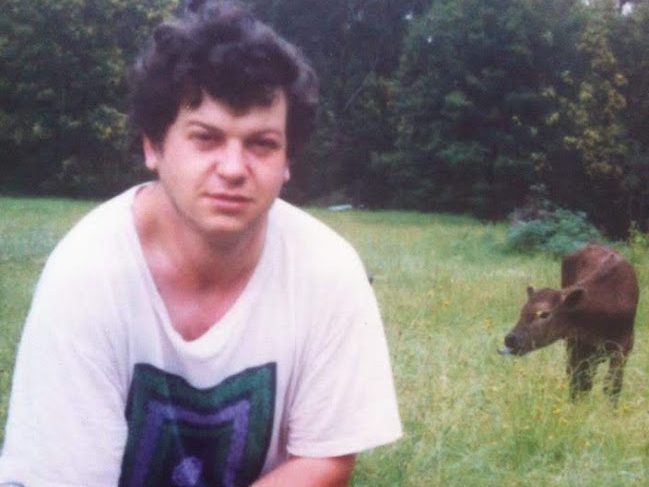

Brian works at Igalia, he is a member of the W3C Technical Architecture Group (TAG). He also paints many and varied subjects and writes thoughtfully about Web Standards.
Transcript
Steve:
Well, hello.

Brian:
Hello again, Kardell.

Steve:
Hi. How are you? Good.

How are you, Steve? Not too bad. Now, do I pronounce your name correctly when I say Kardell or is it?

Yeah, definitely. Yeah, I always have problems with people's names, but well, I'm glad that I don't mispronounce it.

Brian:
It's okay. You can mispronounce it anyway. I'm always feel strange saying my own name.

Why is that? I don't know. Just never have liked it.

I never really identified with it. Like it. Yeah, I don't know.

Anyway, I just don't like my last name and I don't feel like even I say it in a way that sounds right. So. So tell me whatever you want.

Steve:
Well, no, no. I mean, if you don't want to be called broke. No, I just wondered because it's one of those like I was talking to someone the other day and I think I mentioned it on here as well was that I knew this this person from my daughter's school.

She was one of the parents, but her name was either Helena or Helena. And I could never remember that. However many times she told me, I could never remember which one it was.

I always felt uncomfortable talking about. It's just it's just one of those things. But anyway.

I was thinking just before, what is your favorite fruit? Plums. Do you have a favorite fruit?

That's the first. Sorry? Plums.

Plums. You like plums. So you definitely have a favorite fruit because some people don't have a, you know, they just say, well, I like all fruit.

Brian:
I don't know. I don't like all fruit, actually. But I like plums like peaches, like cherries.

I have apple tree and a peach tree and a new tree in my yard. Yeah. Kardell Estates.

Mm hmm. Yeah. Not to be confused with like Lawson Manor, you know?

Steve:
Yes.

Brian:
Yes, of course. Borrow that from Bruce. Yeah.

Steve:
I could see behind you some of your artwork, I presume.

Brian:
Yeah, I know. It's a lot of it back there. What's not on that side or all over my house or whatever I have is hundreds of paintings and drawings and stuff.

Steve:
So to you and how much of your time do you spend doing that?

Brian:
Well, this is an interesting and personal question, if you want a story about it.

Steve:
Yeah, yeah. I mean, well, I mean, yeah. No, I mean, if happy to share.

Brian:
Yeah, I'm happy to share it. I just don't know how interesting it is for anybody. So it's interesting to me.

Steve:
I mean, I'm just doing this for me.

Brian:
So I was a little kid, you know, and I liked I really liked to do like art and I thought it was like, you know. Better than average, let's say, you know, like so it it kept me interested because, you know, people would. Say it's really good, you know, and then somewhere along the middle school, high school, you get mashed together with like lots of new people and eventually there's somebody who's just like so much better than you, you know, and I don't know, just like.

Found other things that I did instead, you know, that I just thought, like, I don't know, I was put off by not being nearly as good at it. And so I just stopped and then I got engaged when I was 19 or 20. And I changed sort of like my whole life at that point in time, like after, like in high school, I smoked a lot of pot, drank a lot of beer, you know, like didn't go to class very much, was not interested in academics.

I thought everybody in my family ever has swung a hammer, so probably going to swing a hammer and I'm OK with that because I've been doing it summers and holidays and stuff like that for years already. And yeah, so I like left behind my friend group and like spending all of my time with her and her family. And we were engaged for a couple of years and then we broke up and I was sad in a new kind of way, you know what I mean?

Like in a way that I had not been sad before. And I didn't know what to do with my time because I didn't, you know, like that was all of my time was with her family. I wasn't sad about her so much.

It was more like, what is my life now? Because I thought I was going to make my life back.

Steve:
So how old was this, sorry?

Brian:
Yeah, I was like 20. And then I painted and drew pretty much constantly, like hours a day for five years until I met someone and then I was with them for 13 years. And in that whole time, I kind of didn't draw and paint.

There were just other things to do, you know? And then after that time, we split up and I was by myself again. And I was like, I don't know, I guess I'll draw and paint.

And so I did the same thing, you know, hours a day for several years. And then I decided that I would date again. And I've been with my girlfriend for about two years and I do not spend very much time doing it anymore.

So it's a long, long-winded reply to...

Steve:
No, no. It's a really interesting perspective, though, that you, like it sort of feels as if at times your creative urge just comes out or needs to come out. And in the process of coming out, you need to divest yourself of emotional relationships.

Brian:
Well, I know you've talked on this before about that you had depression, right? Oh, yeah. So I've had my whole life anxiety.

And at times, depression is heightened in those. And for me, it's always been really therapeutic. So yeah, I think that's a big part of why I find myself doing it, because you can get lost in it, you know, like you can...

You quickly stop thinking about all of the terrible things and just get really focused on this thing. It's a little bit like when you're programming and you get into like flow, you know, and you're... Yeah.

Steve:
So how does your web standards work fit into this?

Brian:
It doesn't.

I've painted a bunch of web standards, people. I think actually, I think our... Let's see.

Settings are... Well, I don't know. There's...

Just happens to be right next to me. This is Ken Christensen. I don't know if you know, he was from Intel.

He was on TAG for a few years. But I was supposed to send him that painting. I told everybody who's a web standards person, if I painted you and then I said I would send you a painting and didn't.

Sorry. There's a lot of...

Steve:
Yeah, I think you said several times to me that you'd paint me. Did I? Yeah, probably.

No, not at all. It's interesting that you should mention the painting, though, because I was going to talk about the TAG a bit and you being on it. I was thinking about my views, like, I don't know if you've seen sort of like early days or early days, you know, early 2000s, the sort of way that people from the W3C and the sort of players were the early...

Those people that went on to from the TAG, how they were memorialized, like in glass sort of mosaics.

Brian:
No, really?

Steve:
Yeah. And I'll share it with you. I was showing it to Mike Smith because it just seems like these people are now the TAG.

Like when I looked at some of the people, I could still scare me, but overall, people looked approachable. Maybe it's because I'm getting older and I'm getting to know people better and be more relaxed. I don't know.

But anyway, the people in the TAG seemed more grounded than they had been in the past.

Brian:
Yeah, I mean, I think that's true. But both of things are probably true, because I know that, you know, I think I was very intimidated by some of them, for sure. And now, not so much, you know?

Steve:
Yeah. Well, that's... I mean, that's...

I mean, in the sense that, I mean, you know, the sense of what you said, intimidated, and it sort of sounds rather sinister. I mean, that what I think it is, is that it's an inability on my part, for example, to be able to communicate effectively with certain people, because I don't understand how the language worked. But beyond that, it's, I'm more able to with the current TAG.

Brian:
Yeah.

Steve:
You know, by knowing people like yourself, and also dealing with getting to know Lola, and having worked with Matthew. So, okay, so I asked you about how you're, the things that you do outside of your work. And you said, well, not that I really.

So how did you get it? Like, what drew you into this line of work?

Brian:
So, at this time, they are connected in this way. So at this time, when I was like, drawing and painting in my 20s, my mom was involved in a thing here. And she always told me, like, we know this famous artist.

And I was like, yeah, okay, whatever, mom, you know? And he was here one time when I went to, in Pittsburgh, when I went to pick up my mom. And I was early, and he had walked outside early.

And he would, we're just staying there talking awkwardly. I kind of didn't even really know who he was. And he said, oh, your mom told me you've been doing some art.

You know, I'd love to see it sometime. And I'm like, oh, I have some in my car, hold on. You know, so I went and got it.

And he is looking at it. And he says, oh, this is actually a lot better than I expected it to be. And like, have you had any formal training or anything?

So anyway, he invites me to, he says, hey, well, if you're ever in Vermont, you know, you can come swing by my studio. And, you know, people pay me thousands of dollars to look over my shoulder. You know, you can just come and whatever for free.

I'll even like put you up on an air mattress in my house or whatever, you know? I said, great. How about next week?

And I don't think he was serious in retrospect, but then it was awkward to say no. So I went, and a weekend turned into a week, and it turned into two weeks, and he offered me a job. And I was suddenly working for him in rural Vermont, and there's nothing to do.

And I don't really have a life or anything at that point in my life, which was part of the problem. And so he had this studio, and he had bought a computer that was just sitting in a box unopened. And I said, well, why don't we open it?

And, you know, we got it open, and I'm like, oh, I can do all these things to help your business. And the web was brand new. And I was like, well, let's put your art on the web, you know?

And yeah, that just led to another opportunity, to another opportunity. Then I got a job working for a little company in Burlington, Vermont, that had a multimedia arm. They did a lot of stuff, and they were starting to do web stuff.

So yeah, and that's about the time when I learned about W3C, because it was just being formed, and you know, you used to get all your news through magazines. And I saw these pictures of Tim and, you know, this Illuminati of the web, right? And I was like, wow, I'm sold.

I'm in. Whatever they do is going to be the best. I also was really big into the Gang of Four Patterns book at the time.

And I think that I was sort of like maybe also coming out of a place in my life where it was like a lot of religion. And so I was like looking for somebody to give me the stone tablets and tell me the right way, you know? This is just going to be the way we do it.

XML, XSLT, XPath, XQuery, XLink, XPointer.

Steve:
Yeah, I was thinking about that as well, and how that academic approach was superseded because it was a dead end in the end. Well, not a dead end, but it was, there was other priorities that the web was looking at. Can you speak to that?

Brian:
I think it's interesting, right? If you think about it, I think that when you look at W3C when it was founded, I think XML, the whole world was behind XML, right? I mean, there was nobody who didn't go from HTML and be like, oh, yeah, that would be useful if you could just use other TAGs, you know?

And yeah, I mean, everybody, every business was like, yeah, let's do that. And got behind it and made products and made standards. And then one random Saturday afternoon, Doug Crockford throws up a one page thing on a website that has no authority at all.

That's just like, I don't know, what about this? And everybody went, oh, yeah, that's way easier. It fits on one page.

I can understand it. It's simple. And developers chose that.

And because we built everything on this XML stack, everything fell down related to that. So that's a shame. But I do think that the HTML5 era of taking a practical approach and how do we move forward by evolution rather than revolution.

Steve:
That was thrust upon the W3C sort of membership from outside primarily.

Brian:
Yeah.

Steve:
Yeah. So I mean, it was a good thing. I mean, I was involved to some extent.

And I think it was a good thing overall. But it was hard. These things are always hard.

And I don't think everything that happened was well, you know, orchestrated or well thought out. But it was an interesting period.

Brian:
Yeah. The thing that was wild about that is we were just talking about this on a recent Egalia chats, where it's like, you know, there was this time, I want to say like 2007, where they tried to bring HTML back into W3C. And you were one of the editors at some point in there.

And I remember this sort of like two popes problem, right? Like, who's in charge? Where you disagreed on things.

And I remember really distinctly this argument about the main element between you and Hicksey, and I think Ana as well.

Steve:
And it went on and on and on.

Brian:
It went on and on and on.

Steve:
But eventually, things changed. And over time, four or five years later, it became the, you know, very much the same as the original W3C, as how I'd originally...

Brian:
Yeah, as basically a TAG for the ARIA role, more or less.

Steve:
Yeah. Not just a TAG for the ARIA role, but yeah. Yeah.

I mean, that's, yeah, thinking about it the other way. I always think of semantics first.

Brian:
But yeah.

Steve:
Yeah. That was, yeah, I mean, it was an interesting time. And there were things that were left unfinished, business I thought was left unfinished, that from what was in the W3C HTML spec, that I could see as improvements in the HTML standard, which is file PRs and work with them, and got stuff done.

Brian:
Yeah. Another one I recall us discussing a few times and going back and forth and getting on was the document outline. I'm curious, like, what do you think about where we landed with that, where we have the, like, heading level offset?

Have you seen that?

Steve:
To be honest, I haven't looked into that sufficiently to give you a reasonable answer.

Brian:
Hmm. I saw that recently that Anna is taking up implementing it, and it's implemented in WebKit, I think also in Chromium. I saw that Anna was taking up implementing it in WebKit.

And as they're looking at it, they're like, oh, wait, I thought this was, this is actually more complicated than I remember us agreeing to. And I'm wondering, like, do you ever have that experience? Like, do you ever see that where, like, we have some kind of, you think you have some kind of agreement, and then you look into it and you realize, oh, that's a lot more complicated.

Steve:
Oh, yeah, all the time.

Brian:
Yeah.

Steve:
Yeah.

Brian:
Yeah.

Steve:
Yeah, the things, yeah, I mean, you try to scope, you know, you look at something, you try to estimate, oh, yeah, it's going to take some amount of time, but when you actually start to do it, it takes two weeks or three weeks.

Brian:
Yeah.

Steve:
Yeah. It's, you know, the complexity levels here. Some part of the fun, though, isn't it?

Brian:
I hope it gets done, because it's one of those things that until it's baseline widely available, I'm curious what you think about that, actually, we can come back and talk about that if you want, but baseline widely available is, you know, like, it's been out there for it's been implemented and deployed in browsers for, like, two or three years. So chances of it not being supported are pretty small. Not zero, though, which is important.

But like, basically, for the heading stuff, I feel like I can't, I really can't change anything in my site until it's widely available, because, you know, like, people distribute their blogs through RSS and stuff. And RSS isn't going to run a polyfill or something, you know, like, and that's the tricky stuff that gets bad, I guess. You lose all the accessibility characteristics and probably the styling and everything if you're delivering it that way.

Steve:
Yeah. Keep it simple.

Brian:
Yeah.

Steve:
If you're, you know, yeah, it's just, you know, the more complex, yeah, the more possibility you're going to have that it's going to break somewhere. Yeah, for sure. Now, tell us more about what you're doing on the TAG, what's the current work?

What's what is the TAG like? I always talk about the TAG as if I know what the TAG is. I may know, but I can't remember.

So just give us a little bit of an overview. Yeah. The technical architecture group.

Brian:
Yeah, I mean, the technical architecture group is, I think, is supposed to be something of a steering group for W3C and try to look at, like, the long term, you know, 50 years out kind of view of things. But then to also it's become really a lot of apply that through concrete stuff like so basically it's part of the Chromium process that, I mean, that that's just Chromium's policy. You can have whatever policies and other I wish that they did.

But, you know, most of the sort of innovation proposals come through Chromium because they have infinite money that they spend on standards development. So they try a lot of things and see what sticks to the wall, you know. But all of them in the process have to get a TAG review.

I think there's more value in the early TAG review where it's like, hey, we haven't spent too much time, but here's sort of where we're at and what we're thinking. There's a lot of opportunity for discussion and course correction at that point in time. You know, the later that it gets, once it's actually shipping in one browser, it's like pretty hard to get people to change it.

And if it's shipping in two browsers, then I don't know what's the point in even having the discussion. That's like it's pretty much reality at that point.

Steve:
And you still you still do have or there still is discussion?

Brian:
You can still end up having discussion in some of those even TAG is also integrated into the W3C process. So the W3C, every time you move between stages or you get a new charter request, it also goes to the TAG and. You know, TAG.

Reviews it and optionally comments on it in those as well, so. Yeah, and the TAG also is it's one of, well, now three, but really just two in terms of the day to day groups in W3C, there's the advisory board and the technical architecture group. And they're just small groups that.

Are elected and appointed combination of elected and appointed that. But extra time in toward one of the two questions, one being architecture, the other being the the process of W3C itself. So that's the advisory board and.

Those two are also involved in since the W3C. You know, Tim. Was sort of like.

He was called the director, but it was sort of like the I don't want to say benevolent dictator, but like the decider, right? He was the decider. So if there was like if we couldn't agree, if there were formal objections, if there were whatever, then we go to Tim and Tim could sort of play the decider role.

Steve:
He was the emperor, you know, and who fulfills that role now?

Brian:
Yeah. So now it's it's these councils, formal objection council. So that's why I was bringing up the AB.

So it's a combination of the AB and the TAG that here are those. And then we create a, you know, a verdict and a comment on it.

Steve:
How many people are on the council?

Brian:
Too many. Yeah, I mean, it's a lot. I was just in a formal objection meeting this morning.

I can't really talk too much about it, but it's a lot of people and it's a lot of discussion. It was a lot more efficient when it was Tim, that's for sure.

Steve:
Yeah. So and so, well, you mean that sort of time between.

Brian:
Yes.

Steve:
Yeah. So it being decided. So is there any way to speed that up, you think?

Brian:
I don't know. I don't know. I think there's a lot of things that W3C needs to review.

I don't know Dom there. Yep. To be the interim CEO.

So hopefully things trend better. That's good.

Steve:
So you think it was a positive thing that under the circumstances that they replace it?

Brian:
I think W3C needs to make changes. So that is a change. So that that's better than not a case, though, isn't it?

Steve:
Always need to make changes. And it does make changes. But there's always more to be made.

Brian:
Yeah. Interesting place. It is an interesting place.

All of them are making changes. And like in some ways, what WIG has moved more in the W3C's direction. W3C has moved a little bit in that direction.

And they they work together a lot better now. Yeah. So.

Yeah.

Steve:
Yeah. I mean, the focus has moved a lot. And I really thought, well, think that at some point the fact that that HTML effectively moved its development and moved, you know, defining it largely moved out of the realm of W3C was seen by some people as a death knell.

But I don't think it's. Well, obviously, it's changed that W3C, but it hasn't, you know, led to the demise.

Brian:
I was looking just the other day and the W3C has a spec dot sorry, not the W3C, the WHATWG has spec dot WHATWG.org that has their the standards that they're under WHATWG. And I think there's 22 of them now. That's that's a pretty good number.

And there are some more that are. You know, suggested to move over there, so I think. I think it's pretty important to address the reasons for that.

Steve:
Oh, so you think, OK, and how is that going to be addressed?

Brian:
It's a good question.

Steve:
Is this is it some I mean, for what is the government going to come from the W3C leadership AB TAG or combination of all of them?

Brian:
Yeah, well, so the interesting thing is that the process doesn't give either the TAG or the AB any actual power there. The powers are mainly in speaking from a position of. You all elected us or we were appointed for some reason, so this is these are our collective thoughts.

We agree to spend time that the rest of you don't have to to have a smaller council of people to discuss those things. And by nature, it seems you sort of trust us to do this. So it's all a little bit like.

There's no real power there, um, so it really needs to come from sort of the the membership in the team need to decide what W3C needs to be and make it so. So. But I think I think there are things where, like I said, the what the what wig has evolved some.

Toward W3C a little bit, and I think the W3C has opportunity to do the same, to move in in that direction. And hopefully, let's see what happens.

Steve:
Yes. OK, so maybe now we'll just switch it up a gear and go to the Rogues Gallery.

Brian:
Let's do it.

Steve:
I know that's not something you've been looking forward to. Yeah.

Brian:
Apologize in advance to anybody who I don't know.

Steve:
OK, so let me just. I don't like doing the Rogues Gallery myself just purely because it makes it difficult.

Brian:
To get it on the screen?

Steve:
Yeah, essentially, yes. You know exactly what I'm talking about. This is what I prepared before for Doug, for Doug, who was going to be on the.

But as I say, he would equally. I'm sure there's people there that, you know, and people. That you might not know, but that's fine because I know you.

Yes, I am there and I am wearing Patrick, one of Patrick's designs that he inspired by his trip to Japan. Yes, I like to call it. Thank you for smoking.

And who else can we see?

Brian:
That is the only person I recognize, to be honest.

Steve:
I can't. I can't. Top left wearing the smiley face hat.

No, the emotionless, the expressionless face emoji hat. Yes. The originally expressionless face himself.

That's Dr. David Swallow.

Brian:
You know, that's funny because he was I watched the episode with you and Eric Bailey and he was also on there. And I was like, oh, he's always on there. I don't know.

I'm sorry. I don't know who he is.

Steve:
It's absolutely fine. I mean, he's just somebody who's very dear to me. But he's also, you know, does his own thing.

And as far as accessibility and usability is concerned, UX a lot.

Brian:
Yeah.

Steve:
Next up.

Brian:
I think this person also was on the one with.

Steve:
He was. And you should know him because he's does stuff at the W3C quite a bit.

Brian:
Yeah.

Steve:
That is Patrick Lauke.

Brian:
No, it is not. Yes, it is. It's Patrick Lauke.

I was. Wow. I thought this was the other guy.

But, you know, I thought I was confident when you put this up on the screen. I was like, OK, I'm going to get at least Patrick. And I think Adrian has been on a bunch of these.

I thought maybe I would get Adrian, you know. But wow. Yeah, he's so small.

It doesn't.

Steve:
Yeah, well, yeah. Oh, yeah.

Brian:
Now I can see.

Steve:
Yeah, it's Pat. And this is another shirt from HTMLZ. I've had it available for years, haven't sold a single one.

I mean, I've not even I had bought one. Next up. See, this is where I get shadi.

I think her name is Zenobia. I had it. But yeah, she's a person from Poland or is Polish.

OK, so the next person along you can see is a guy called Ricky Osman. OK, he I made this shirt for which is I'm not going to try. Do you do you speak any Dutch?

Brian:
I do not know.

Steve:
OK, so I'm not going to try to pronounce that because I've forgotten how to pronounce it, but essentially it means accessibility is political in Dutch. Got it. I said on somewhere, I think LinkedIn, I said, if you want one in your language, just drop me a line.

And this person did. And I created that shirt. I just sent it to her.

I didn't ask her to pay for it because if someone has a design idea, I say, hey, go for it. And I said the same thing with the bottom left here. Well, yeah, sorry, Ricky.

I just said one because Ricky's I used to manage Ricky and he's an old friend. Then bottom left corner is Ian Lloyd, also known as Lloydi. OK, I work with and it's yeah, work with TPG as well.

And he's wearing one of his own designs, as you can see, is button up buttercup, which I've got for sale. It's cool. So it's just telling you the one big story.

Brian:
It's one big plug. Yeah.

Steve:
And then there's another really good friend of mine, a guy called. Well, I've been told that his name is begani, but I was calling beganyi. You might forget me.

And that's all continue to call him.

Brian:
I like his mug there. That's on your. Yeah, that's pretty good.

Steve:
Yes. Yes.

Brian:
WCAG like ACDC.

Steve:
Yes.

Brian:
Yeah.

Steve:
Yeah. There's a rise in this one with one with HTML. That's how I started.

I wanted to make a shirt. I'd seen this guy, where, which was the ACDC HTML. That's how I started.

Brian:
I like it.

Steve:
The lockdown. Last but not least is, is this is one of my old bosses.

Brian:
We skipped you. We skipped you.

Steve:
Oh, yeah. Well, I thought I already mentioned me there. I am wearing pats thank you for smoking.

Pat has got a we're like battling, battling entrepreneurs now.

Brian:
Ah.

Steve:
And he does a lot of interesting stuff. I just got another one of his, which was some sort of pixel art skull. He does a lot of pixel art stuff like that.

Brian:
So you're wearing a smoking. You're wearing a smoking thing.

Steve:
Yeah.

Brian:
Do you still smoke?

Steve:
Sorry. Do I now? No.

Yeah. No, no.

Brian:
Because we both when we met, we both smoked.

Steve:
Yeah.

Brian:
Yeah.

Steve:
Yeah. But I remember. Yeah.

I remember. Yeah. I remembered that we did.

Yeah. But, um, but yeah, that was at least 10 years ago.

Brian:
Yeah.

Steve:
More 12 years ago. A long time ago. Yeah.

No, he just it was a sign that he saw when he was in Japan.

Brian:
I like it. It's like pixel art. Yeah.

Steve:
Yeah. Yeah. I like it as well.

It's just really. It's just I call it. He's thank you for smoking.

Remember some film about it.

Brian:
It looks like something Jen Schiffer would make.

Steve:
Who's Jen Schiffer?

Brian:
I should have brought my own rogues gallery.

Steve:
Ah, yes.

Brian:
You should look her up. She's very enjoyable. She's she she worked for Glitch for a long time, and now she makes candles.

She makes some. Well, not not just candles. She makes candles and pottery and the whole.

I'm going to step away from the mic really quick. One second. I'm going to get you a visual.

OK, so these are some candles that Jen Schiffer made. See, that's an egg. See that?

Steve:
Oh, yeah.

Brian:
It looks just like an egg.

Steve:
The sort of candles that you won't actually like because of the. Exactly.

Brian:
I wouldn't like them, but.

Steve:
Yeah.

Brian:
But she, you know, she makes ornaments, a piece of ornamental candles that are kind of interesting and different, you know.

Steve:
So, you know, let's just get this this last over the line. This guy, Dave O'Neill, used to be my boss, my boss, and most of everybody else that worked at TPG from here, which is quite a few of us. And that he was wearing it.

And for some reason, he bought this shirt, which is my good friend, Johnny James. And it's AJJY Accessibility. That that print of Johnny I got from his avatar from from a Jira from a Jira account.

It was nice. Yeah. But you may know that Dave O'Neill has got these full sleeves.

It's he's he's quite a tattooed person. He's an interesting character. Do you have any tattoos?

Sorry? Do you have any tattoos? No, I don't.

No, I don't at all. I don't. Hold on, let's just get rid of this.

And it's an interesting question, but OK. So, yeah. So do I have any tattoos?

No, but I do like watching shows about people getting tattoos.

Brian:
I think Bruce Lawson's daughter is a tattoo artist.

Steve:
Yeah.

Brian:
She does some some big tattoos, like really big tattoos. She does on. Yeah, they're pretty, pretty nice, actually.

I only know that because he going back to the art of people that I know or whatever, I don't know her. I never met her. But Bruce asked me for her.

16th birthday or her 18th birthday to do a drawing of her. And I did. It was actually a nice drawing.

It came out really well. And I told him a number of times that I would send it to him as well. And I also never sent it to him, but he TAGged her on the post and told me that she was also an artist.

And I like followed her Twitter account or whatever it was back at the time. And then I saw that he TAGged her again and said something about a tattoo. And every once in a while I go and look and see what her tattoos are and how that's shaping up.

They're pretty nice.

Steve:
Yeah. Yeah. I mean, do you have tattoos?

Brian:
I don't yet, but I have been I'm going to get one in a few weeks, I think, in Florence. I'm going to I go every year to Italy where my sister has a place in Florence. And yeah, I'm going to get one there of Fleur de Lis, like the Florence one that is a little bit it's different than the French one.

Steve:
The only thing is, I'd like to see a freshly done tattoo, but most of them don't age well at all. They become so. Yeah.

I know you haven't really seen any designs that I like.

Brian:
My girlfriend has three, one, two, three, three.

Steve:
Yeah.

Brian:
Yeah. They're all nice. I think they're small.

They're all pretty small.

Steve:
My girlfriend, my daughter's girlfriend has a couple, but they're very small.

Brian:
Yeah.

Steve:
Very young. But, you know, I mean, I think part of my conservativism about not wanting to have them myself is because when your kids are younger and they start saying, I want to get tattoos, you just want to say, well, just wait.

Brian:
Yeah. Yeah. My daughter also has a number of tattoos and a lot of piercings.

Steve:
Yeah. My youngest has loads of piercings. My oldest daughter did say she was going to get a tattoo, but she just can't be arsed.

So, okay. I mean, she was talking about it and then, you know, she's had ample opportunity. I mean, she's old enough now.

She's 21. I couldn't tell what to do. But anyway.

Brian:
Well, I'm going to be, I am 52 and I haven't yet, but I'm going to, so there's still time for her.

Steve:
Oh, yeah. There's all the time in the world. I mean, I'm 62 and I don't think I will.

Like, I still think about it sometimes, just, you know, like something like a HTML5, you know, that classic, but it's a banner type shield thing because it just consumed such a large part of my life.

Brian:
Yeah. Do it. Do it, Steve.

Steve:
Do it and then you can say that I egged you into it. It's either that or the, I don't know if you can see those arms, the lose away arms on the background, on my background. Can you see my background?

Brian:
I can see your pink chair.

Steve:
Yeah. Above the pink chair are two arms like that.

Brian:
Oh, okay. I thought those were antlers.

Steve:
Yeah. Well, I was thinking about getting that as a tattoo. No, they're not antlers.

They signify many things, but they're arms. Brian, what can I say? It's been an absolute pleasure to have a conversation with you and there's actually loads of questions that I never asked, but it's just getting to that point where my dinner's almost ready.

So I'm really good. Unless, do you have anything burning you want to throw out there before we shut down?

Brian:
No, not really. I mean, I would have loved to get to talk a little bit more about like accessibility or Igalia or whatever, but we can do that when you come on the Igalia Chats podcast.

Steve:
Yeah, but no, please do. I mean, just give me a bit of an overview of Igalia as well, because I've been interested in that. Please do.

Go ahead. I mean, I can edit it down a little bit, you know, whatever. No, I won't edit what you said, but I mean, if I, yeah, don't worry.

Tell me more or tell me about Igalia because I really don't know. I mean, I've got a good feeling about it. That's all I have.

Brian:
Yeah. I mean, I think one of the things that is really interesting and like reshaped our, you know, history of the web is that like we went from sort of one company has to pay for everything in terms of a web engine to, you know, this open source model where other people can contribute. And if you can't actually contribute because you can't, you know, maybe you can't even afford to join the W3C long term.

You can't afford for, you know, people to do the prototyping, work with the vendors, all that kind of stuff. You know, you can sponsor something. And so, you know, Igalia works with like lots of organizations to do work in different web browser engines.

Steve:
Sorry, do you like you get funding to implement sort of a particular thing or do you crowdsource the funding to implement?

Brian:
I wish we could crowdsource more. It's really hard and it surprises me that it's as hard as it is because I thought, you know, like the average income of developers is not super low. You know, like it's most developers can sort of afford to throw a few bucks, you know.

And I even encouraged, we tried doing crowdfunding for like, hey, here's five things we could do. Like everybody pitch money into a pot and like whichever one has the most money, that's the one we'll do, you know. And yeah, I mean, it was difficult.

Yeah, it was difficult. We did raise like $50,000, I think, but the vast majority of that was from just a couple that gave like $10,000, you know. And with that, we implemented Focus Visible, which was, you know, a way to fix the accessibility problems created by the fact that the Focus pseudo class didn't respect what browsers actually do with Focus indicators.

And so, it would lead to people overriding the default styles and making everything worse for everyone. And so, then the net result is that they would follow that up by disabling Focus indicators altogether for things where it was really important.

Steve:
And what's the support for that across the...

Brian:
It's in everything. Yeah, it's in everything now. Yeah, that was a thing that was spearheaded by myself and Alice Boxhall, who also now is at Igalia, and Rod Dodson.

I don't know if you remember him?

Steve:
Yes.

Brian:
He left Google. He was at Google, but he and Alice actually did an accessibility course that was made available online that I think is still one of the courses I like the most out of all the ones that I've seen. I don't remember where that was, but it was like one of those Google-sponsored content.

Steve:
Yeah, I think I remember it.

Brian:
It was really nice. It was really nice. Really high-end.

Steve:
Yeah.

Brian:
So, yeah, I would love if we did more, if we could do more of that. I think that there's an aspect of WHATWG that works, particularly because it is the implementers that are sort of gating the reality checks on it. That is a little bit harder to work in the W3C model, because there's not something like that.

Anybody can propose something. Nobody's going to go out of their way to shoot it down until it becomes a real problem.

Steve:
I think it works better, the W3C model works better for something like the WCAG than it does than it would an alternative model.

Brian:
I would love to fix that about it, though, because the one thing that the W3C has that WHATWG doesn't have is members, like lots of members who pay money. What I would love to see is, you imagine the CSS working group that has I don't know, 180 members or something like that. It's a big working group.

There were even more interests that used to be there that aren't really there anymore, from print and stuff like that. They used to just sort of work on their own specs. But if everybody is just sort of doing their own thing, but nobody's actually paying for more than just words, nobody's checking whether this can be implemented performantly, whether browsers are actually going to accept the pull requests and stuff like that, then it's just a specifiction, right?

Steve:
I'm saying that the current development of CSS is not browser developer engineer-led.

Brian:
It is now, but I'm saying there were lots more members that were interested in things and driving things and working things, but they weren't gated by reality, whereas the browser stuff was more. What would be nice about that is if everybody was paying in their money and saying, hey, turns out that there are 12 different organizations that don't make a web browser. They're all interested in their own thing.

And if we all do that, then nobody gets their thing. But if we can work together to decide which thing is most important of those 12 things, we fund that one, we get that done. And next year, we'll work on your thing.

Just some way for those organizations to have the reality gate of it takes money to do these things, and we need to make sure that we have commitment or else we're just kind of...

Steve:
The only reality gate as well is, I mean, there must be other factors that go in, apart from the fact that, well, A, we need money, or B, it's in the browser makers' interests. I mean, it can't be always about it being in their best interest, because that's what you have a organization which is only run by the vendors.

Brian:
But there are things that the vendors aren't prioritizing. So I give you an example, like MathML is a thing that the browsers, they don't prioritize. They're just not interested enough to do the work because it doesn't help anybody's bottom line.

But it is actually very important for lots of other organizations.

Steve:
Makes mathematics more understandable to a wider range of people.

Brian:
Yeah. And so there are many reasons to be interested in that, from education standpoint, from print standpoint, from science standpoint, from government sharing standpoint. And so if those organizations pool their money, they could fund that.

And the browsers generally are happy to have that. They just don't want to spend their money on it.

Steve:
Hasn't there been some implementation of that stuff, though? I thought I saw some. Or is it just intent to implement or...

Brian:
Oh, yeah. MathML core is a thing that's in all the browsers now. But none of that work has been funded by the browser vendors.

So Igalia has been the champion of that.

Steve:
And where did Igalia get the money for that from?

Brian:
From many, many places, including two donations from individuals that amounted to like $150,000. Just people who were like... Yeah.

Yeah.

Steve:
For real? Yeah. No, that's great work.

Brian:
It's important. It's like, who is it important to, is the question. And I think that's what I'm saying.

The thing that W3C has is lots more people who have things that are important to them but they're not able to even make that thing happen. And so we need better ways to get them to work together and say, as a working group, this isn't getting done. It's not getting prioritized.

There are 12 of these things. So rather than everybody fail at 12 things, let's pick one thing and work on that thing together and get it done and then work on the next thing.

Steve:
I'm trying to understand because what I thought you were saying was this, that we've got to get more people to join the WG working group or the standards body or whatever. Now, how would that work and how would that change things?

Brian:
Yeah. No, I'm talking about a thing that we could do at the W3C. Or we could do it in a group that's neither of them even.

But it's just like, the nice thing about W3C is they have specs that we work on. They have an incubation process and just a way for those groups.

Steve:
I thought you were talking about moving more standards work to the WG because the W3C wasn't doing the job.

Brian:
I think W3C is doing a job of getting people to join with money and getting them into a room to talk about things. But then they lack the, here's how you take it to the really serious of getting it implemented in browsers. Here's how you get browsers interested enough to spend the hours and hours that it takes to have those conversations.

Here's how you get implementations done. Yeah, I would like to see those groups work on pulling their money into some kind of way that just guarantees that nobody is just rowing the boat in their own direction for no reason. And how do we work to get real progress on these things?

To make people understand that it's not just free. None of these browsers are going to do it for free unless that's what they choose to prioritize. If you have a thing, which is print or something about podcasting, there are many, many, many things that people have proposed over the years that they just can't get anywhere.

And a lot of the reason they can't get anywhere is that the browsers are like, yeah, maybe it's a cool idea. I don't know, but we're not going to spend our money on it.

Steve:
So what about EU? One of the things I saw today was this EU-based sovereignty or whatever. Office 365 alternative.

Brian:
Yeah, we do a bunch of stuff with the organizations like that. There's Sovereign Tech Fund and there's NLNet. There's increasing things like that.

I don't know in this current hellscape how real it is in the US still, but at least under Biden, there was some idea of a fund for securing open source and stuff like that. So there are other governmental organizations and funds that are very, very valuable for this kind of thing. But it needs somebody to drive it.

Steve:
Do you, knowing Vivaldi from what I've heard from Bruce anyway, it sounds like it's got some similar structure that the companies, maybe totally off, but that's what I got the idea of. Do you work with those European-based companies as well to try to do stuff to boost the European unity or whatever?

Brian:
Yeah, no, totally, 100%. We're also involved in some EuroSky stuff.

Steve:
Yeah, we're interested in a lot of that stuff and helping out.

Brian:
Some of it is being funded by those organizations. So that's all good. Excellent.

Hey, thanks for having me on, Steve.

Steve:
Yeah, sorry I tried to cut you quick there. I'm just tired.

Brian:
No, you don't have to. You can cut all that in fact and just leave it.

Steve:
No, no, I enjoy it. I am glad that you pushed me and we persevered because it was interesting what you had to say and I'll have to listen to it again in order to, but let me just stop this for the moment. Thanks a lot, Brian.
Some stuff mentioned
Buffalo Springfield- Bluebird
Lyrics
Listen to my bluebird laugh
She can't tell you why
Deep within her heart, you see
She knows only cryin', just cryin', yeah
There she sits, aloft at perch
Strangest color blue
Flying is forgotten now
Thinks only of you, just you, oh yeah
So get all those blues
Must be a thousand hues
And be just differently used
You just know
You sit there mesmerized
By the depth of her eyes
That you can't categorize
She got soul, she got soul
She got soul, she got soul
Do you think she loves you?
Do you think at all?
Soon she's goin' to fly away
Sadness is her own
Give herself a bath of tears
And go home, and go home
2 replies on “Brian Kardell visits the Fireside”
[…] Video: Brian Kardell visits the Fireside Steve Faulkner: Brian works at Igalia, he is a member of the W3C Technical Architecture Group (TAG). […]
[…] Video: Brian Kardell visits the Fireside Steve Faulkner: Brian works at Igalia, he is a member of the W3C Technical Architecture Group (TAG). […]